
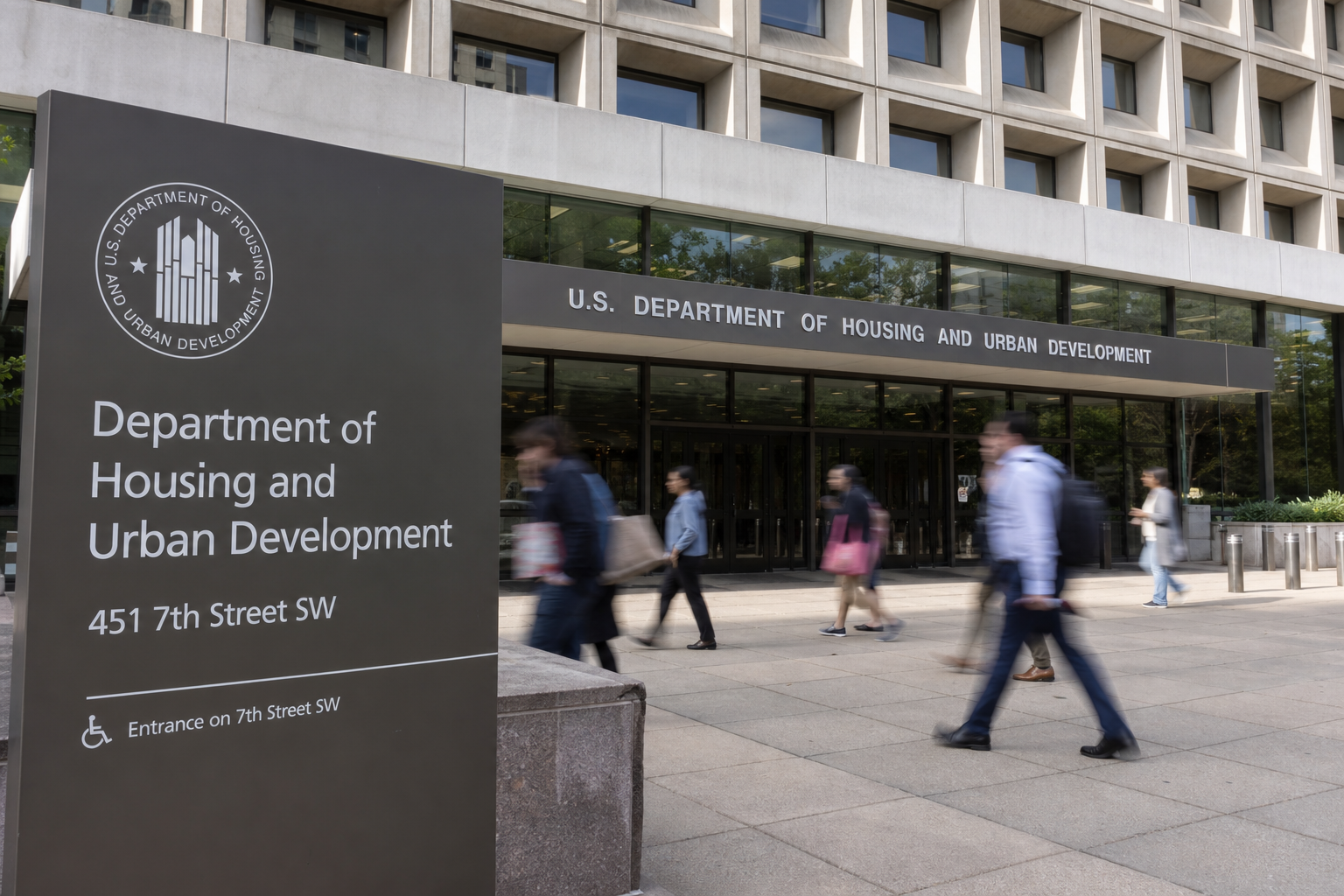
The Housing Policy Lawsuit That Matters to Your Tax Bill
The Department of Housing and Urban Development does not exist in a vacuum. When it writes a rule, someone has to enforce it. When it allocates a dollar, someone has to explain it. And when it changes how money flows to the states, the states notice.
That is where we are now. State attorneys general from Democratic-led states have filed suit against the Trump administration's HUD, challenging policy directives that they say exceed the agency's statutory authority and impose unlawful conditions on federal housing grants. The legal theory is straightforward: Congress writes the law, the executive branch enforces what Congress wrote, and anything beyond that is ultra vires action that the courts can stop.
This matters because housing policy is not abstract. It flows through the Community Development Block Grant program, the Housing Choice Voucher program, and dozens of other federal pots of money that cities and counties depend on. When HUD changes the rules for receiving that money, it changes what happens on the ground in your community.
What the Lawsuit Actually Says
The challenge centers on HUD directives regarding how states and municipalities must allocate housing resources and what conditions the federal government can impose on their receipt of funds. The states argue that certain Trump administration policies exceed the scope of HUD's delegated authority under the statute and constitute unlawful regulatory overreach.
This is not new territory. Courts have been litigating the boundaries of agency authority since the Administrative Procedure Act became law in 1946. The question is always the same: did Congress authorize this, or did the agency make it up?
The states are arguing that specific policy directives issued by the Trump HUD department go beyond what the statute permits. They contend that these directives impose conditions on federal funding that lack statutory basis and that the agency failed to follow proper rulemaking procedures in issuing them.
The Federalism Question Beneath the Lawsuit
Here is what you should actually pay attention to: this lawsuit is not really about HUD. It is about whether the federal government can use money as a weapon to force states and cities to do things Congress did not authorize.
That is a legitimate constitutional question. The Spending Clause allows Congress to attach conditions to federal money. But there are limits. The conditions have to relate to the purpose of the program. They have to be clear. And they cannot amount to coercion.
When HUD issues a directive that says you cannot receive housing grants unless you comply with Policy X, and Policy X is not in the statute Congress wrote, that is a problem. Not because Policy X is good or bad, but because it was not authorized. Congress could authorize it. The agency cannot.
The Trump administration would respond that it is simply enforcing the statute as written and removing conditions that Democratic-era HUD officials added without authority. That is a defensible position. The courts will have to decide whether it is correct.
Why This Matters Beyond Housing
If the states win, it means federal agencies cannot unilaterally add conditions to grants that the statute does not contemplate. If the Trump administration wins, it means the agency has broad discretion to interpret housing law and enforce it as it sees fit.
You can see why both sides care. Federal agencies have spent decades attaching conditions to money as a way to push states in policy directions Congress never voted on. That is not a Republican problem or a Democratic problem. It is a structural problem.
A court ruling here will likely affect more than housing. It will signal how much deference courts will give to agency interpretations of their own authority. If HUD can rewrite the rules for housing grants, why cannot the EPA rewrite the rules for water permits? Why cannot the Department of Education rewrite the rules for Title IX?
The Procedural Red Flags
The lawsuit also raises a procedural argument that matters. The states claim that HUD issued directives without following the notice-and-comment rulemaking process required by the Administrative Procedure Act. That is a technical claim, but it goes to a real principle: the public gets to be heard before the government changes the rules.
If HUD issued policy directives without APA notice-and-comment, that is a problem regardless of whether the directives themselves are good policy. Process matters. It is not exciting, but it is foundational. You cannot trust government that will not explain itself publicly before making rules you have to live under.
The Trump administration will argue that it was clarifying existing law, not making new law, and that such clarifications do not require APA rulemaking. That is a technical response, but courts take seriously the distinction between guidance and rules, and the question of when the public gets input.
What Happens Next
The case will probably be filed in the D.C. Circuit or the Southern District of New York. Both courts have experience with federal housing law and agency authority. Discovery will take months. Briefing will take longer. A ruling could come in 2026 or later.
In the meantime, housing grants will flow, or they will not, depending on whether courts block the Trump HUD directives while the case proceeds. That is where this becomes real. Federal money either gets to the housing programs or it does not. States either have to comply with new rules or they do not. The lawsuit is legal theater, but the consequences are concrete.
The principle worth tracking is this: can the executive branch rewrite the conditions attached to federal spending through agency directive, or does Congress have to vote? That question will define the boundaries of administrative power for the next decade, and housing is just where it happens to land right now.
Mark February 2026 on your calendar. That is roughly when you will see the first substantive rulings. Until then, the litigation will proceed quietly, the way constitutional cases usually do — out of public view, in hundreds of pages of legal briefs, with the outcome decided months before anyone outside the courthouse hears about it.
