
The Deal, the Details, and What Gets Decided in a Border Negotiation
The United States and Mexico signed an amendment to their Colorado River water treaty in January 2024. Most of Arizona did not notice. That is not a criticism of Arizona. That is a criticism of how water policy gets made and explained.
Here is what happened: The two nations agreed to share the burden of Colorado River shortage through 2026. Mexico will reduce its water take by 200,000 acre-feet over three years. The United States commits to the same reduction. The agreement includes a payment mechanism so Mexico does not bear the cost of shortage alone.
For Arizona, that means something specific. Your state has senior water rights on the Colorado River. California has the most senior rights. Nevada comes next. Arizona is third. When there is not enough water, you lose first. Or you would have lost first, without interstate agreements and federal legislation that allocated Arizona 2.8 million acre-feet per year from the Colorado River. That is your number. Write it down. 2.8 million acre-feet.
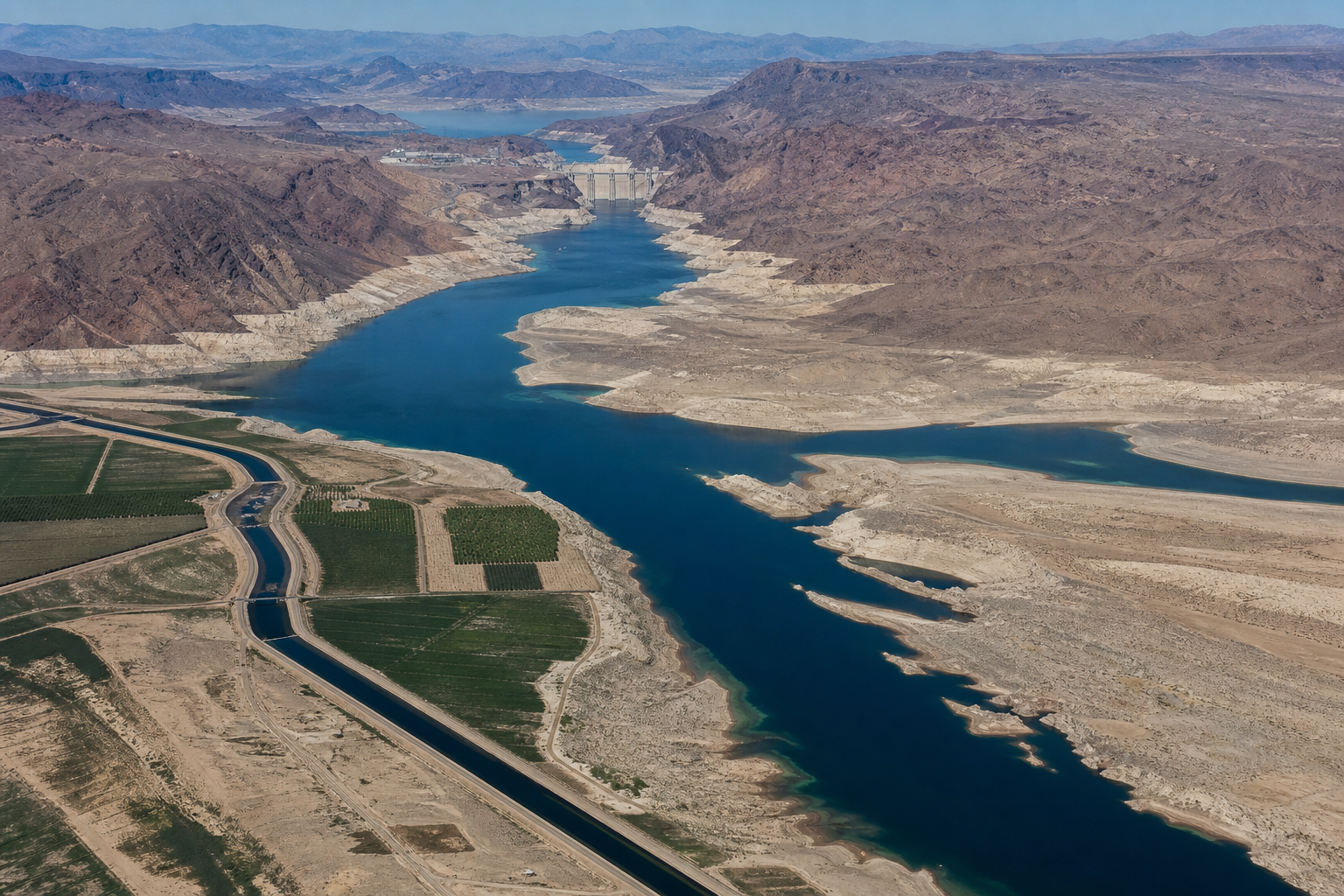
The shortage has been real for twenty years. The Lake Mead reservoir sits below elevation 1,040 feet because the river does not deliver what it promised to deliver when they built Hoover Dam in the 1930s. The Colorado River Compact assumed 16.5 million acre-feet flowed annually. The actual average is closer to 13 million. That gap did not close. The shortage tiers came into effect. Arizona got ordered to give up water.
By 2023, Arizona was required to reduce usage by 512,000 acre-feet. That reduction fell hardest on agriculture in Pinal County. Farmers in the Pinal Active Management Area receive their water through the Central Arizona Project canal. CAP has to buy less from the river when shortage orders hit. Farmers with junior water rights got cut first.
The new Mexico agreement does not solve that problem. It postpones it. For three years, the United States and Mexico both contribute to conservation. That conservation keeps Lake Mead from dropping further, which means the shortage tier stays at current levels rather than deepening into Tier 2B. Tier 2B cuts would push Arizona's reduction to 592,000 acre-feet. Three hundred thousand more acre-feet gone. Ask a Pinal County farmer what that means to his operating margin.
Who Pays for Conservation, and Who Decides
Mexico gets paid 300 million dollars over three years to implement water conservation. That money comes from the U.S. federal government. You can argue whether that is good policy or necessary diplomacy. You should also ask yourself whether conservation was already supposed to happen without payment, and whether this is an incentive or a subsidy for non-performance.
The structure matters, because the payment moves outside the direct appropriations process Congress controls. It flows through existing treaties and international agreements, which means your elected representatives in the House approved the mechanism years ago and now have limited ability to block specific instances without renegotiating the whole treaty.
That is not unique to this deal. That is how international water law works in the western states. Federal power preempts state authority at the border. Arizona negotiates through the federal Department of Interior. You do not vote on it in Phoenix. You do not see the vote counts. You see the result.
The agreement also does not address the core problem: the Colorado River does not have enough water for the thirteen states and two nations relying on it. Conservation slows the decline. It does not reverse it. By 2027, when this agreement expires, the Lake Mead reservoir will be lower. The problem will be larger. The solution that day will be harder.
What This Means for Arizona Water Security
Arizona farms produce $4 billion in annual output. Cotton, alfalfa, lettuce, citrus, and hay account for the majority of Colorado River water use. The Pinal Active Management Area grows three crops per year in many cases. That productivity depends on irrigation that depends on a river that is not delivering.
The new agreement buys time. It does not buy water. For a farmer with a mortgage and equipment payments, time without a permanent solution is time spent on borrowed confidence.
The long-term answer involves hard conversations about what agriculture in Arizona looks like when junior water rights holders cannot count on permanent supply. Some of that land will move out of production. Some will shift to crops requiring less water. Some farmers will sell their water rights to cities. That is not a failure of this agreement. That is the inevitable outcome of a river that overcommitted itself eighty years ago.
What matters now is transparency in how those conversations happen. If the federal government, the states, and Mexico are reshaping Colorado River allocation, Arizona voters deserve to see the math. Not in press releases. Not in Interior Department fact sheets. In the actual reduction numbers, the payment amounts, and the decision timeline.
Your Role in the Next Shortage Conversation
This agreement runs through 2026. That means the next renegotiation begins in 2025. That is when the real pressure arrives. That is when you need to be watching who Arizona sends to those negotiations, what they are willing to trade, and whether they are protecting Pinal County farmers or managing decline.
Mark January 2025 on your calendar. By spring, the next round of shortage management discussions will be underway. Find out what Arizona's position is. Find out whether your elected officials are demanding a permanent solution or accepting another temporary band-aid. Then decide whether they deserve your vote in 2026.
The Colorado River will not save itself. The shortage will not reverse on its own. What happens next depends on whether Arizona fights for its water rights or accepts whatever arrangement the federal government and the other states decide to impose.
