
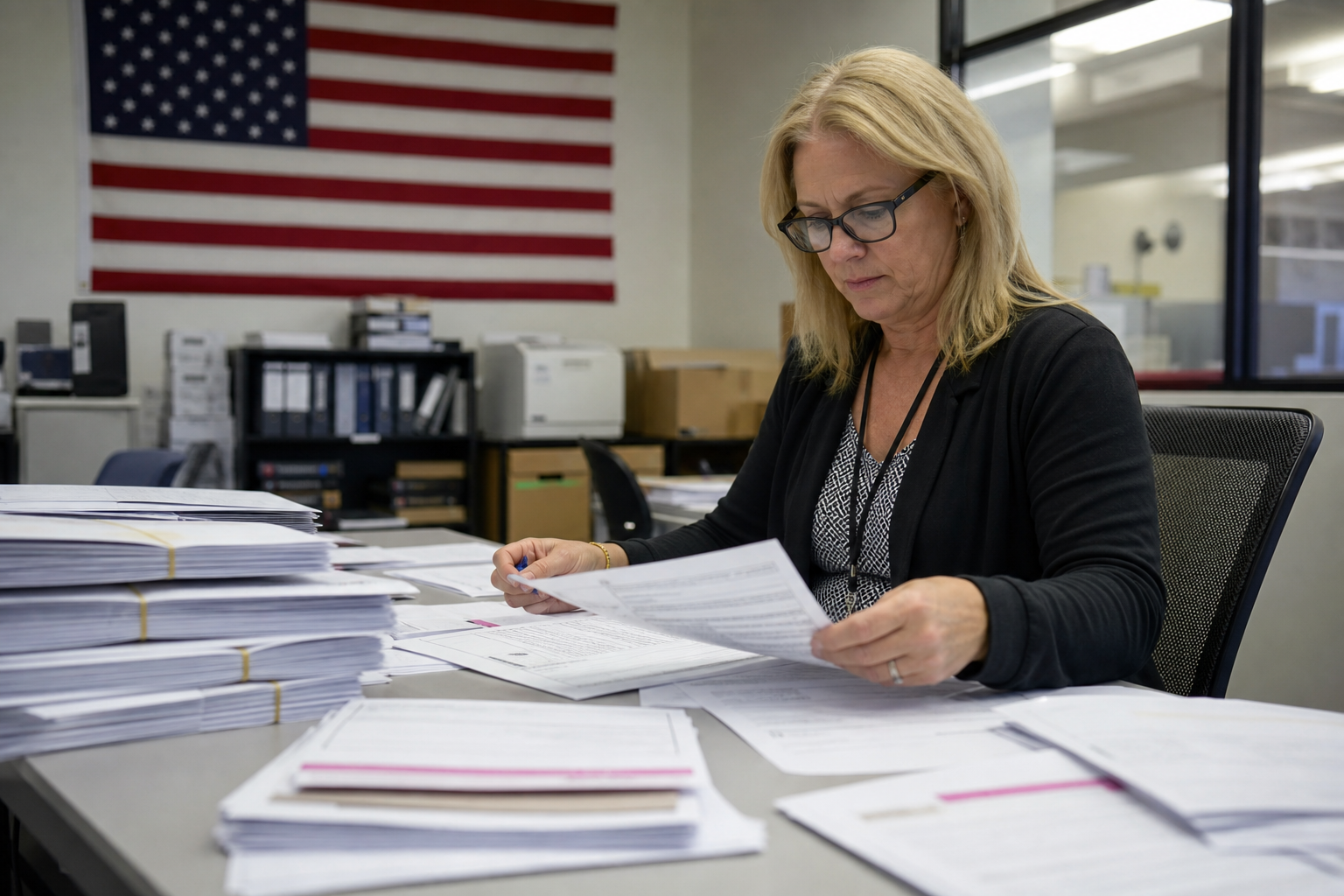
Evidence of suspected voter fraud has now been referred for prosecution in eight states, with reported allegations that include noncitizen registration, double voting, and unlawful ballot activity. That fact matters on its own. It matters even more because it cuts through one of the lazier habits in election coverage: pretending the only choices are panic or denial.
You do not need to claim every election is stolen to say the obvious. Illegal votes are illegal votes. Ineligible registrations are ineligible registrations. Double votes are double votes. And if cases are serious enough to be referred for prosecution, then the system caught a problem late that should have been stopped early.
What these referrals do and do not prove
A referral is not a conviction. It is the handoff from election administration or an investigative body to prosecutors for possible criminal charges. That distinction matters. Responsible coverage should keep it.
But the distinction cuts both ways. A pending case is not proof of a vast conspiracy. It is also not nothing. Too much of the political class treats election violations as meaningful only if they are large enough to change a statewide result on their own. That is the wrong standard.
The real standard is simpler than that. Did an ineligible person get onto the rolls. Did someone cast more than one ballot. Did the safeguards fail until after the election. If the answer is yes, you have an election integrity problem whether the margin was 500, 5,000, or 50,000.
The public understands this better than many officials do. You lock your front door even if your neighborhood is mostly safe. You reconcile your bank statement even if most transactions are legitimate. Elections should be run by that same adult standard.
Noncitizen registration is not a messaging problem
One category reportedly involved in these referrals is noncitizen registration. That issue is often discussed as if concern about it were merely rhetorical. It is not rhetorical if names are being referred for prosecution.
Federal law bars noncitizens from voting in federal elections. States manage the registration process, maintain voter rolls, and verify eligibility using the tools available to them. The weak point is obvious. If registration systems rely too heavily on self-attestation, delayed data matching, or incomplete list maintenance, the burden shifts from prevention to cleanup.
Cleanup is where confidence goes to die.
Officials who want public trust should want fewer opportunities for post-election discovery, not more. That means accurate citizenship verification where the law allows it, tighter list maintenance, and routine audits that happen before ballots are cast.
This is not anti-voter. It is pro-voter. Legal voters are the people harmed when ineligible names sit on the rolls and unlawful ballots enter the count.
Double voting is a systems failure first
Double voting allegations carry the same lesson. However rare or common a given official claims the conduct to be, each case points to a failure in interstate coordination, ballot tracking, or timely record reconciliation.
Americans move. Snowbirds split time between states. College students vote away from home. Military and overseas voters use special processes. Those realities do not excuse duplicate voting. They do explain why weak data-sharing and delayed cross-checking create openings that should not exist.
The policy implication is plain. States need cleaner and faster methods to identify duplicate participation across jurisdictions without compromising lawful voters. If a person votes in one state and then appears to vote in another, that should trigger a rapid review, not a years-late press release.
Again, the number matters less than the lesson. One double vote is one too many because each one tells you the controls were not strong enough at the moment they were needed.
Trust is not a substitute for verification
The deepest problem here is cultural, not technical. Too many election officials still act as if public skepticism is the disease rather than the response to poor transparency. It is the same mistake over and over. Decline to verify in public. Decline to publish enough detail for outside review. Then scold voters for asking basic questions.
That does not work anymore.
If there are prosecution referrals in eight states, the answer is not to wave them away because they may involve small numbers. The answer is to explain, in detail, how the cases were found, what controls failed, and what will change before the next election cycle.
Show the process. Show the audit trail. Show how the rolls are cleaned. Show how duplicate records are flagged. Show what county officials do when documentary conflicts appear in a registration file. If a losing side cannot verify its own loss, the institution has left work undone.
Policy fixes are not complicated
Most of the reforms conservatives have pushed for years are procedural, not exotic.
- Require proof of eligibility where state and federal law permit it. A registration system should verify, not merely request honesty.
- Improve voter roll maintenance. Dead records, duplicate records, and outdated addresses are invitations to trouble.
- Strengthen interstate data sharing. States should know sooner, not later, when a voter appears to have cast ballots in more than one jurisdiction.
- Use routine audits and public reconciliation. Confidence rises when citizens can inspect the numbers, not just hear assurances about them.
- Enforce the law consistently. Referrals that go nowhere teach the worst lesson of all.
None of that prevents legal voting. None of that suppresses a lawful citizen. What it does is tell every honest voter that the state takes his ballot seriously enough to protect it from dilution.
The political class keeps learning the wrong lesson
There is a familiar dodge in both parties, though more often on the institutional left and among timid Republicans. If evidence of fraud does not prove a nationwide scheme, they say the issue is overblown. That is not analysis. That is evasion.
Aviation does not ignore near misses because most planes land safely. Banks do not dismiss unauthorized withdrawals because most accounts balance at the end of the month. Election administration should not shrug at unlawful registrations or duplicate ballots because the total may be limited.
The point of an integrity system is to make violations hard, detection fast, and prosecution credible.
Conservatives should be careful here as well. The case for tighter election law gets stronger when it stays factual. Name the conduct. Name the weakness. Name the fix. Do not outrun the evidence. You do not need theatrical language when the referral itself tells the story.
What voters should demand next
Voters in every state should ask a short list of questions.
- How were these suspected violations discovered?
- How long after registration or voting were they discovered?
- What databases or verification steps failed to catch them earlier?
- What changes are in place before the next election, not after it?
- Will prosecutors publicly report charging decisions and outcomes?
Those are not partisan questions. They are citizen questions.
The referrals in eight states do not settle every argument about election integrity. They do settle one point. The problem is real enough to generate criminal referrals across multiple jurisdictions. Real enough for prosecutors. Real enough for reform.
And that leaves elected officials with a choice. Tighten the rules, verify eligibility, clean the rolls, and publish the evidence chain in a way the public can inspect. Or keep insisting the system is fine while another batch of cases arrives after ballots have already been cast.
Mark the next legislative session in your state. That is when the excuses will be offered. It is also when the fixes should be demanded.
