
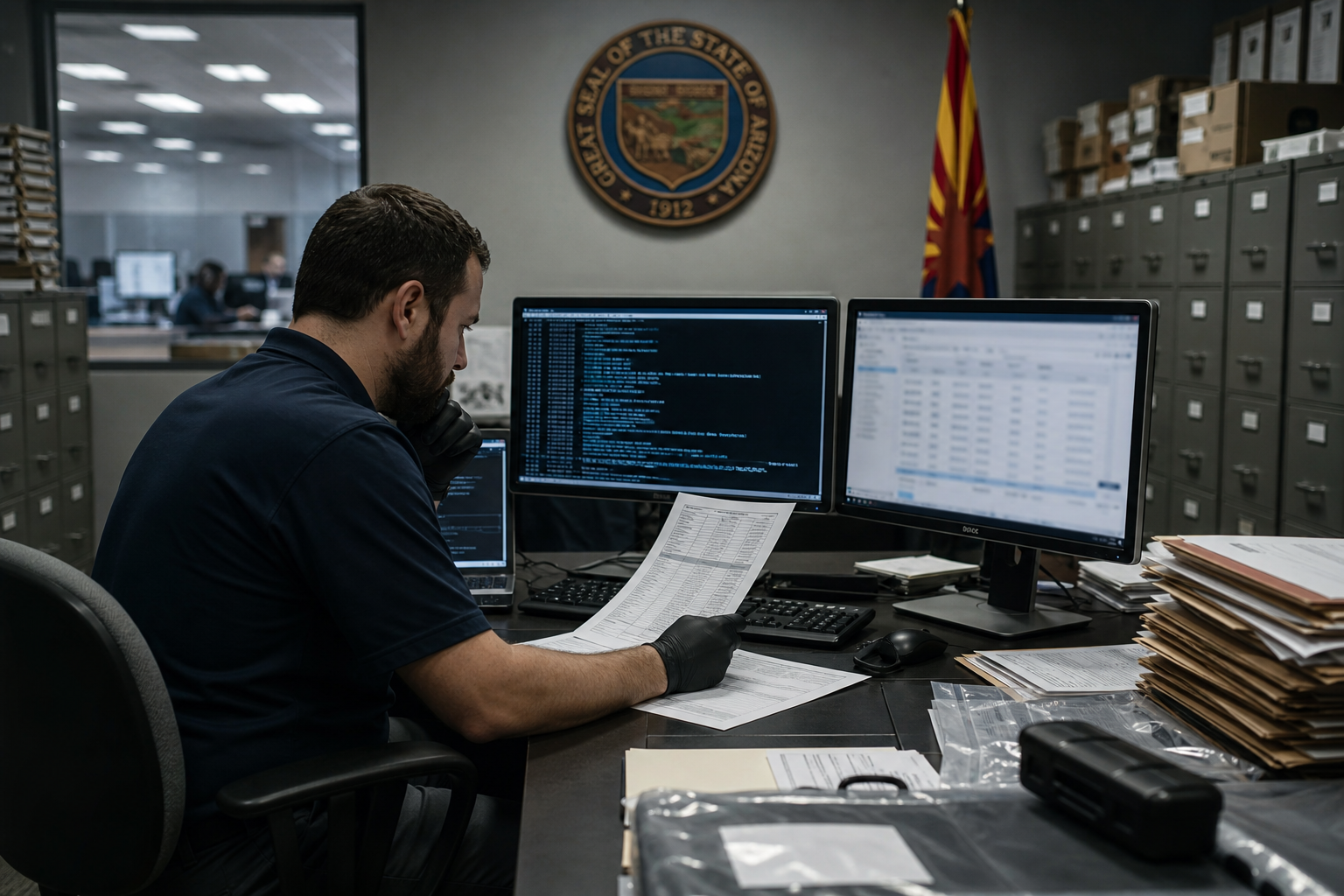
Arizona voters were told for years that confidence in elections depends on trusting the professionals. That line gets harder to sell when newly declassified documents show that roughly 600,000 voter files were hacked before the 2020 election and no meaningful prosecution followed.
Start with the number. Six hundred thousand. Not 600. Not 6,000. Six hundred thousand voter files. In a state where statewide races are routinely decided by narrow margins, that is not a minor technical event. That is a major failure of public stewardship.
The first point matters. A breach of voter data is not the same thing as proof that votes were changed. Those are different claims, and conservatives do ourselves no favors by blurring them. But the second point matters just as much: when election-related systems are penetrated at that scale, the public has every right to demand names, timelines, remedial action, and criminal accountability where warranted.
What a Voter File Breach Means
Voter files typically contain identifying information used for registration, verification, outreach, and list maintenance. The exact fields involved matter. Were Social Security numbers exposed? Driver license information? Voting history? Internal administrative notes? The public should not have to guess.
That is the pattern in election administration too often. Officials disclose just enough to say they disclosed something. Then they retreat into process language. The process, you will notice, is always available. The person responsible is harder to locate.
If 600,000 files were compromised before a presidential election, the obvious questions are plain:
Who knew, and when did they know it?
Which agency or county office maintained the affected system?
What information was taken?
What security failures made the breach possible?
What referrals were made to state or federal law enforcement?
Why did prosecutors decline action, if they did?
Those are not fringe questions. Those are the minimum questions of self-government.
The Prosecutor Problem
The most damaging part of this story may not be the hack itself. Systems get attacked. That is the world we live in. The more revealing scandal is what happened after.
If prosecutors had evidence sufficient to charge, the public deserves to know why no case moved. If prosecutors lacked the evidence, the public deserves to know why the investigative trail was so weak in a matter involving election infrastructure and hundreds of thousands of records. Either way, somebody owes Arizona a real explanation.
Too often in this state, election transparency is treated as an emotional issue to be managed rather than a public duty to be fulfilled. You saw that after 2020 in Maricopa County, and you still see it in the instinct to dismiss basic questions as dangerous. That is backward. Secrecy breeds suspicion. Specificity lowers the temperature.
Post the incident timeline. Post the scope of the data exposed. Post the interagency communications, redacted only where truly necessary. Post the declination rationale if prosecutors refused the case. Do that, and voters can evaluate the facts. Refuse to do it, and officials are asking the public for one more installment of blind trust.
Why This Matters Beyond 2020
Some readers will ask a familiar question: if the breach happened before 2020, why does it matter now?
Because the institutions that failed then are often the same institutions asking for more authority now.
Election administration depends on chain of custody, database integrity, audit trails, and public confidence. Not confidence as a slogan. Confidence as a system that can be checked. If a major voter database was compromised and the response was bureaucratic shrugging, that is not ancient history. That is a present warning.
Arizona remains a national target in every election cycle. The state is close, polarized, and administratively fragmented across counties. That means cyber vulnerabilities are not abstract. They are part of the operating environment. A serious government would treat a six-figure voter-file breach as a standing lesson, not an old embarrassment to be buried in a records release.
And yes, there is a political angle. Republicans have spent years arguing that election systems must be transparent enough that the losing side can verify its own loss. That principle applies here too. If the state cannot explain how 600,000 files were compromised and why nobody was meaningfully punished, then the state is teaching voters the wrong lesson: that procedure is for the public, but immunity is for the institution.
Transparency Is Not Optional
There is a reason this story lands hard in Arizona. Voters here have lived through years of half-answers on ballot printer failures, signature verification standards, chain-of-custody disputes, and late-document dumps. Every unresolved episode becomes part of a larger credibility deficit.
Officials will say the system worked. They always say the system worked. But if a system permits a breach affecting 600,000 files and then produces no visible accountability, what exactly worked? The press conference? The memo? The talking points?
Election systems do not have to be perfect. They do have to be auditable. They do have to be competently secured. And when they fail, the response has to be public enough that an ordinary voter can follow it without hiring a lawyer or filing three public-records requests.
What Arizona Should Do Now
The policy response here is not complicated.
Release a full public timeline of the breach, discovery, containment, and notification process.
Identify the exact categories of voter data that were accessed or exfiltrated.
Publish the investigative findings and prosecutorial declination decisions, with narrow redactions only where legally required.
Require independent cybersecurity audits of voter registration systems and county election databases.
Mandate prompt written notice to affected voters when election-related personal data is compromised.
Hold legislative hearings with sworn testimony from the relevant officials, not staff summaries and prepared statements.
None of that is radical. It is what accountable government looks like.
I have said this before about election procedure in Arizona. If the public cannot check it, the public will doubt it. That is not irrational. That is a normal response to a government that asks for trust while withholding detail.
Six hundred thousand files. Keep the number in front of you. Six hundred thousand.
If that many records tied to Arizona voters were compromised before the 2020 election, and prosecutors still produced nothing the public can examine, then the issue is bigger than one hack. The issue is whether election administration in this state is built to protect voters or to protect agencies from embarrassment.
Lawmakers should not let this disappear into one more archive box in Phoenix. Put it in a hearing room. Put people under oath. Put the documents online. Then let the public see whether the state took a breach of 600,000 voter files seriously. Right now, it does not look that way.
