
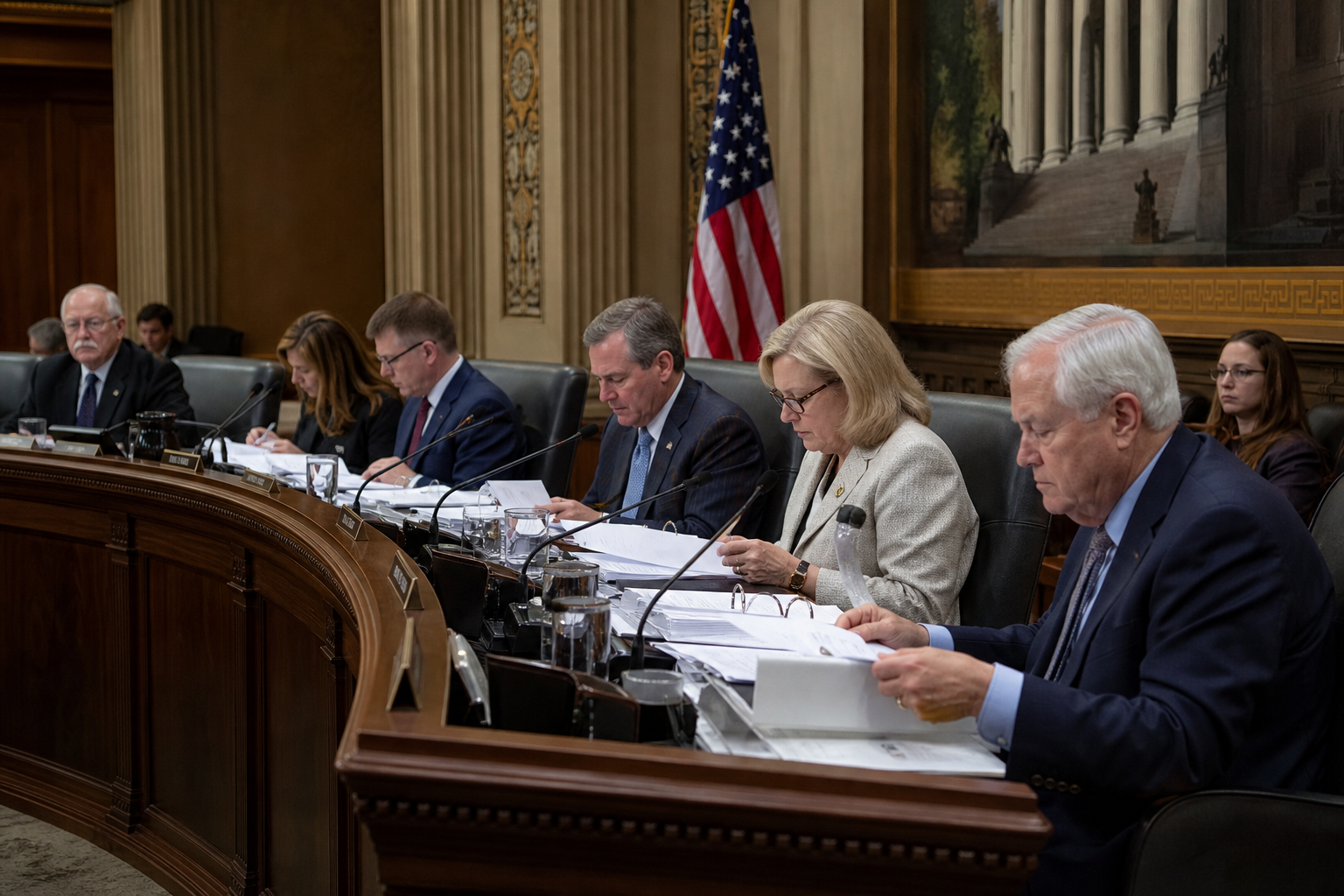
State legislatures are once again moving on a familiar issue with a blunt name: American Laws for American Courts.
The idea is simple enough for any voter to understand. If a foreign law, ruling, or legal code would violate the U.S. Constitution or a state constitution, a court here should not enforce it. That is the pitch. And in a political climate where sovereignty is back at the center of public debate, the pitch lands.
This is not a new fight. Versions of these bills have circulated in statehouses for years, often backed by conservative legal activists who argue that American courts should never be a back door for legal norms that do not recognize free speech, equal protection, due process, or religious liberty as this country understands them.
The issue keeps returning because the larger argument keeps returning. Who governs here. On what terms. And under whose law.
What these bills are designed to do
Most of these proposals do not ban courts from looking at a contract signed overseas or recognizing a foreign judgment in every circumstance. Courts already deal with international business disputes, foreign marriages, adoptions, and cross-border custody matters. That is ordinary legal work.
The bills instead aim at a narrower point. They typically say a state court may not enforce a foreign law or foreign legal decision if doing so would deny a party rights guaranteed under the U.S. Constitution or the state constitution.
That matters because courts sometimes face cases involving:
contracts that select a foreign country’s law to govern a dispute,
family law orders issued overseas,
arbitration agreements that may point to non-U.S. legal standards,
civil judgments from foreign courts that one side wants enforced here.
Supporters say the principle should be stated plainly in statute, not left to assumption. They argue that a right is only secure when the law says so in black and white.
That is not an irrational position. Courts matter most in edge cases. Nobody notices the guardrail until the truck hits it.
Why conservatives keep backing them
For many conservatives, this is a sovereignty bill before it is anything else.
The American system rests on a basic premise: legislatures write the law, voters can replace the legislators, and constitutional guarantees place hard limits on what government may do. Foreign legal systems are not accountable to American voters. Their judges do not answer to your state constitution. Their legislatures do not answer to your sheriff, your county recorder, or your ballot.
That should not be controversial.
Supporters also see these bills as part of a broader response to elite drift. For years, the public has watched institutions blur lines that used to be obvious: citizen and noncitizen, local control and federal command, statutory text and agency improvisation. So when lawmakers say American courts should apply American constitutional standards first, voters hear a larger point. They hear a government being told to remember where it is.
And yes, many of these campaigns have also been driven by concern over Islamic law, especially in family and arbitration disputes. Backers of the bills often deny they are targeting any one religion. They say the statutes apply to any foreign legal system, period.
That is the safer and smarter way to write them. A bill framed around constitutional rights and neutral legal standards stands on firmer ground than one framed around fear of a specific faith tradition.
The legal question critics raise
Critics answer with a fair question. Is this fixing a real gap in the law, or writing a press release into statute?
American courts already have doctrines that limit enforcement of foreign law and foreign judgments. Judges generally do not enforce agreements or rulings that violate a state’s public policy. Constitutional protections already constrain what state courts may do. In plain English, a court is not free to toss out due process because a contract signed in another country says otherwise.
That is the central critique. The problem, critics say, is mostly hypothetical.
Sometimes that critique is right. Legislatures do pass declaratory bills. They state principles already embedded in existing law. But that does not automatically make a bill useless. Statutes can clarify the rule for lower courts, litigants, and state agencies. They can reduce ambiguity before a bad case arrives instead of after.
The real test is in the drafting.
If the language is precise, tied to actual constitutional conflicts, and careful not to disrupt routine international commerce, then the bill can function as a legitimate safeguard. If the language is sloppy, expansive, or designed mainly to create symbolic conflict, it invites litigation without adding much protection.
The drafting matters more than the slogan
This is where state lawmakers usually separate the serious work from the bumper sticker.
A well-drafted bill should answer a few obvious questions.
Does it define what counts as a foreign law or foreign legal code?
Does it limit the prohibition to cases where a constitutional right would actually be impaired?
Does it preserve ordinary enforcement of international business agreements when no protected right is at stake?
Does it avoid singling out a religion in a way that creates needless constitutional trouble of its own?
If the answer to those questions is no, the bill is not ready. Legislators should not pass vague language and let judges clean it up later. That is how statehouses create confusion and then blame the courts for reading the text they wrote.
You see that pattern often enough.
Why this issue is back now
The return of these bills fits the moment.
Immigration, border control, national identity, campus unrest, transnational activism, and declining trust in institutions have all pushed sovereignty questions back into daylight. Voters are less patient than they were a decade ago with legal abstractions that seem to weaken self-government. They want bright lines. They want domestic law enforced by domestic institutions under rules they can read.
In that climate, a bill saying foreign legal systems do not override constitutional rights is politically durable.
It also lets Republican lawmakers speak to a real conservative concern without adding a major spending line to the budget. That fact should not be ignored. In many state capitals, symbolic legislation flourishes when appropriators run out of courage.
Still, this issue is not merely symbolic. Courts are where sovereignty becomes practical. If you can be compelled in an American courtroom under standards that deny rights your constitution protects, then self-government has already been diluted. The courtroom is where theory cashes out.
The bottom line for state legislatures
State legislatures are on solid ground when they insist that no foreign legal rule may be enforced in a way that strips Americans of constitutional protections. That is not xenophobia. It is constitutional housekeeping.
But they should also be honest. These bills are strongest as guardrails, not as panic buttons. The legal system already contains some protection. The case for new legislation is clearest when lawmakers can show exactly where a statute would sharpen, not duplicate, existing law.
That means committee members should do the work. Name the relevant sections. Ask whether current public-policy exceptions are enough. Ask family law judges, contract lawyers, and constitutional litigators where the weak spots are. Then write the bill to those weak spots.
Not broader. Not sloppier. Not louder.
The conservative case here is straightforward. American courts exist to vindicate American rights under American constitutions. If a foreign legal claim collides with that, the foreign claim loses. It should lose clearly. It should lose predictably. And legislators should be competent enough to say so in plain text.
That is the standard. Watch the markup. Read the definitions. The slogan is easy. The statute is the part that counts.
