
The Technology Is Here. The Law Is Not.
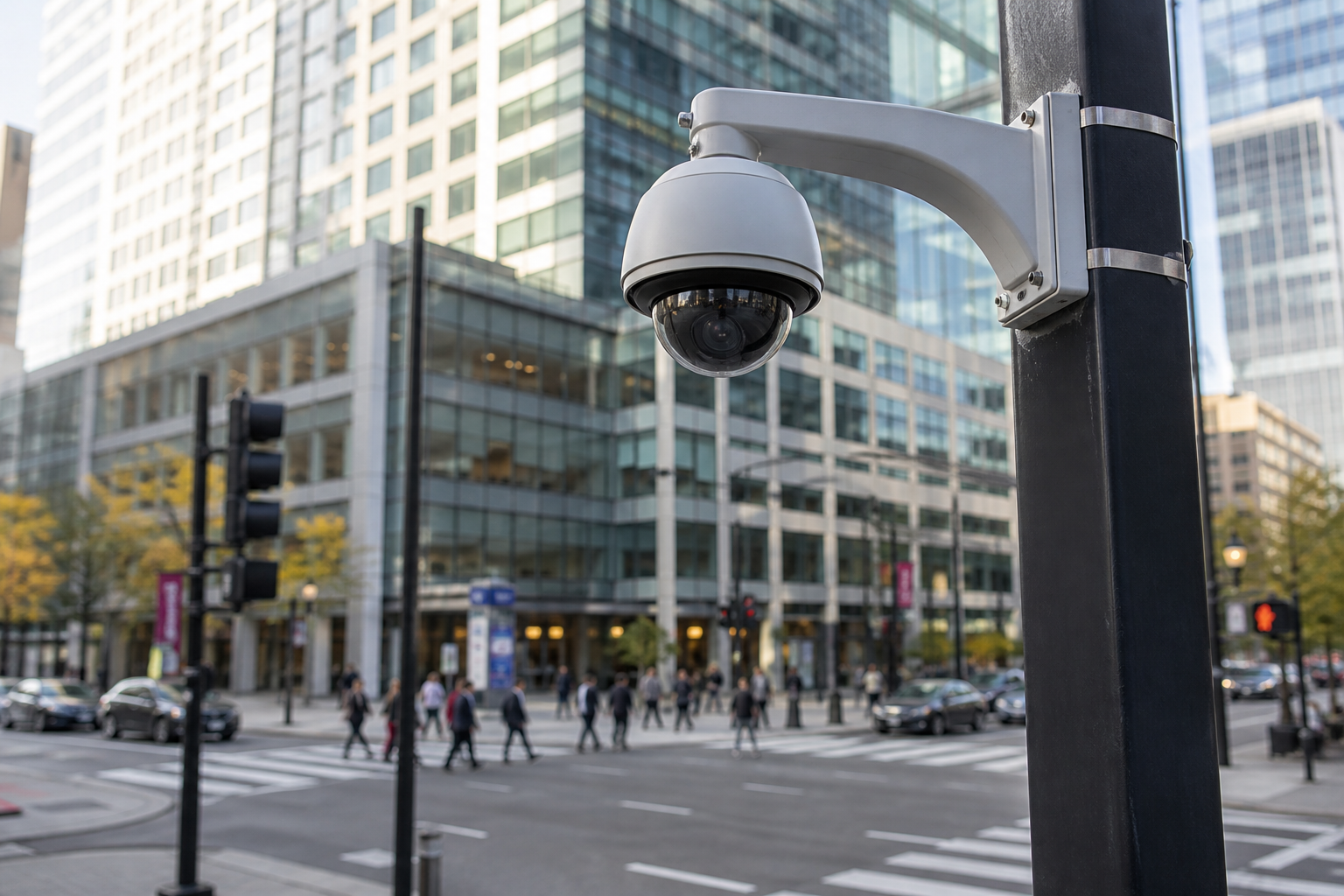
Cities across Arizona and the nation are installing AI-powered cameras that identify faces, track vehicles, and flag behavior in real time. Police departments are using them to solve crimes faster. City councils are approving them to deter theft and vandalism. Nobody argues the technology works.
The problem is none of it is illegal yet.
How AI Surveillance Actually Works on the Street
These systems do more than record video. They scan faces against databases. They track a person's movement across multiple cameras. They send alerts when a vehicle matches a description or when someone walks in a pattern a computer decides is suspicious. In some cases, they retain footage indefinitely and analyze it retroactively, turning every public street into a searchable archive of who went where and when.
A police officer making an arrest can run facial recognition against mugshot databases. That is law enforcement. A camera running facial recognition on every person who walks through a downtown corridor and flagging matches in real time—that starts to look different.
The Constitutional Question Nobody Has Settled
The Fourth Amendment protects against unreasonable searches. For 200 years, the courts have been working out what that means. A traffic stop requires reasonable suspicion. A search of your home requires a warrant. A wiretap requires a judge's approval.
But what about a camera that watches your face every time you leave your house?
The Supreme Court has never ruled on mass AI surveillance. Lower courts are split. Some judges say identifying someone in public doesn't violate the Fourth Amendment because you have no reasonable expectation of privacy when you walk down a street. Others say that constant, documented tracking is different from occasional observation by a human officer. The difference matters.
If an AI system can place you at a protest, a courthouse, a clinic, or a specific church every time you visit, does that surveillance require a warrant? Should it? Right now, depending on your jurisdiction and the department's policy, the answer is: maybe not.
Arizona's Position in the Broader Debate
Arizona law enforcement agencies have deployed facial recognition and license plate readers. The Arizona Department of Public Safety uses facial recognition. Maricopa County Sheriff's Office and Phoenix Police Department both have access to these systems. State law does not require a warrant before running a search. It does not require documented probable cause. It does not mandate that you be notified if your face was in a database used to investigate you.
This is not a hypothetical. A person's image can be scanned, flagged, stored, and matched to other imagery without a warrant, without their knowledge, and without a judge's approval anywhere in that chain.
Why Conservatives Should Care About This
Conservatives correctly worry about government power. We argue that checks on executive authority matter. We say that Congress, not bureaucrats, should make the rules. We defend the Bill of Rights against intrusion.
AI surveillance is a test of those principles.
If you believe the Constitution limits government—that there are things government cannot do no matter how convenient—then mass surveillance should concern you. Not because surveillance is always wrong. Police tracking a specific suspect with probable cause and a warrant is legitimate. But police scanning every face at a shopping center to find that suspect is different. The second one treats the constitutional requirement for particularized suspicion as optional.
The boundary between security and surveillance is not a policy question. It is a constitutional one. Once that line moves, it does not move back.
What Needs to Happen
Arizona should require a warrant before using AI surveillance systems to identify someone. That is not radical. It matches the Fourth Amendment. It does not prevent police from using the technology. It requires them to show probable cause to a judge first, the way the Constitution demands.
Arizona should require agencies to disclose when facial recognition or AI surveillance was used in an investigation. A person has a right to confront the evidence against them. If an AI system identified you, you deserve to know that and to question its accuracy. Right now, you might never find out.
Arizona should mandate retention policies. Footage should not be stored indefinitely. Databases should be purged on a schedule. The longer data persists, the more it becomes a permanent record of your movements, your associations, and your private choices.
And Arizona should pass these rules before federal courts force them. Because if states do not establish clear constitutional limits on AI surveillance, the courts eventually will, and the standard they set might be stronger than you want.
The Vote You Should Ask About
When your state legislator runs for reelection, ask them whether they support a warrant requirement for AI facial recognition. Write down the answer. Because that vote will tell you whether they take the Fourth Amendment seriously or whether they think government convenience matters more than constitutional limits.
Your image belongs to you. The government needs a reason before it searches for you. That was the deal. Do not let anyone convince you it has changed.
