
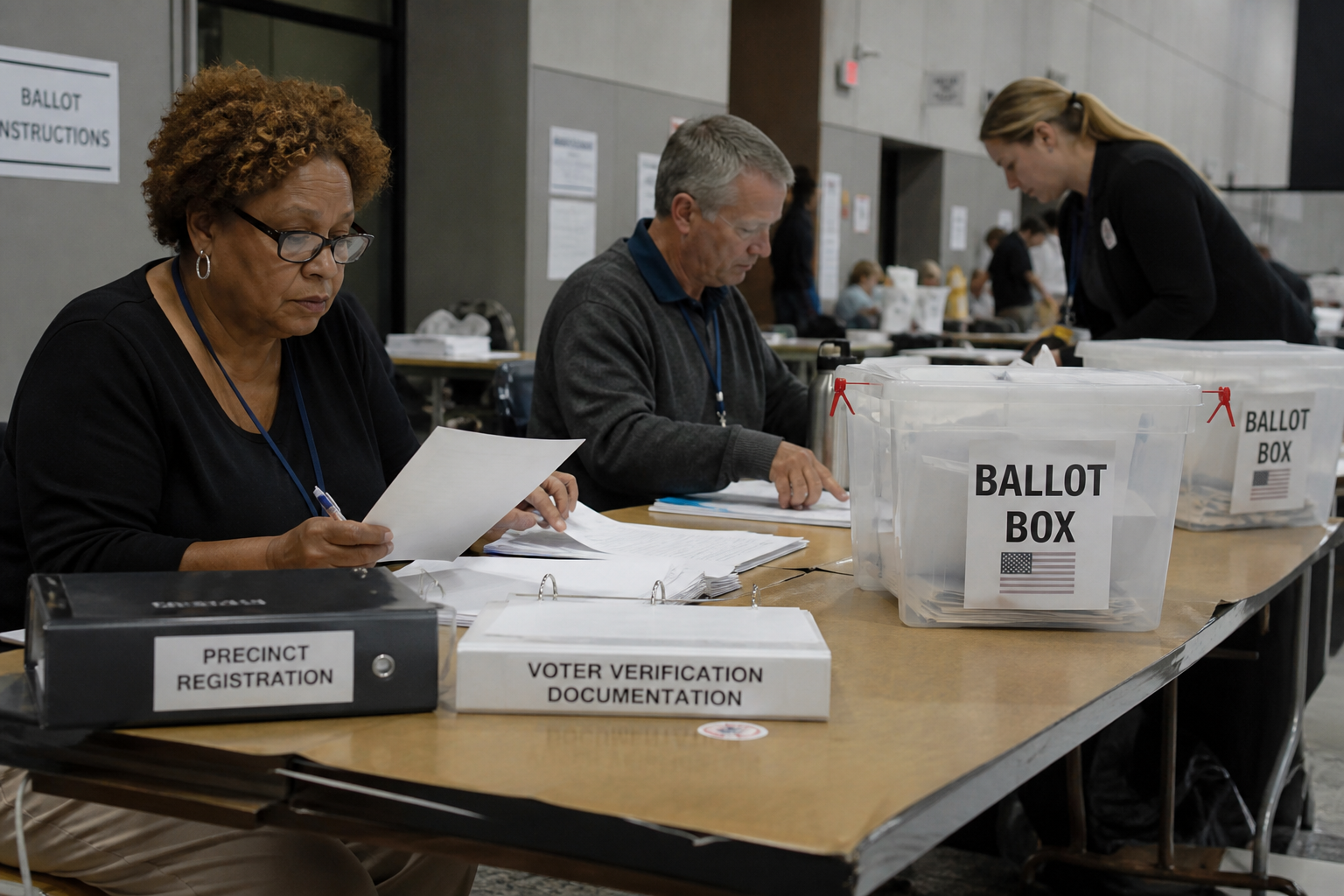
A System That Cannot Say No
The Maricopa County Recorder's office recently disclosed that the county's voter registration database lacks the technical capacity to cross-check applicant records against Arizona's felon registry. This is not a minor administrative gap. This is a foundational failure in how a system determines who gets to cast a ballot.
In Arizona, individuals convicted of a felony lose voting rights until restoration is granted. The law is clear. The procedure for enforcing it is not. Maricopa County—which encompasses Phoenix and contains roughly 60 percent of the state's registered voters—cannot automatically prevent a person with an active felony conviction from registering to vote. The system requires manual intervention. Manual processes fail.
What the System Does Now
Currently, Maricopa County staff manually cross-reference voter registration applications against available conviction records. The process depends on county employees flagging applications, researching histories, and determining eligibility before a ballot is issued. When the workload spikes—during election season, during surge registration periods—the manual review becomes a bottleneck. Applications slip through.
The Recorder's office has acknowledged the limitation and indicated that a technical solution is needed. But acknowledgment is not the same as correction. The gap remains. Every election cycle, the risk repeats.
Why This Matters Beyond the Margin
Election integrity exists on two levels. The first is outcome—whether the reported winner actually received the most votes. The second is legitimacy—whether voters believe the system excluded ineligible ballots and counted eligible ones fairly.
A system that cannot reliably screen for felony ineligibility damages both. If one ineligible vote is cast, the margin in a close race is theoretically affected. More importantly, if the system cannot demonstrate that it caught ineligible voters, the losing side has legitimate grounds for skepticism. You cannot restore confidence in a result by insisting people trust the process. You restore it by showing them the process works.
The Broader Arizona Context
This is not Maricopa County's only eligibility screening challenge. The county has also struggled with citizenship verification in voter registration. Arizona law requires applicants to provide either a driver's license number, last four digits of a Social Security number, or tribal ID to establish citizenship. The verification is paper-based in many cases. It depends on staff cross-referencing applications against motor vehicle records and Social Security Administration databases—systems outside the county's direct control.
Each vulnerability compounds. A registration system that cannot screen for felonies, combined with citizenship verification delays, combined with signature verification standards that vary between precincts, creates a chain where errors accumulate and accountability disperses.
What Needs to Happen
Arizona's Secretary of State should mandate that every county implement automated cross-checking of voter registration applications against the state's felony conviction database. The technology exists. The legal framework exists. What has been missing is the directive and the funding to implement it consistently across all fifteen counties.
Maricopa County should be required to complete this integration before the next election cycle. The process should be transparent: applicants denied registration on felony grounds should receive written notice citing the specific conviction and restoration status. That record should be public and auditable.
The Recorder's office should also publish, quarterly, the number of applications flagged for felony ineligibility, the number verified as ineligible, and the number ultimately rejected. These are not sensitive data. They are the metrics that prove the system is doing its job.
The Trust Question
You have heard this before in Arizona election debates. The argument always returns to the same place: systems can be improved, but they require resources and time, and meanwhile you should trust that the process is working well enough.
That argument does not work anymore. It may never have worked. A voting system is not like a restaurant where a few health code violations are acceptable as long as most meals are served safely. Ballot eligibility is binary. Either a person is eligible or they are not. Either a system can verify it or it cannot.
Maricopa County cannot verify felon ineligibility in real time. The county acknowledged this. Now the question is whether state leadership forces the fix before the next election or waits until a close race raises the issue publicly.
If you are a precinct committeeman in Maricopa County, you should ask your Recorder's office and your Supervisor's office when the felony cross-check automation will be operational. Get the date in writing. If the answer is vague, escalate to your state legislator. Elections are six months away. If your county cannot answer the question by February, you know the system will not be ready when votes are cast.
