
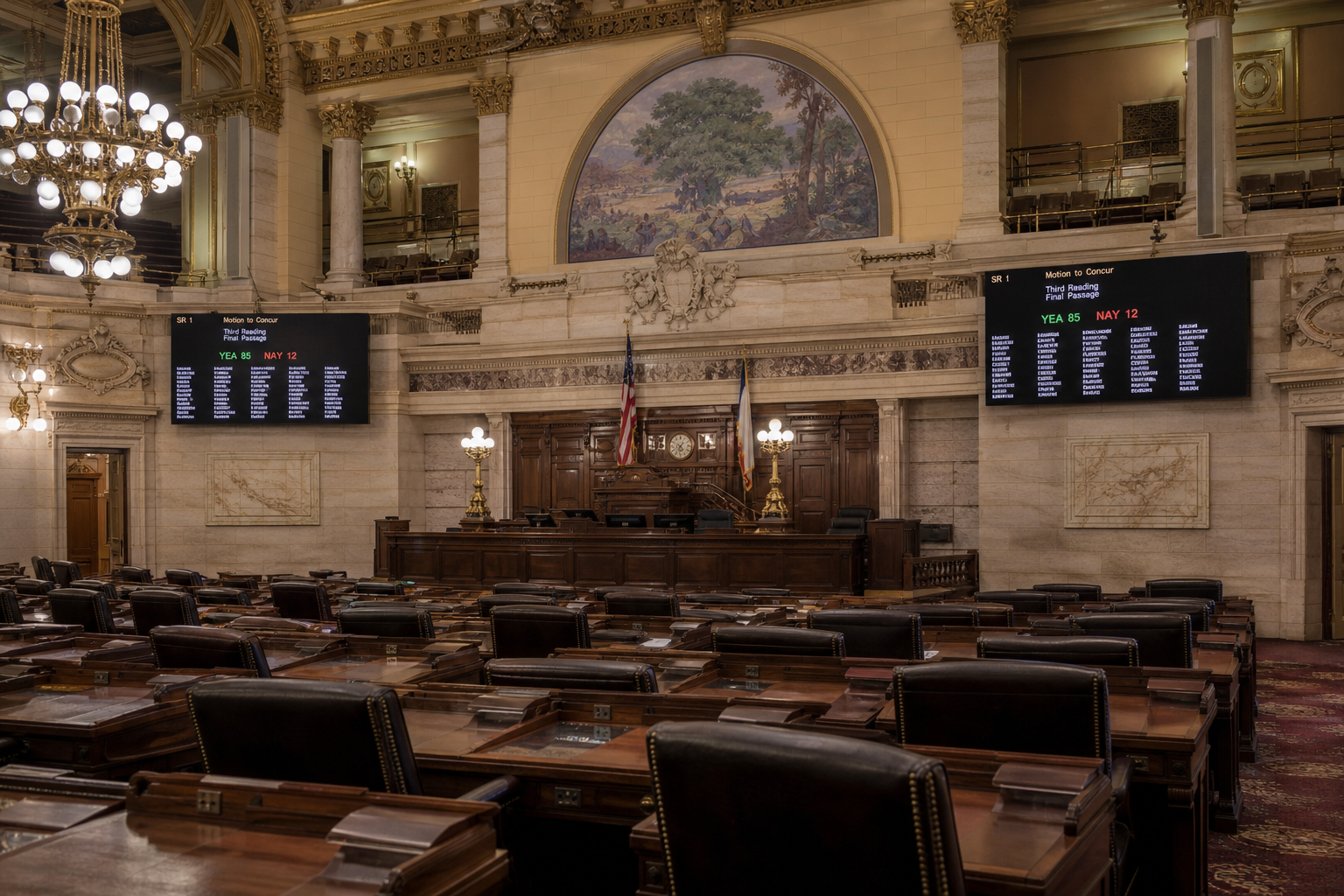
The Electoral College Face New Pressure From State Legislatures
When you lose power in a state capitol, you start thinking about how to change the rules so you don't lose it again. That is not cynicism. That is politics. And right now, the Electoral College—that constitutional structure designed to preserve federalism in presidential elections—is facing pressure from states that see an opportunity to reshape it.
The National Popular Vote Interstate Compact has been the main vehicle for this effort. The compact works like this: states agree to award their electoral votes to the winner of the national popular vote, but only once states totaling 270 electoral votes have signed on. Right now, the compact has 209 electoral votes committed. That is roughly 77 percent of what is needed. For years, this was a liberal project. Democratic-controlled states wanted to bypass the Electoral College because it had cost them the presidency twice in the last twenty years.
But the pressure is shifting. And it is coming from places you would not expect.
The Conservative Case Against the Electoral College Is Gaining Ground
Republican-controlled legislatures in some states are now making a different argument: the Electoral College gives too much power to a handful of swing states, and their own voters are being ignored. If you live in Texas or California or Arizona, your presidential vote does not matter much in the current system. The game is played in Pennsylvania, Michigan, Wisconsin. Those three states have roughly fifty million people combined. But their status as toss-ups in a polarized electorate means they consume 90 percent of campaign attention and resources.
This is not new thinking. But it is finding new advocates in state legislatures that have solid Republican control and believe they will keep it. If a state can lock in its electoral votes through the compact, that state gains leverage in a way the Electoral College does not currently allow.
Arizona has not joined the compact, though the conversation happens here every two years. You can see why the temptation exists. Arizona has become a swing state against its will. Twenty years ago, Arizona was reliably Republican. The state gave Republicans electoral votes almost automatically. Now every presidential campaign plants field offices in Phoenix and Tucson and treats Arizona as a toss-up. That is disruptive to state politics. It means national money and national media focus on races that should be about Arizona. Presidential candidates promise things to Arizona that they will never deliver, because Arizona mattered for one cycle.
Federalism and the Constitution Are Not the Same Thing
Here is where conservatives need to think carefully. The Electoral College is a federal design. It preserves state-level authority in the selection of the president. Each state gets electors equal to its congressional representation. That design has a logic: it prevents a few high-population centers from dictating the presidency without regard to geography or the concerns of less-dense regions.
The National Popular Vote Interstate Compact does not eliminate that logic. It preserves it in a different form. States are still the unit of action. But instead of each state's electors being decided state-by-state, they all go to whoever won the national popular vote. The federalism question remains: who decides how votes are counted? States do. The compact simply changes what those state votes are for.
This matters because it means you cannot defend the Electoral College on federalism grounds and also defend the compact on federalism grounds. You have to pick one.
Conservatives should be cautious about the compact for three practical reasons, not theoretical ones.
First, the compact requires 270 electoral votes to take effect. That is a brittle threshold. If it reaches 269, it is dead weight. If it reaches 270, it suddenly becomes the entire system. There is no gradual transition. The night a state legislature votes to join and crosses the threshold, the Electoral College ceases to exist and nobody warned the voters that night was coming.
Second, the compact gives every state's electoral votes to the national popular vote winner. Arizona's votes would go to the national winner even if Arizonans voted the other way. That is not federalism. That is subordination. You have surrendered state authority to a national count you do not control and cannot verify at the state level.
Third—and this is the hard part to say—the states that have signed the compact so far are Democratic states. They signed it because they believed it would help Democrats. If 270 electoral votes are suddenly committed to the national popular vote winner and those votes come from blue states, Republicans should ask: how will Republican-controlled states being added to this compact change its utility to Democrats? The honest answer is: they will not. The compact does not hurt the party that selected most of the states in it.
What Arizona Voters Should Watch
Arizona has not joined the compact. The legislature has considered it. The public debate has been thin. Most Arizona voters do not know their state is part of an ongoing discussion about whether to give away its electoral votes to whatever the national popular vote delivers.
If you live in Arizona and you want to know whether your state is about to enter this compact, here is what to do: watch the House and Senate committees that handle federal and state affairs. The bill number will not be obvious from the title. When a legislator introduces the compact bill, it will have a bill number and an author. Demand your state representative and senator take a public position on it before the vote. Do not accept a quote from the press office. Ask them in person at a town hall or precinct meeting.
The Electoral College debate is legitimate. Swing state fatigue is real. But the solution ought to be debated in the open, with voters asked what they want, not imposed through a compact that most voters do not know exists.
That vote is coming to a legislature near you. Mark the date when you see it.
