
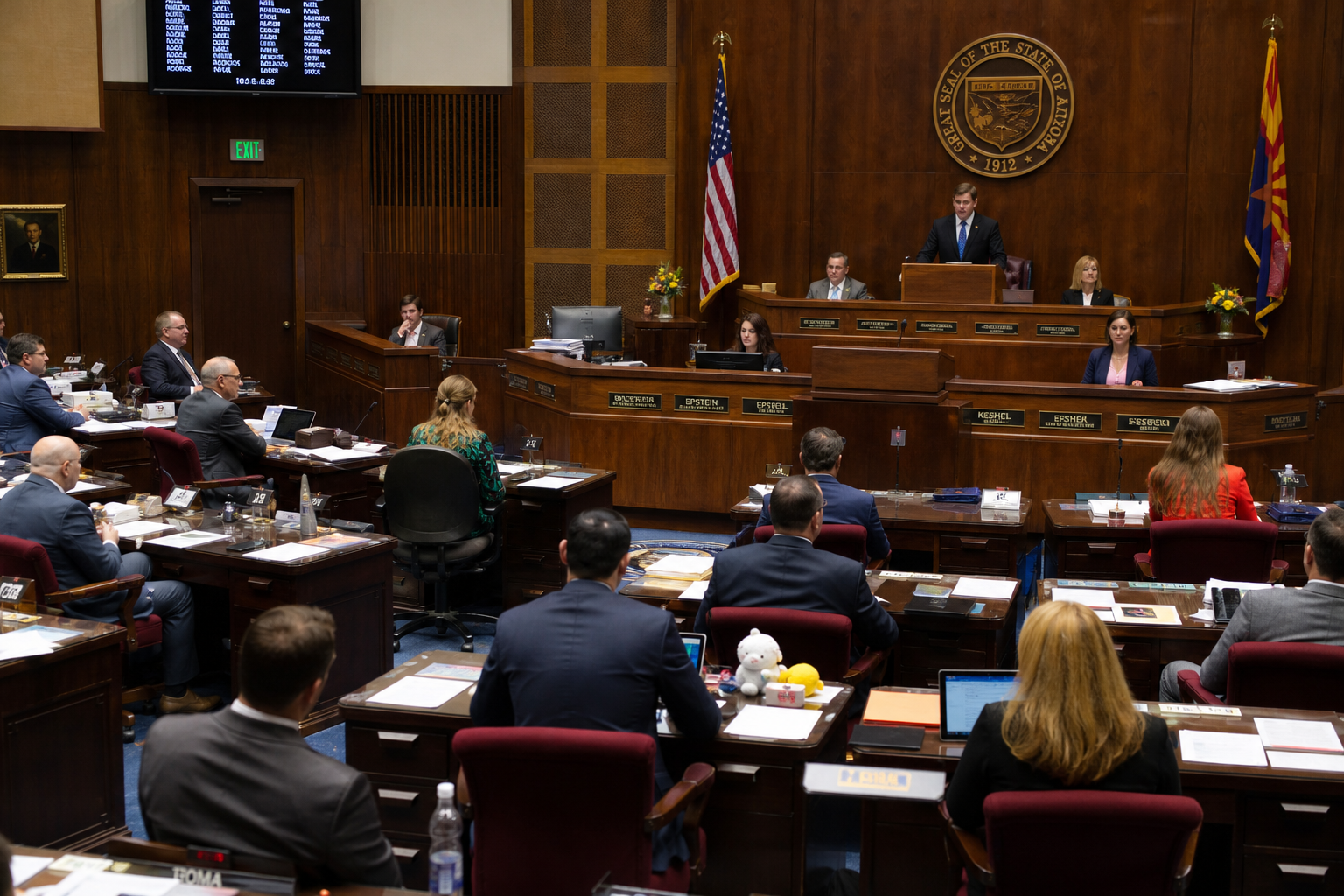
Arizona Takes Aim at Foreign Law in American Courts
A handful of state lawmakers are moving forward with legislation designed to prevent Arizona courts—and by extension, U.S. courts overall—from recognizing or enforcing the legal systems of foreign nations. The stated intent is straightforward: protect American judicial sovereignty and ensure that disputes involving Arizona citizens are resolved under American law, not under Sharia law, international commercial codes, or any other external legal framework.
This is not a novel concern. Similar bills have circulated in state legislatures across the country for over a decade. What makes the current Arizona effort worth following is the specificity of the language and the institutional mechanics that actually make a difference in how judges rule.
What the Bills Actually Do
The proposed legislation would prohibit Arizona courts from applying, enforcing, or recognizing the laws of a foreign nation if doing so would violate the Constitution or the laws of Arizona or the United States. The language is careful. It does not forbid the acknowledgment that foreign law exists. It does not prevent a court from understanding the legal background of a contract dispute or a family matter that may touch on foreign legal traditions. It says this: when it comes time to rule, the judgment must be grounded in American law.
That distinction matters because courts occasionally do encounter situations where foreign law is relevant. An inheritance dispute might involve property in another country. A commercial contract might have been executed under a foreign legal regime. A marriage might have been entered under religious law from outside the United States. The bill does not say ignore all of that. It says: when you rule, use the law of Arizona and the United States.
Why This Matters Beyond the Courtroom
The concern underpinning this legislation is rooted in constitutional theory and practical governance. The Constitution grants the federal judiciary authority to hear cases arising under federal law, and it grants state courts authority to administer state law. That is the arrangement. When a foreign legal system is applied in an American court, that arrangement is upended. A judge in Phoenix becomes, in effect, an administrator of a legal code that no Arizona voter approved, that no Arizona legislator wrote, and that the Arizona Constitution does not authorize.
Consider this from a voter's perspective. You live in Arizona. You own property in Arizona. You enter into a contract in Arizona. You expect that if a dispute reaches court, an Arizona judge applying Arizona law will decide the matter. If instead a judge applies Saudi law or the legal code of another nation because one party requested it and the judge agreed, you have lost a property right you thought you possessed: the right to have your affairs governed by the law you consented to live under.
This is why the concern crosses partisan lines to some extent. Conservatives see it as a matter of constitutional fidelity and judicial restraint. The court's job is to apply the law of the jurisdiction. Judges are not empowered to substitute foreign legal systems for domestic ones, no matter how they might view the comparative merits of either.
The Practical Objection
Proponents of these bills will tell you the need is real. They point to cases in Michigan, New York, and other jurisdictions where judges have applied Sharia law or other foreign legal principles in family law disputes, contract cases, and property matters. The National Center for Lesbian Rights and similar organizations have documented instances. The Council on American-Islamic Relations has pushed back against the characterization, arguing that such cases are rare and that the bills create a chilling effect on the legitimate accommodation of religious law in contexts where parties actually consent to it.
That tension is worth taking seriously. If two parties to a contract explicitly agree that their dispute will be governed by another nation's law or a religious legal code, should a court enforce that agreement? The bills carve out space for that—they do not forbid parties from contracting to be governed by foreign law, only forbid courts from applying such law in violation of American constitutional and statutory authority. The practical question becomes: at what point does honoring a party's choice of law cross the line into the court abdicating its duty to apply American law?
What Arizona Should Do
If your legislators bring this bill to a vote, read the language carefully. Ask them whether the bill requires the judge to follow the Constitution and Arizona law, or whether it creates exceptions for religious law or international commercial arrangements that might go unnoticed. Ask them whether courts already have the authority to do what this bill does, and if so, why the bill is necessary.
The answer to that last question is usually: because courts have done the opposite in other states, and Arizona wants to be on record that it does not. That is a legitimate legislative statement, even if the courts in Arizona have not strayed. It is a preventive measure.
Mark the bill number when it reaches committee. Watch the floor vote. See which Republicans and Democrats vote for it and which vote against it. That vote tells you something about how each legislator views the relationship between Arizona courts, Arizona law, and the constitutional order.
Your court system was built to serve you. When it starts serving foreign law instead, you have a right to know, and your elected representatives have a duty to stop it.
