
The Core Question: Whose Law Governs Here?
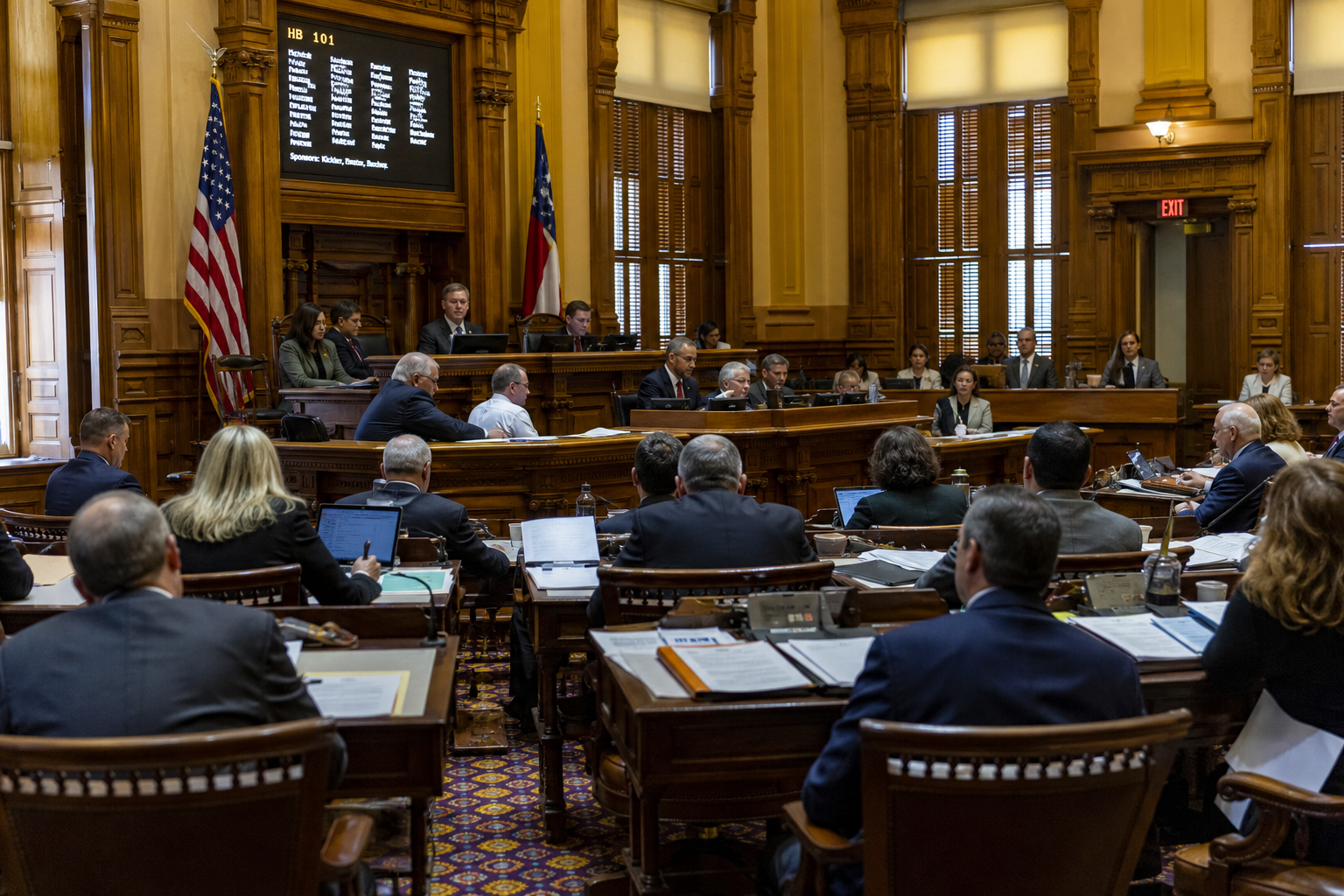
A handful of state legislatures are taking up a question that sounds academic until you stop and ask yourself: who decides what law applies in your state court? If a judge can look to foreign legal precedent, international treaty interpretation, or religious law systems to override your constitutional protections, then the Constitution is not actually supreme in your own courthouse. That is the argument driving what proponents call "American Laws for American Courts" legislation.
The impulse is straightforward. The Constitution is the highest law of the land. When a court interprets it, the interpretation should be grounded in the text, the Founders' intent, or established American legal precedent. Not in what courts in other countries have decided. Not in international agreements that have never been ratified or debated in your state legislature. Not in religious law systems, no matter how ancient or culturally rooted, if they conflict with constitutional protections.
The problem, proponents argue, is that this actually happens. Courts do cite foreign law. They do reference international instruments. They do so in cases touching marriage, property, custody, religious exercise, and criminal procedure. A judge citing a German constitutional court opinion or an international human rights tribunal's interpretation is effectively substituting that court's authority for American constitutional authority. Your recourse — voting the judge out of office, appealing to your state legislature, amending the Constitution — disappears the moment the precedent becomes a footnote in a foreign ruling.
Why This Matters Beyond Theory
Consider a hypothetical with teeth. A state court faces a case involving religious exercise and public accommodation. Instead of asking what the First Amendment's text says or how American courts have interpreted it, the judge looks to how Canada's courts balanced similar claims. Or the European Court of Human Rights. Or principles drawn from international human rights law. The foreign standard might be more restrictive. It might be more permissive. It does not matter. What matters is that a precedent your legislature never voted on, written by judges you cannot remove, has become binding in your courthouse.
This is not paranoia. This is a documented pattern. Over the past two decades, American courts citing foreign law have done so in constitutional cases. Property disputes. Family law. Criminal appeals. The frequency is debated. The principle is not. When it happens, a person's rights in your state are being decided partly by law your state did not write.
Marriage law provides the clearest example. Before the Supreme Court's 2015 Obergefell decision, state courts navigated marriage equality claims. Some courts looked to international human rights bodies. Others did not. The citation of foreign precedent did not change the outcome, but it signaled something important: American courts were seeking authority beyond the Constitution and state law to decide rights claims. Your state's marriage law was no longer being decided solely by your state's courts and legislature. It was being informed by judgments from countries with different constitutional structures, different electorates, and different accountability mechanisms.
The Legislative Response
State legislation addressing this typically follows a consistent structure. It declares that state courts shall not use foreign law, foreign court decisions, or international agreements to interpret or apply the state or federal constitution. It protects statutory interpretation from similar external influence. It preserves the right to consider foreign law purely as historical or comparative reference — understanding how other systems worked — while prohibiting its use as binding authority.
The language matters. These bills are not isolationist. They do not prohibit scholarly reference to comparative law. They do not ban studying how other countries have solved similar problems. They say that when a court is deciding what your constitutional rights are, the decision should rest on American constitutional sources. Not on what judges in other democracies think.
The bills also typically include carve-outs for cases involving treaties ratified by the United States Senate, since the Constitution itself makes ratified treaties the supreme law of the land. And they preserve judicial discretion to refer to international law when interpreting a statute that explicitly incorporates international standards or when applying conflicts of law principles in commercial or family disputes where the parties have chosen foreign law to govern their contract.
The Federalism Angle
There is a federalism argument underneath this. State courts are creatures of state constitutions and state law. A judge in Arizona is bound first by the Arizona Constitution, then by the U.S. Constitution, then by state statutes and case law. Foreign law is not in that hierarchy. It should not become a substitute for levels of law that actually apply here. If the Arizona Constitution is ambiguous, the Arizona Supreme Court should resolve it. If Arizona law is unclear, the Arizona legislature should clarify it. Foreign courts have no role in either process.
This also matters because it preserves the ability of each state to define rights in its own way, within constitutional limits. If foreign law becomes persuasive authority in state courts, then the avenue for state-level constitutional experimentation closes. Why bother amending your state constitution or passing a state statute to protect a right differently than neighboring states if foreign courts can override your choice through a footnote in a state court opinion?
Where This Stands
Several states have passed versions of these measures. Others have considered them. The legislative progress has been uneven, partly because courts have been cautious about citing foreign law in recent years, making the issue seem less urgent than it actually is. The low frequency of citation does not mean the principle is settled. It means judges are currently exercising restraint. Restraint is not law. When a different panel of judges takes a different view, the door opens again.
This is one of those issues that seems to matter only to people who read court opinions carefully. Most voters will never encounter it. But if you believe the Constitution constrains government power because the Constitution is the highest law of the land — and not because it is useful to consult unless something better comes along — then you should want your courts to know the difference.
Check your state legislature's docket. If a bill like this has been introduced, it is worth tracking. These measures do not often make headlines. When they pass, they change the default rule for how your courts decide what your rights are. That deserves at least as much attention as bills that make headlines and do half as much.
