
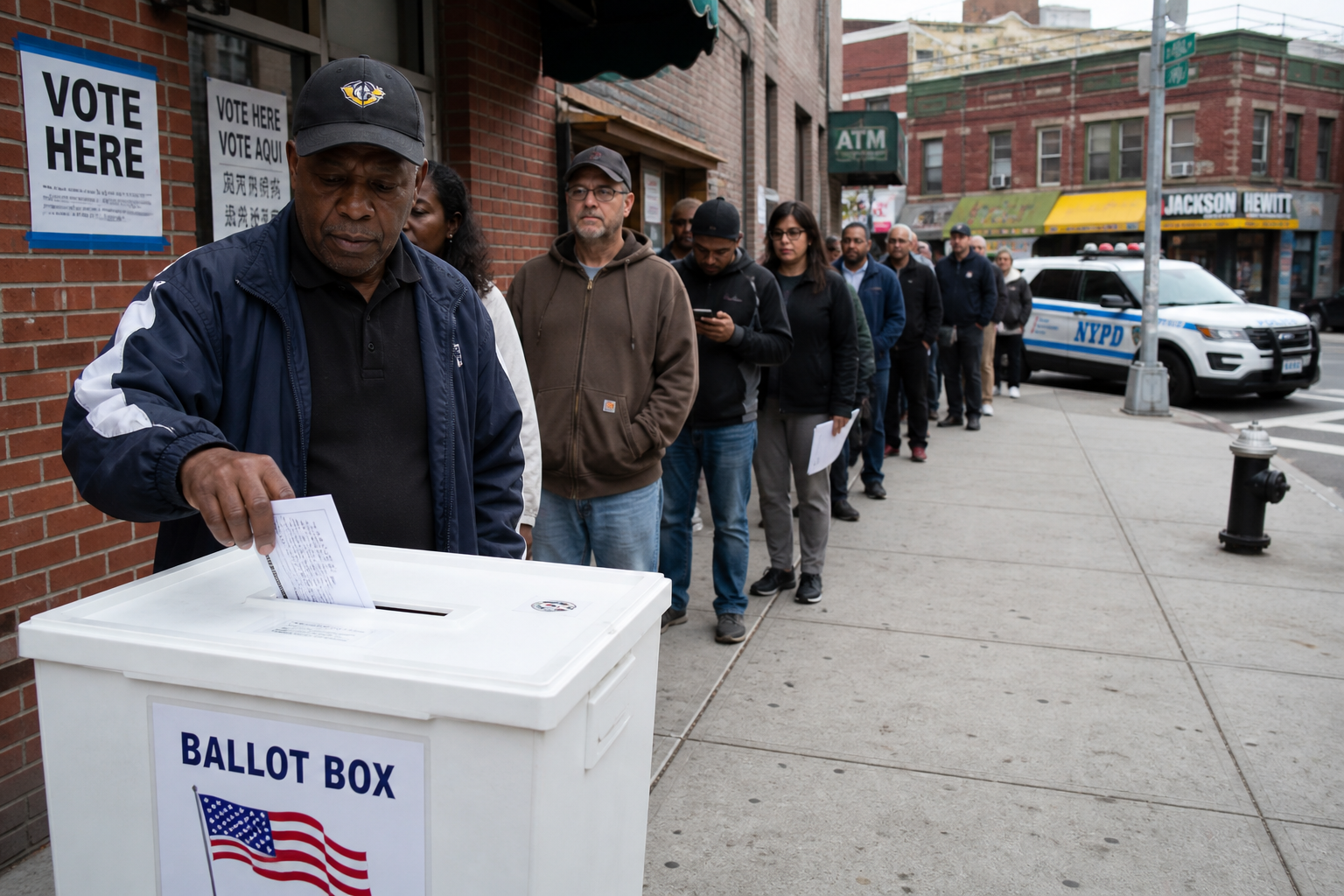
The Vote Count Tells the Story
When a municipality puts a public safety tax increase on the ballot, it is making a calculated admission: the existing budget is not enough, or the existing budget is being spent somewhere else. Either way, the taxpayer is being asked to vote on a problem the city council already knew about.
This is not accidental. It is structural. In states with Proposition 13-style property tax limits, or in municipalities that have hit statutory caps on general fund revenue, a sales tax increase becomes the only lever left. The mayor's office runs the numbers. City staff calculates what can be cut without triggering a crisis. The gap that remains gets packaged as a public safety initiative and sent to voters. If it passes, the city gets the money. If it fails, the city explains that it tried.
What Local Elections Reveal About National Disagreement
The pattern of these votes — where they pass, where they fail, by what margins — is not a referendum on police. It is a referendum on whether voters believe their city government is actually trying to solve the problem it claims to have.
In jurisdictions where sales tax increases for public safety have passed, voters consistently cite a simple reason: they trust that the money will go to more officers, faster response times, or better equipment. Not bureaucracy. Not consulting contracts. Officers. Vehicles. Training. Things they can see.
In jurisdictions where these measures have failed, voters give the same kind of answer, inverted. They do not trust the city to spend the money that way. They have watched the budget for years. They know which departments grow and which shrink. They know the difference between a budget increase and a staffing increase. Many have calculated that their city could fund a police increase simply by not expanding parks department administration, or by not launching yet another homelessness initiative before finishing the last one.
This is not a conservative or liberal question. It is a trust question.
The Core Problem: Governments Spend Money, Not Categories
Here is what a voter never sees: a city budget structured by outcome. Instead, you get line items. Officer salaries. Vehicle maintenance. The dispatch center. Emergency services. And then, below that, a thousand other things competing for the same pool of money. A city council that votes to freeze hiring in dispatch while approving a new DEI coordinator position has not made a mistake. It has made a choice. The voter is then asked to cover that choice with a tax increase, and told it is necessary for public safety.
This is why local sales tax votes have become a proxy for the national debate about government priorities. Conservatives argue that government should do the core functions first — police, fire, roads, water — and only then fund the rest. Progressives argue that government should fund all priorities together and that asking voters to choose between core services and social programs is a false choice. The tax increase simply makes visible what was hidden in the budget all along.
The Arizona Dimension
Arizona has seen this pattern play out in Phoenix, Scottsdale, Mesa, and smaller cities along the I-10 and I-17 corridors. Maricopa County municipalities have placed more than a dozen public safety sales tax measures on ballots in the past decade. Some passed. Some failed. The ones that failed tend to share a characteristic: the city government had not demonstrated fiscal discipline in other areas first.
Voters in these communities are not opposed to paying for police. They are opposed to subsidizing bloat. They want to see the city council make choices first, before asking them to pay more. This is not complicated. It is not ideological. It is the behavior of a customer who has been sold a defective product and is now being asked to pay extra for a better version of the same product.
What These Votes Mean for the National Conversation
The national debate over public safety funding has become abstract. Activists argue about "defund the police." Politicians respond with "back the blue." Voters, meanwhile, are solving the problem at ground level: by demanding that their cities prove they can manage existing money before getting more.
This is a useful correction. It means that the public safety funding debate is not really about ideology. It is about performance and trust. A city that maintains street lighting, fills potholes, and keeps parks clean can ask voters for a police tax increase and get it. A city that ignores basic maintenance while launching new programs gets rejected, even when it frames the request as public safety.
The pattern is consistent enough that it should inform how conservatives approach the question at state and national level. The political coalition that supports more funding for law enforcement is not an abstract coalition of ideology. It is a coalition of people who believe their government should do the basic job first, prove it can do that job with the money it has, and only then ask for more.
What Comes Next
More municipalities will face these votes. More will frame them as moral choices between safety and fiscal responsibility. Most will lose if they have not made visible choices elsewhere first. This is not a bug in the system. It is a feature. It is the way voters discipline government without waiting for an election day to remove an incumbent.
If your city is planning a public safety tax increase, ask three questions before voting. First, what did the city cut to reach its deficit? Second, where did the city hire and promote in the past five years? Third, what outcome metric proves the money will be spent on what the city claims? If your city council cannot answer those questions clearly, the vote is not really about police. It is about whether your city government trusts you to pay first and verify later. That is a different kind of question entirely.
