
The Bond Measure Arithmetic
A school district in a mid-sized Arizona county is considering a $500 million bond measure. The stated purpose is straightforward: expand college preparation programs, support dual-enrollment courses, and create pathways to reduce student debt burden for graduates. On the surface, this sounds like investment in the future. But the math requires scrutiny.
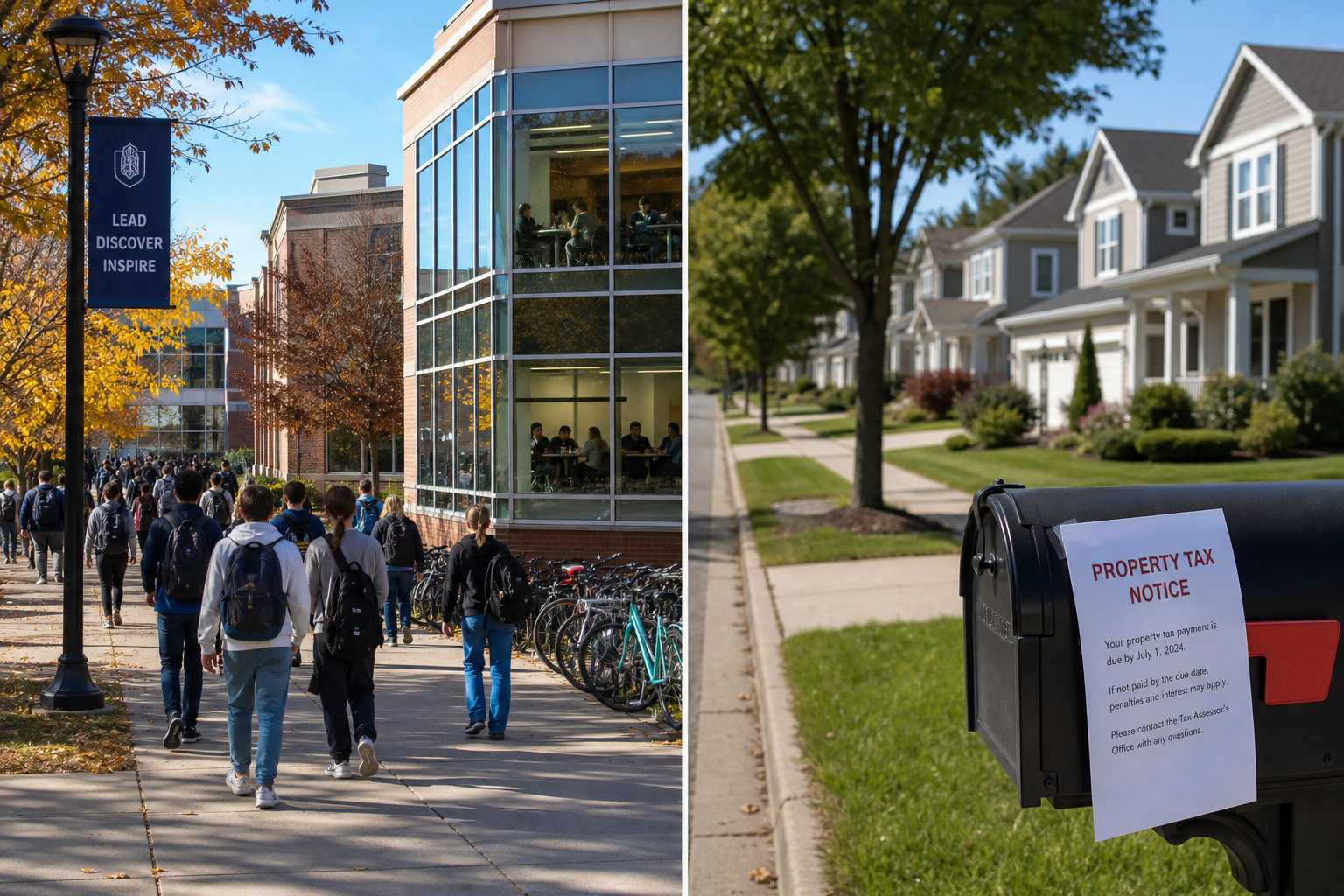
That $500 million does not materialize from nowhere. It comes from property tax assessments on every home, every commercial building, and every piece of land in the district. A homeowner with a $300,000 house will pay roughly $180 per year for twenty years—the typical bond repayment period. Multiply that across a district, and the collection reaches into the hundreds of millions.
Here is what often gets left out of bond campaign messaging: the money does not reduce student debt. It funds programs. Those programs may reduce debt if they successfully place students into dual-enrollment courses, which allow high school students to earn college credit tuition-free. That part works. But the bond itself is not debt forgiveness. It is a public spending commitment that shifts the financial burden from individual borrowers to all property taxpayers, regardless of whether those taxpayers have children in school or whether their children will attend college.
Who Bears the Cost
Consider the actual distribution of burden. A retired couple in their seventies, living on Social Security and a modest pension, will pay the bond tax on their home for twenty years. They will not attend college. Their children are grown. Their grandchildren may or may not benefit, depending on whether the programs reach them and whether they choose to use them. Yet every year, their property tax bill includes a line item for a commitment they did not make and from which they will not directly benefit.
This is not an argument against education. It is an argument about which taxpayers should be obligated to fund which expenses. There is a difference.
A business owner in the district faces the same calculation multiplied. If the property is commercial or industrial, the bond tax applies to assessed value. For a small manufacturing operation or a family-owned distribution center, that represents a direct reduction in available capital that could otherwise go toward wages, equipment, or expansion.
These are not abstract considerations. They are the arithmetic of competitiveness in border counties where wage pressure is already tight and where a state competitor just across the line in Nevada charges no property tax.
The Federal Complication
State and local bond measures for education spending exist in the context of expanding federal student loan programs. The federal government already supplies roughly $200 billion annually in student loans. Federal Pell Grants provide up to $7,000 per year to students from lower-income families. Income-driven repayment plans cap monthly payments at a percentage of discretionary income. The Public Service Loan Forgiveness program cancels remaining balances after ten years for government and nonprofit employees.
Against this backdrop, state and local governments are now proposing to fund additional pathways into higher education and to subsidize college preparation in public schools. The question worth asking: at what point does the layering of programs become redundant rather than complementary?
A high school student with access to a federally funded Pell Grant, participation in a dual-enrollment program funded by a local bond, and eligibility for state financial aid if she attends an Arizona university is already receiving substantial public support. Whether adding another layer through a bond measure reduces her actual debt or simply redistributes money between different government programs is not always clear from bond campaign materials.
The Arizona Context
Arizona presents a specific case. The state has no income tax on residents' Social Security benefits—a real advantage for retirees. But Arizona relies heavily on property tax and sales tax revenue. Property tax rates vary by county and district, and they compound. A homeowner in an active school district with multiple bond measures can see effective property tax rates that exceed 1.2 percent of home value annually in some cases.
At that rate, a $400,000 home generates $4,800 per year in property tax. Over thirty years of ownership, that is $144,000. If even part of that funding stream goes toward college preparation programs that benefit students whose families have the means to attend college anyway, the public subsidy is directing money upward rather than toward the most vulnerable students.
This is not a hypothetical concern. Dual-enrollment programs and college preparation pathways tend to be accessed at higher rates by students whose families already have college experience and higher incomes. Students whose parents did not attend college and whose families are at the economic margins often lack the information or confidence to navigate these programs even when they are available.
The Alternative Question
If the genuine goal is to reduce student debt burden, there are more direct approaches. States could regulate tuition growth at public universities by tying appropriations to enrollment rather than allowing per-student spending to balloon. States could require transparent cost disclosure before enrollment. States could fund vocational and trade programs that lead to employment and earnings without accumulating borrowing.
What states generally do not do is impose cost discipline on the institutions that generate the debt in the first place. That would require confronting university administration budgets, administrative staffing ratios, and auxiliary spending that has nothing to do with classroom instruction.
A $500 million bond measure funded by property taxpayers is politically easier than cutting administrative overhead at a state university. It feels proactive. It allows elected officials to say they are addressing a real problem. But it does not address the root cause of rising college costs—which is not insufficient funding, but rather institutional unwillingness to constrain spending.
What to Look For
Before your school district or state brings a college-related bond measure to the ballot, ask specific questions. How much of the bond funds classroom instruction versus administrative infrastructure? What measurable reduction in student debt does the program target, and over what timeframe? How many students from lower-income families actually use the programs, and what are their completion rates? What cost-sharing requirements exist at partner universities, and have tuition commitments been locked in?
The debate over student debt is real. But it should not become an excuse to expand public spending without accountability or to shift the costs of individual educational choices onto property taxpayers who have no voice in those choices.
Read the bond language before the election arrives. Ask the superintendent for the five-year spending plan. Attend the board meeting where this gets discussed. Your property tax bill is counting on it.
