
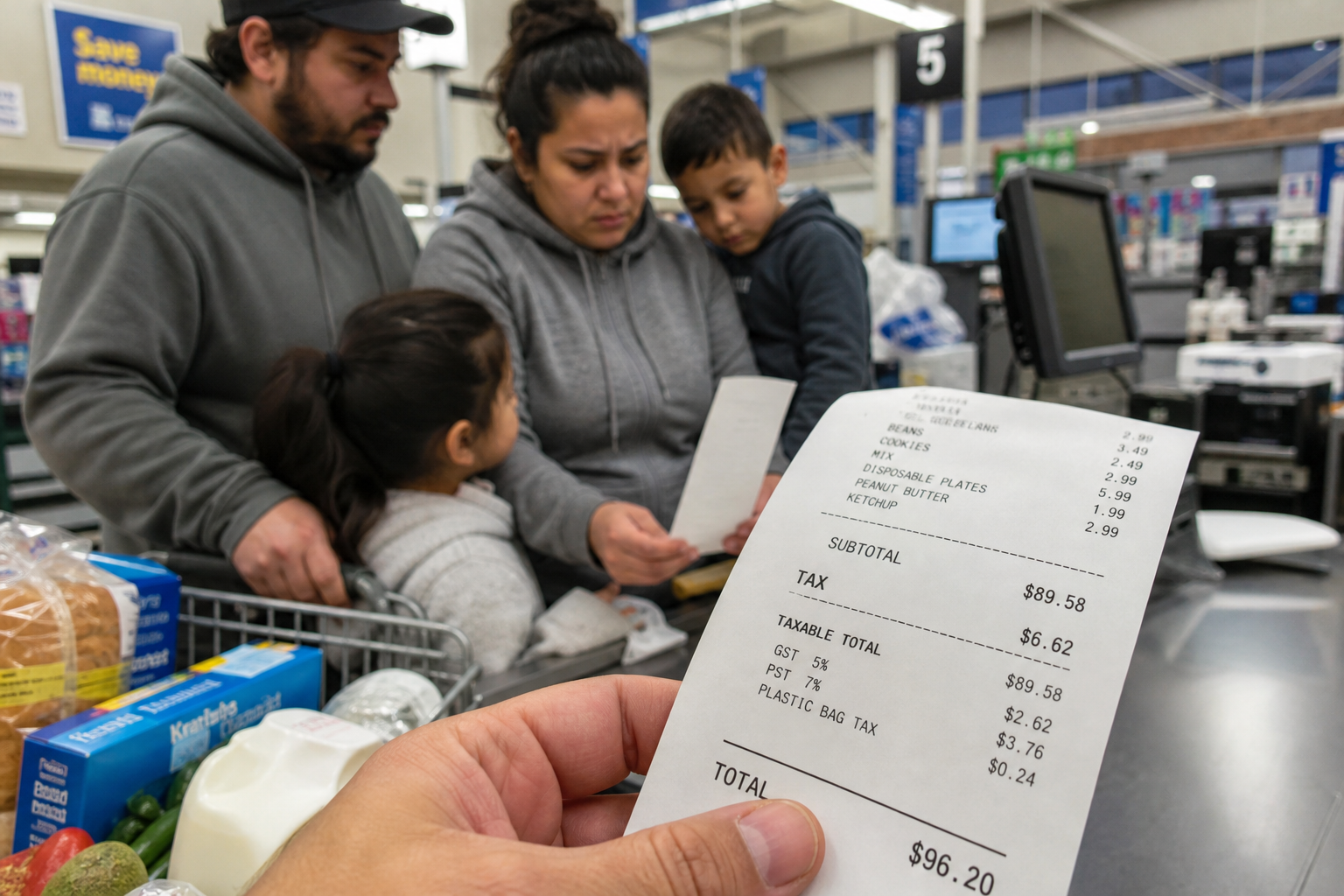
The Invisible Tax on Your Grocery Receipt
Walk into any grocery store in America and look at the receipt. That tax line used to be simple. Today it reflects a patchwork of county, city, and special district levies that compound on top of state sales tax. In some municipalities, the combined rate exceeds nine percent. In others, it climbs toward ten.
This is not accident. It is policy. And it works precisely because most taxpayers do not track it.
How Local Taxes Became the Path of Least Resistance
State legislatures face a problem that municipal governments do not. Voters watch state budgets. They see income tax increases and react. They hear about sales tax hikes on the evening news.
Local taxes move differently. A city council votes to raise the municipal sales tax by a quarter cent. The media covers it for one news cycle. A typical family of four spends roughly fifteen thousand dollars per year on taxable goods and services. A quarter-cent tax increase costs them thirty-eight dollars annually. It shows up as ninety cents on a twenty-five-dollar grocery bill. Invisible in aggregate, devastating in accumulation.
Three quarters of a cent. One full cent. These increments add up. A working family that spent thirty thousand dollars on taxable goods and services in a high-tax jurisdiction paid an additional three hundred dollars because of local levies enacted over the past five years.
Working Class Families Pay a Larger Share
Sales taxes are regressive by nature. A family earning fifty thousand dollars per year spends a larger percentage of income on taxed goods and services than a family earning two hundred thousand dollars. The wealthy invest in stocks and real estate. They pay capital gains taxes, which are federal. The working class buys groceries, gas, and clothing. Every purchase is taxed.
Local sales tax increases therefore fall hardest on people who can least absorb them. A single mother working two jobs does not get relief. She gets a higher effective tax rate every time she fills her tank or pays for her children's school supplies.
This is not progressive taxation. It is regressive taxation dressed up in the language of local control.
The Accountability Problem
State legislatures must pass budgets through floor votes. Those votes are recorded. You can find them online. You can see which representative voted to raise taxes and by how much. You can make a decision before the next primary.
Local tax measures operate in dimmer light. A city council holds a hearing. Attendance is sparse. A consultant presents a staff report recommending the increase. Council members vote. The measure passes five to two. The local newspaper runs a short article. Nobody tracks it in a database you can access before election day.
Then your paycheck is smaller because the tax took an extra thirty or forty dollars, and you cannot quite remember which council members voted yes.
What Conservative Policy Should Demand
First, transparency. Every local tax increase should require a public hearing held at a time when working people can attend. Not at ten in the morning on a Thursday. Not at a location requiring a parking fee. Elected officials should have to explain to their constituents, face to face, why a tax increase is necessary.
Second, accountability. Cities and counties should be required to post the current combined sales tax rate and any proposed increase on their websites. That rate should be calculated to the hundredth of a cent and updated annually. You should know exactly what you pay before you vote.
Third, restraint. Municipalities should face statutory limits on annual revenue growth unless they exceed those limits by voter referendum. A city that wants to raise taxes faster than economic growth should have to ask permission. Not of the council. Of the voters.
Fourth, return to substance. Before any local tax increase, the municipality should be required to demonstrate what expenditures will be cut if the tax does not pass. If there are no cuts, that means the increase is discretionary spending, not necessity. Voters should make that choice, not staffers.
The Broader Problem
This is not a partisan issue. Democratic and Republican municipalities both use local sales taxes as their tax of first resort. It is the path of least political pain. Council members get credit for funding services without running the political gauntlet that state legislators face.
But the cost is borne by someone. That someone is the family buying groceries on a budget. That someone is the retiree on a fixed income. That someone is the small business owner paying taxes on inventory and sales, then going home and paying taxes on everything else.
Local control is a genuine good. But it means something different when the decision is made in public before a full council and a watching public. It means something else when the decision is made by bureaucrats in budget hearings no one attends.
What You Should Do
Know your combined local sales tax rate. Write it down. Check your city or county website for the rate and any proposed increases. Attend the next council meeting or county board hearing. Ask elected officials directly whether they will vote for a tax increase. Make them state it on record. Then remember the vote when you vote.
That is the only check on this machinery that works. When voters watch and remember, officials behave differently. When voters do not watch, the taxes keep climbing.
