
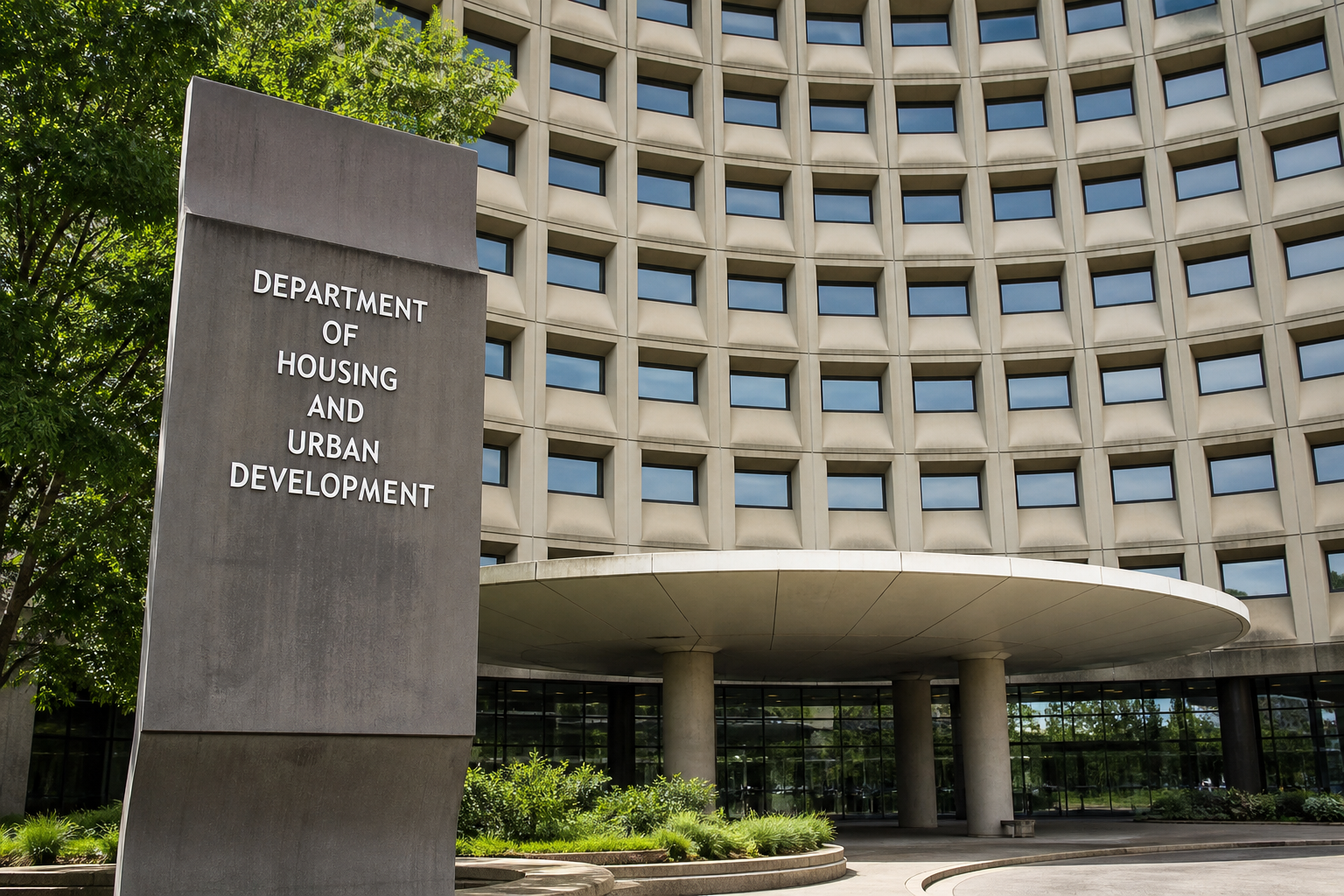
The Filing
Attorneys general from a coalition of states filed suit this week against the Department of Housing and Urban Development, challenging new federal housing policy guidance that ties federal grant dollars to compliance with gender-ideology mandates. The complaint alleges that HUD exceeded its statutory authority by conditioning billions in housing assistance on policy positions unrelated to the stated purpose of federal housing programs.
The core claim is straightforward: Congress appropriated money for housing. HUD used administrative guidance to redirect those funds toward unrelated policy objectives. States argue they cannot comply with both federal housing law and their own constitutionally enacted state law at the same time, and that HUD has no authority to force that choice.
What the Policy Does
The guidance, issued by HUD in recent policy memos, requires housing authorities and providers receiving federal funds to adopt specific protocols regarding gender-identity accommodation in shelter placement, staffing, and facility design. States contend the requirements go beyond civil rights enforcement into affirmative policy mandates that Congress never authorized.
The practical effect is that a local housing authority in a state with different statutory rules now faces a choice: comply with state law or lose federal dollars. That is not a choice. That is coercion dressed as policy.
Several states have passed their own housing policy legislation that conflicts with the federal guidance. Those states argue they cannot be forced to violate their own laws to accept federal money for a core public function like housing assistance.
The Constitutional Question
This is not actually about the policy itself. It is about whether federal agencies can use the spending power to force states to adopt policies Congress never voted on.
The Spending Clause of the Constitution gives Congress the power to tax and spend for the general welfare. But the Supreme Court has held—most notably in cases like South Dakota v. Dole and more recently in statements across multiple decisions—that this power has limits. Spending conditions must be related to the federal interest in the funded program. Conditions that are too divorced from the program's purpose, or that effectively coerce state action, exceed constitutional authority.
HUD's argument will be that gender-identity policy relates to fair housing enforcement and civil rights. States argue that fair housing law, as enacted by Congress, does not include gender-identity categories, and that HUD cannot expand the statute through guidance.
There is a statutory question underneath the constitutional one. Did Congress, when it passed the Fair Housing Act, intend to cover gender identity? The statute lists protected classes. Gender identity is not on the list. HUD's position is that the statute's sex discrimination language implicitly covers gender identity. The states argue that if Congress wanted to add a protected class, Congress would have to vote on it.
Why This Matters Beyond Housing
This case touches the machinery of federal-state relations. If an agency can take a statute Congress wrote, interpret it to cover something Congress did not list, and then condition billions in federal dollars on state compliance, then the legislative process is hollow. The vote in Congress becomes advisory. The real law is made by the agency.
Republicans have long argued that unelected bureaucrats should not make law. This case tests whether that principle means anything when it comes to how agencies spend taxpayer money.
It also matters because housing dollars flow to every state and every city. The precedent set here—whether agencies can use spending conditions to force states into policy positions—will determine how much leverage Washington has over state and local government across all programs.
The Political Dynamic
The states filing suit are predominantly Republican-led. Democratic-led states have not filed a counter-challenge. That alignment is predictable, but it reflects a real difference in how Democratic and Republican administrations view the scope of agency authority.
Democratic administrations have used agency guidance more expansively to advance policy goals; Republican administrations have relied more on statute. Both approaches have risks. The Democratic approach concentrates power in agencies. The Republican approach requires Congress to legislate more often, which is harder.
But the underlying issue does not break along party lines forever. If the precedent holds that agencies can condition spending on compliance with their own policy interpretations, then every future administration—Democratic or Republican—will govern through spending conditions rather than legislation. That shifts power away from Congress and toward career staff.
What Happens Next
The case will move through federal district court first. The states will seek a preliminary injunction to block enforcement of the guidance while the case proceeds. HUD will argue that states have not shown they will suffer irreparable harm and that the law is clear.
If granted, an injunction would prevent HUD from conditioning housing funds on compliance with the gender-identity guidance. That is a practical win for the states but not a final victory on the merits.
The appellate path is predictable. This will reach the Supreme Court if the lower courts split or if the issue becomes sufficiently important. The Court has shown skepticism toward agency overreach in recent years, particularly around the Chevron deference doctrine, which required courts to defer to agency interpretations of ambiguous statutes.
The Real Issue
Strip away the policy disagreement and the constitutional claim is simple: Congress makes law. Agencies execute law. Agencies cannot make law by reinterpreting statutes and conditioning spending.
You may agree or disagree with the gender-identity policy itself. That is a legitimate debate. But the method matters more than the outcome in this case. If the method is sound, future administrations will use it to enforce policies you oppose. If the method is invalid, it constrains what any administration can do unilaterally.
Watch the preliminary injunction hearing. That is where the court will signal how it views the strength of the states' claims. If the judge grants the injunction, the administration will likely appeal. If denied, the states will be forced to decide whether to continue challenging on the merits.
Check the docket number once the case is filed in the relevant federal district. Bookmark it. These cases move slowly, but the stakes are high and the outcome will affect how Washington relates to the states for years to come.
