
The Colorado River Belongs to the States. The Federal Government Has Decided Otherwise.
The Colorado River Compact is a contract. Seven states signed it in 1922. It allocated 16.5 million acre-feet of water annually, divided the river at Lee Ferry, and gave Arizona a share. That compact is not a suggestion. That compact is law.
What happened next is what always happens when the federal government decides a contract inconvenient. It rewrites it without asking.
The Bureau of Reclamation, a division of the Department of Interior, has spent the last decade unilaterally imposing cutbacks on Arizona's Colorado River allocation. These cuts did not come from Congress. They did not come from a renegotiated compact signed by the states. They came from a federal agency making policy through secretarial orders, interim guidelines, and operational directives that were never voted on by anyone you elected.
Arizona's share under the compact is 2.8 million acre-feet annually. That number is fixed. It was fixed in 1922 and it should still be fixed today. Instead, Arizona now receives something less. The difference between what Arizona is entitled to and what Arizona receives is the gap between constitutional water law and administrative convenience.
How a Bureaucracy Steals a State's Water
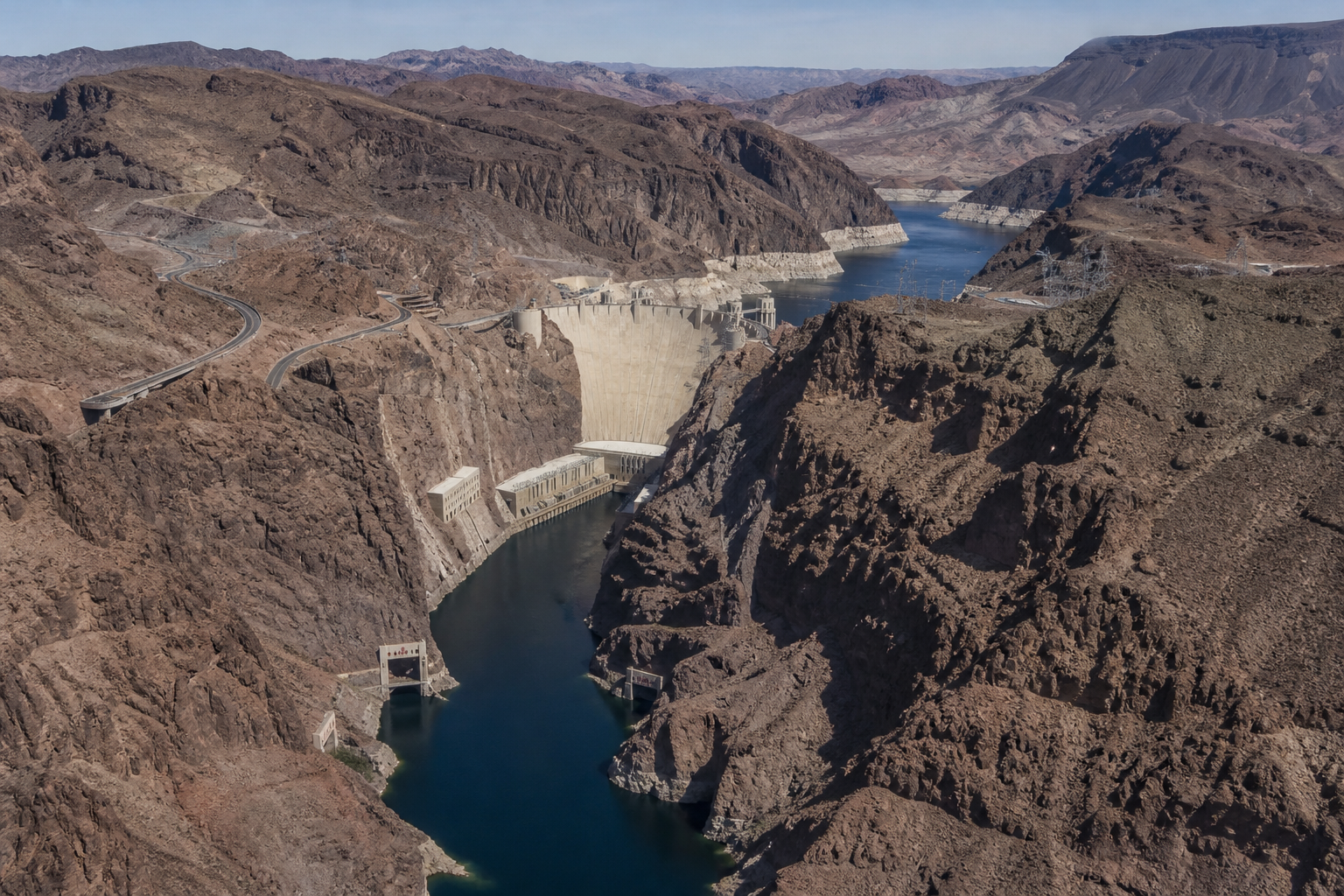
The mechanism is deliberate. When Lake Mead and Lake Powell dropped below certain thresholds—levels the Bureau itself designated as trigger points—the agency declared shortages. When shortages were declared, the agency imposed cuts. Arizona absorbed the heaviest cuts of the seven-state compact because Arizona has the fewest protections written into the secondary agreements that followed the original compact.
That is not an accident. That is colonial administration disguised as hydrology.
The cuts are now approaching half a million acre-feet annually. Half a million. That water is diverted to California and Nevada under terms that were never negotiated with Arizona's consent and that no Arizona governor has the authority to challenge through legislative process because the legislative process does not apply. A federal agency makes the decision. Arizona's elected representatives have no vote. No roll call. No record. No remedy.
Your legislator in Phoenix cannot override this. Your county supervisor cannot override this. Even your U.S. Senators have limited power to override this without abolishing the Bureau or defunding its operations entirely—a step Congress has never taken against any major federal agency in memory.
The Compact Is Not Vague
The Bureau argues that the compact grants it discretion to manage shortages. The language does not say that. The compact says what it says. Arizona gets 2.8 million acre-feet. When there is not enough water, the cuts run in a specific order defined by the compact and its successors. Arizona, under those rules, bears cuts. But the magnitude and timing of those cuts are supposed to be matters of negotiation and interstate law, not unilateral federal decree.
What the Bureau has done is declare itself the arbiter of interstate water law. It has decided that it, not the states, will determine what shortage exists. It has decided how severe that shortage must be before cuts begin. It has decided which state cuts first and how deep. It has decided when to lift those cuts or deepen them. Every decision, made in an office in Denver, signed by a political appointee, with no requirement to ask Arizona permission or even to explain the legal basis.
This is what administrative overreach looks like in real time. Not in theory. In practice. In acre-feet of water that Arizona farmers cannot pump and Arizona cities cannot guarantee to their residents.
Why This Matters Beyond the River
The Colorado River battle is not just about water. It is a test case for whether the federal government can unilaterally alter interstate compacts and contracts by administrative fiat. If the Bureau can do this to Arizona and the compact, it can do this to any agreement between states and the federal government. Grazing compacts. Mining rights. Tribal gaming agreements. Power purchase contracts. All of them become negotiable at the pleasure of whichever agency holds the bureaucratic pen.
Arizona has fewer options than it should. The state should have fought this administratively, in federal court, and in Congress ten years ago. It did not. Arizona's political leadership, both parties, accepted modest cuts as the price of not making waves in Washington. Those modest cuts became standard cuts became severe cuts.
The Western states collectively have a remedy available to them: legislation that reasserts state primacy over interstate compacts and that removes the Bureau's unilateral authority to impose shortages through administrative order. That legislation would require Western representatives and senators to treat water rights with the same jealousy they treat oil and gas rights. It has not happened. It should.
Until it does, Arizona will continue losing water to bureaucratic convenience. Your water. The state's water. Water allocated by law. Taken by administrative order.
Check your state legislator's voting record on Colorado River compact bills during this session. Ask them specifically whether they support legislation that reasserts Arizona's legal right to 2.8 million acre-feet and removes the Bureau of Reclamation's authority to impose unilateral cuts. Do not accept a generic answer about water cooperation. Ask for a yes or no.
