
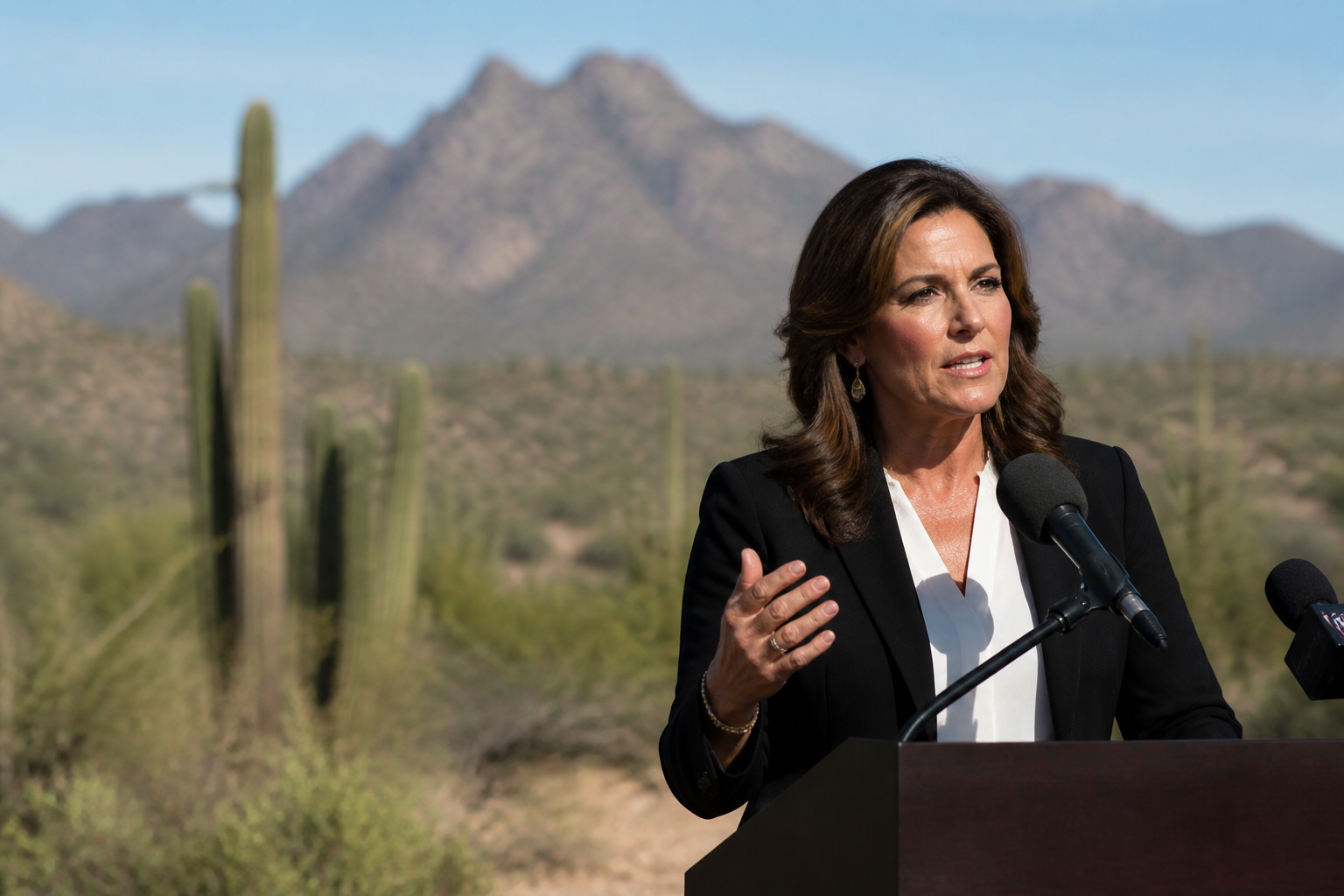
Biggs Enters Arizona Governor's Race With Dual-Track Focus
Andy Biggs, who represents Arizona's Fifth Congressional District, is running for governor on a platform that treats border security and economic affordability as inseparable problems. This is not a rhetorical gesture. It is a choice about what Arizona government should actually do.
The link Biggs draws between these two issues rests on a straightforward premise: uncontrolled immigration, particularly illegal crossing, creates downward wage pressure in certain sectors, increases housing demand in tight markets, and strains public services in ways that cost taxpayers money. Whether you accept that argument or not, you should understand what Biggs is saying. He is not running on border security and affordability as separate planks in a platform. He is arguing they are the same problem requiring the same solution: state-level enforcement mechanisms and accountability for federal policy failure.
What Border-First Means in a Governor's Race
A governor cannot issue deportations or direct Border Patrol operations. That is federal work. But a governor can coordinate state law enforcement with federal agencies. A governor can direct the Arizona Department of Public Safety to conduct criminal investigations of human smuggling networks. A governor can use state law to sanction employers who knowingly hire workers without authorization—though Arizona has done this before, with mixed results and legal challenges. A governor can control which state resources go to border county sheriffs and which detention facilities receive state contracts.
The current Arizona administration has pursued some of these approaches. The question Biggs is putting to primary voters is whether the effort has been enough, and whether a governor elected on this issue would push harder.
Affordability as a Campaign Message
The affordability plank speaks directly to the suburban and exurban Republican primary voter who is not primarily focused on immigration but is deeply concerned about housing costs, electricity rates, and grocery prices. In Maricopa County, this is a real constituency. Home prices in the Phoenix metro area have doubled in the past decade. Electricity rates have risen faster than wages. Grocery costs matter in Queen Creek and Chandler and Surprise.
Biggs' argument connects these costs to state policy decisions: water management (which affects development and housing supply), energy policy (which affects electrical rates), and property taxes (which vary by county and district). These are legitimately within a governor's purview. Whether immigration policy should be framed as a housing affordability issue is the rhetorical choice Biggs has made, and it shapes how primary voters hear both planks of his message.
The Republican Primary Landscape
Arizona will have an open gubernatorial seat in 2026. The primary will feature multiple Republicans competing for the nomination. The candidate who wins will need to thread a needle: energizing the base voters most concerned about border security and conservative social policy, while also capturing enough center-right voters in suburban districts to win a general election.
Biggs represents a congressional district that leans heavily conservative. His House voting record is consistent with that positioning. His argument in this race is that border security and economic management are not ideological positions but practical governance. That distinction matters. It allows him to appeal to voters who are worried about immigration and voters who are worried about their utility bill, as if those concerns are aligned rather than in tension.
What This Means for State Policy
If Biggs wins the primary and general election, his campaign message will become a mandate for specific actions. Border county sheriffs will expect coordination and resources. Employers who operate in gray areas of immigration law will face scrutiny. State agencies will be directed to make border security operations a priority budget item. Housing and affordability questions will be framed through a security lens—though what that actually produces in terms of policy is less clear.
Conversely, if Biggs loses in the primary, his opponent will have to address why border security and affordability should not be treated as linked problems. That is a harder sell in a Republican primary than you might think, because the argument that immigration policy affects labor markets and housing is not fringe economics. It is debate-level policy discussion.
The Accountability Question
The real test for any gubernatorial candidate who campaigns on these issues is whether they can name specific federal failures and state remedies. Biggs should answer directly: Which Border Patrol sector commander has been unresponsive? Which federal agency coordination failure has Arizona experienced? Which state law could pass the legislature and withstand court challenge? Which counties would benefit most from increased state investment in border operations?
Voters deserve those answers before the primary, not after the election. A campaign message should be testable. If Biggs is arguing that state government can reduce housing costs and crime by enforcing immigration law more aggressively, he should show voters the mechanism. If he is running on affordability, he should name which state taxes or regulations he would cut or reform, and what the projected household savings would be.
This is how you separate campaign rhetoric from actual governance intent.
Mark Your Calendar
The Arizona Republican gubernatorial primary will take place in August 2026. Early voting begins in July. The general election follows in November 2026. If you live in a county that borders Mexico, or if you are renting or paying a mortgage in a suburban Arizona district, this race will affect your property taxes, your utility rates, and your employment prospects. Pay attention to the specific claims. Ask follow-up questions. Demand answers that include numbers, not just intention.
