
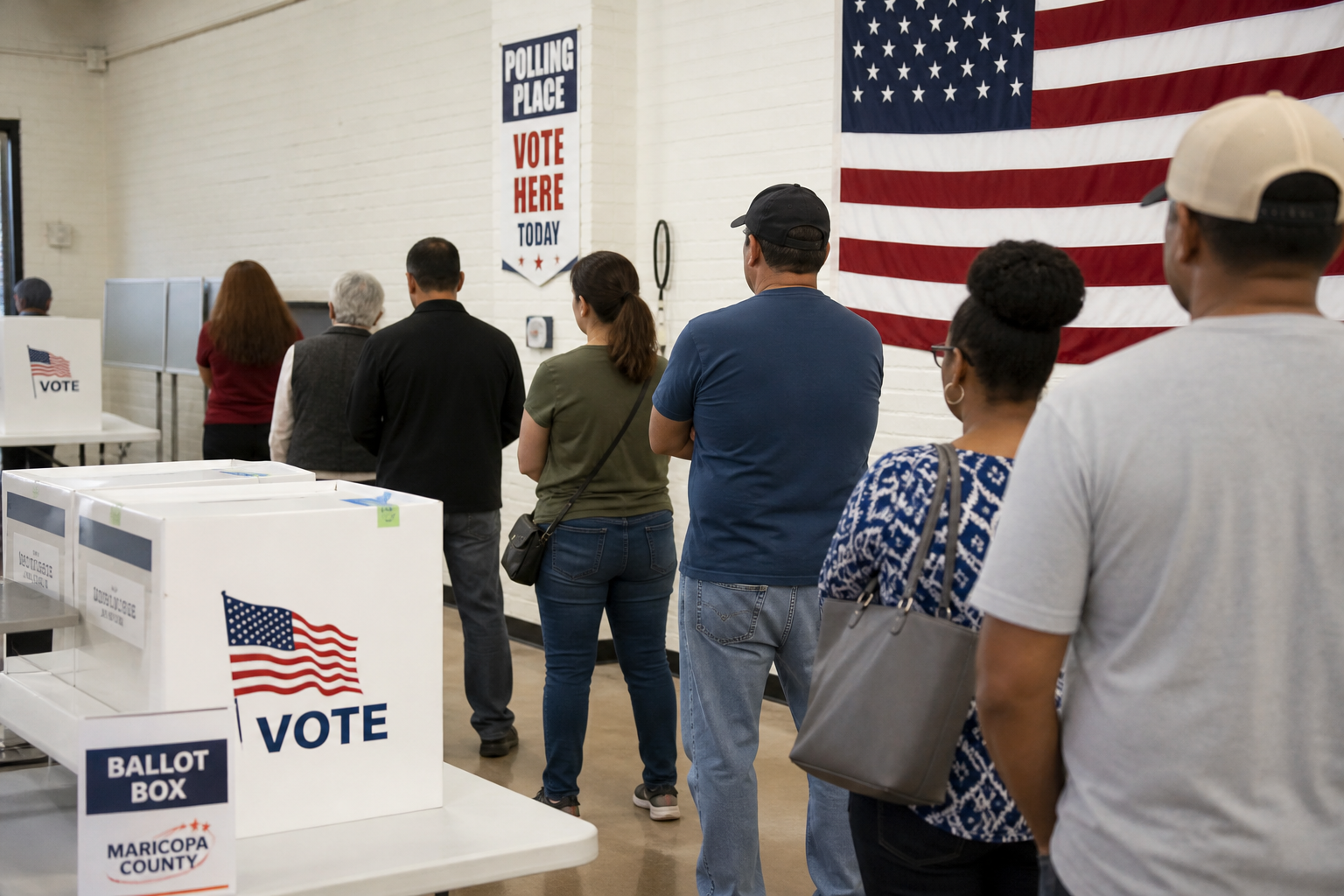
Voters Draw a Line on Government Spending Priorities
Arizona voters are about to weigh in on a straightforward question: Should your tax dollars pay for government diversity programs?
The push is not abstract. It is specific. Across state agencies, in Phoenix and Tucson city halls, and inside school districts from Maricopa to Pinal counties, taxpayer money flows to diversity officers, equity consultants, and training programs that exist to examine how government does business through a lens of demographic representation.
The cost is real. When you add up salary lines for dedicated DEI staff, contract payments to outside consultants, and the cost of mandatory training programs, the number climbs faster than most voters realize. One Arizona agency recently disclosed that DEI staffing had grown by 40 percent in three years. You can ask why. The answer you get usually involves phrases like "institutional change" and "systemic barriers." Neither phrase tells you what services your child receives or what your water bill pays for.
The Conservative Case Against Government-Funded Identity Programs
The conservative argument here is not complicated. It rests on three points.
First: Core functions first. A state government that cannot fix its child welfare system, cannot keep its prison guards paid enough to prevent turnover, and cannot maintain its roads at highway speeds has no business hiring additional layers of administrative staff to examine its own diversity metrics.
Second: Merit matters. When hiring and promotion decisions factor in diversity targets alongside qualifications, you are telling the most qualified candidate that demographic category matters more than competence. That is not equity. That is the replacement of one form of unfairness with another.
Third: Accountability. Show a voter a line item in the budget. Show them the staffing number. Show them the contract amount. Tell them what service improved and for whom. If you cannot do that—if you can only point to training sessions and feel-good messaging—then you are spending money to feel like you are solving a problem, not actually solving it.
Where This Appears on Ballots
Some Arizona communities are moving toward referendum language that would prevent government from using taxpayer funds on DEI initiatives unless voters approve it specifically.
This is not new to conservative-led states. Florida, Tennessee, and other states have already passed legislation restricting DEI spending in government and higher education. The argument that follows is predictable: Civil rights advocates say these restrictions prevent necessary accountability for discrimination. Conservative voters say the problem is not that government lacks tools to prevent discrimination—it already has civil rights law for that—but that DEI programs have become a parallel bureaucracy that costs money and solves nothing.
Arizona's approach so far has been quieter than Florida's. It works through the ballot initiative process rather than through direct legislative action. That is actually more powerful, because it forces voters in specific counties and municipalities to make the call themselves.
The Administration Response
Government officials typically defend DEI spending in terms of inclusion and modernization. They argue that examining how policies affect different demographic groups is basic good governance. They note that federal contractors are required to do affirmative action compliance work, and state programs often follow similar logic.
None of that answers the actual question voters are asking: If we have to cut something, is this what we cut, or is it something else?
A Maricopa County government facing a budget shortfall had to choose between eliminating a DEI coordinator position and reducing hours at a rural county library. The county chose the library. That decision tells you what government actually values when money runs out—and it is not diversity training.
What Voters Should Know Before Voting
Read the ballot language carefully. Some measures will be written in a way that makes them sound like you are voting against discrimination. You are not. You are voting on whether government should spend taxpayer dollars on a specific category of administrative staff and programs. Those are different questions.
Ask your city council or county supervisor: How much are you spending on DEI staff and programs right now? Get a number. Not a percentage. A number. In dollars.
Ask whether any of that spending addresses an actual problem that civil rights law does not already address. If the answer is no—if DEI spending is about making sure staff representation matches population demographics—then you are paying for symbolism, not accountability.
This matters because your vote determines whether that spending continues, whether it shrinks, or whether it grows. Government will not volunteer to eliminate its own administrative layers. It will wait for you to do it.
What Comes Next
Watch your local ballot materials in the next 60 days. If you live in a community considering a referendum on DEI spending, the language will appear there. Read it. Talk to your precinct committeeman about what it actually does and what it costs to say no to it.
Mark your ballot accordingly, and then ask your elected representative why this question had to come from voters instead of from them.
