
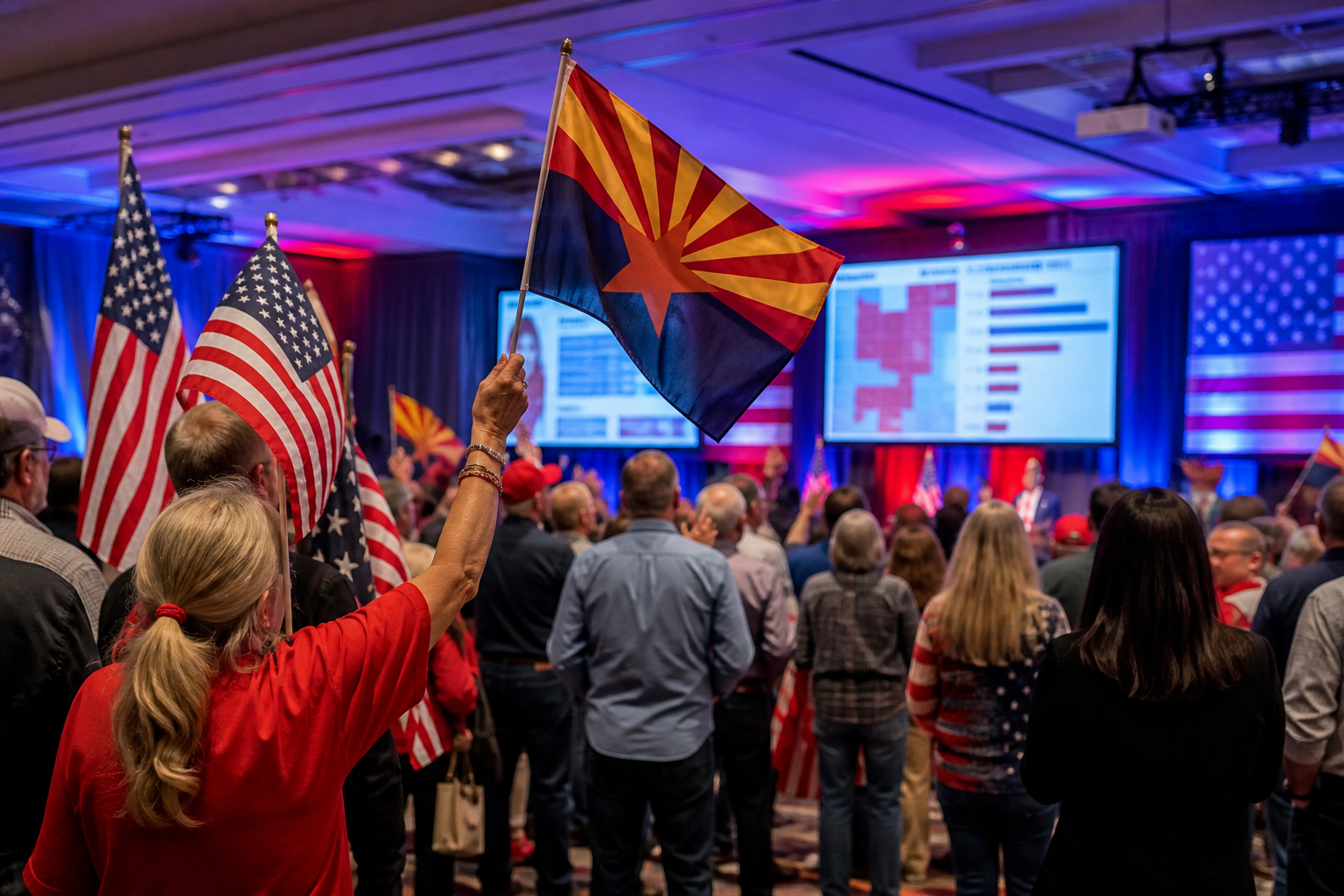
Andy Biggs did not just win Arizona's Republican primary for governor. He cleared the field with a message that primary voters understood.
The margin matters. In politics, everybody claims a mandate after a win. Landslides are different. A close primary can be explained away by consultants, money, timing, or ballot mechanics. A landslide tells you something simpler. Republican voters wanted the conservative option, and they wanted it by enough that nobody can plausibly call it an accident.
What Biggs' primary win says about the Arizona GOP
Arizona Republicans have spent the last several cycles in an argument with themselves. Is the path back to statewide power a softer message, a more managerial tone, and fewer fights with the press? Or is it a sharper contrast on border security, spending, election administration, school choice, and the reach of the administrative state?
This primary result points in one direction.
Biggs has long been identified with the party's constitutional conservative wing. He is not a candidate built around cautious ambiguity. Voters knew what they were buying. They bought it anyway. More to the point, they bought it in volume.
That matters because primaries are where parties reveal their actual priorities, not the priorities that get polished in donor memos. Republican primary voters in Arizona are signaling that they are done with defensive politics. They do not want a Democrat in slower motion. They do not want a Republican who campaigns in Apache Junction and governs like a moderate from Washington. They want contrast.
You can like that or dislike it. You cannot honestly miss it.
The border will now sit at the center of the governor's race
In Arizona, every statewide race eventually comes back to the border, because the border is not an abstraction here. It is a highway in Cochise County. It is a ranch cut open by smuggling traffic. It is fentanyl moving north and public trust moving down.
Biggs' victory all but guarantees that border enforcement will be the center pole of the general election. Expect a blunt argument: the federal government has failed, Arizona cannot wait, and the governor's office should use every lawful tool available to assist enforcement, support local law enforcement, and challenge federal neglect.
That is not fringe in this state. It is practical politics rooted in lived experience, especially outside the urban consultant bubble.
Democrats will argue that such a message alienates suburban swing voters. Maybe. But Republicans do not win by muting the issue voters already think is defining the era. They win by showing they have the will to act on it.
If Democrats want to answer that, they will need more than a familiar accusation that every enforcement argument is somehow extreme. Arizona voters have heard that song for years. Meanwhile, the border remained unsecured.
Spending, agencies, and the question of who governs
There is another piece here that matters just as much as the campaign rhetoric. Biggs' win is also a sign that Republican voters want a governor willing to confront the machinery of government itself.
That means spending. It means executive agencies. It means rulemaking. It means the quiet ways government expands even when lawmakers promise restraint.
Conservative voters are increasingly skeptical of a Republican style of governance that talks about limited government on mailers and then signs off on budgets, agency discretion, and temporary programs that somehow become permanent. They have seen that movie. They know how it ends. The bureaucracy grows, the press calls it bipartisan, and the taxpayer gets the invoice.
Biggs now carries the expectations that come with this primary result. If you run as a constitutional conservative and win in a landslide, voters will expect more than symbolic fights. They will expect line-item scrutiny. They will expect vetoes. They will expect actual conflict with entrenched interests inside state government, not just speeches about them.
That is the burden of a mandate. It does not let you drift.
School choice remains a live issue in the suburbs
Do not miss the education piece.
Arizona Republicans, especially suburban parents, have become far more willing to treat school choice as a front-line issue rather than a side topic for think tanks. The Empowerment Scholarship Account program changed the politics of education because it made the question immediate: who decides what kind of schooling your child gets, the family or the system?
On that question, the conservative base is not confused.
Biggs' primary strength likely reflects, in part, that parental-rights coalition. These voters are not interested in being told that choice must be trimmed, managed, or made more acceptable to the same institutions that opposed it from the start. They want expansion protected. They want bureaucratic obstruction watched. They want a governor who will say plainly that the child is not the property of the district.
Again, this is not theory in Arizona. It is a weekly household decision for families across Maricopa and Pinal counties.
Water and growth will test every slogan
The general election will not be fought on the border alone. Water will sit there too, whether candidates like it or not.
Arizona's growth model is now colliding with water reality in ways that no amount of cheerful chamber-of-commerce language can hide. Assured water supply disputes, groundwater fights in rural counties, and pressure on development approvals are no longer niche concerns. They are central governance questions.
A Republican nominee who talks about liberty and property rights will still have to answer a hard question: how do you protect growth, agriculture, and local control without pretending that hydrology is a partisan rumor?
This is where serious conservative governance has to be more than branding. It has to be specific. It has to deal with active management rules, groundwater pumping, infrastructure, and the state-federal conflicts wrapped into Colorado River policy. Voters may not use those terms every day, but they know when a well is dropping and when a subdivision keeps rising out of the dust.
The next governor will need more than applause lines on this front.
What this means for the fall
The usual class of Republican strategists will now issue the usual warnings. Too conservative. Too sharp. Too much contrast. Too risky.
They issue these warnings almost by reflex.
Here is the problem with that script. Arizona Republicans have tried the safer, more managerial route before. It has not exactly produced a durable statewide majority. At some point, a party has to decide whether it exists to offer a real governing alternative or simply a more polite version of the status quo.
Biggs' landslide suggests primary voters made that choice already.
That does not guarantee a general election win. Arizona remains competitive. Democrats will have money, media help, and the usual institutional advantage that comes from being treated as the default party of acceptable opinion. Biggs will have to broaden without blurring. He will have to reassure swing voters that competence and conviction can still occupy the same campaign.
But he begins the fall with one advantage that cannot be manufactured after the fact: clarity.
Voters know what he stands for. They may agree or disagree. But they know. In a state tired of poll-tested fog, that is not nothing.
The real signal
The biggest takeaway is not about one candidate's night. It is about the mood inside the Arizona Republican electorate.
That mood is harder-edged than the consultant class prefers. It is less patient with procedural excuses. It is more skeptical of institutions. It is more willing to reward candidates who promise confrontation rather than accommodation.
You can see why. The border is still a mess. Inflation burned through family budgets. Schools became culture-war battlegrounds because officials insisted on making them so. Public trust in elections remains weaker than it should be because transparency reforms that could ease doubt are still too often resisted. Government keeps asking for confidence it has not earned.
In that environment, a landslide for a conservative candidate is not mysterious. It is rational.
Now comes the harder part. Winning a primary by a large margin is a signal. Governing is the test. Arizona Republicans just sent the signal. The fall campaign will decide whether the rest of the state is willing to hear it.
Mark the next debate date when it is announced. Watch what gets discussed and what gets avoided. That will tell you quickly whether this race is about Arizona's real problems or the usual effort to rename them.
