
The Transparency Question Nobody's Answering
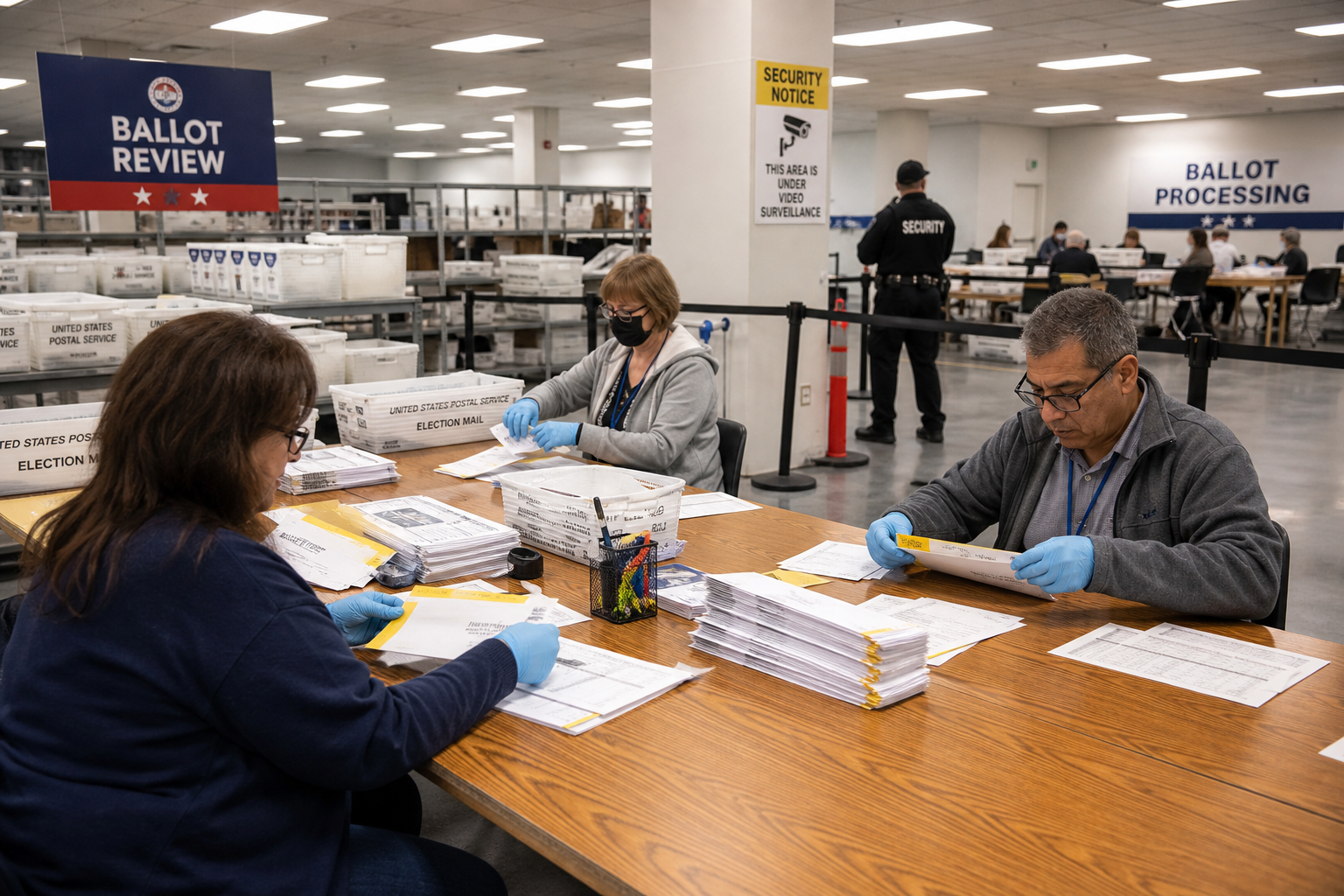
Arizona processes more than 2.7 million mail-in ballots in a presidential cycle. Two point seven million. That number matters because it sits at the center of a fight that isn't about fraud rates or election outcomes. It's about whether a losing candidate—or a losing voter—can actually verify their own loss.
The push for tighter mail-voting procedures in Arizona is straightforward. Election integrity advocates want the same chain-of-custody documentation for mail ballots that already exists for in-person voting. They want signature verification protocols to be consistent across all counties. They want reconciliation numbers posted by precinct on election night, in public, so anyone can pull a spreadsheet and check the math.
This shouldn't be controversial. It's the difference between a system that requires your trust and a system that lets you verify it.
Where the Procedure Breaks Down
Start with the signature verification piece. Arizona law requires county recorders to compare mail-in ballot signatures against the voter registration database. But the statute doesn't mandate a uniform standard. One county's match might be another county's mismatch. I asked three county recorders last year how they train signature verifiers. One sent me a training manual. One said they use a subjective assessment approach. One didn't answer.
The chain of custody problem runs deeper. A mail ballot leaves a voter's hand, enters the postal system, arrives at a county facility, gets sorted, verified, and tabulated. Every step should have a paper trail. Most Arizona counties have partial documentation. Some have better than others. Maricopa County publishes precinct-level reconciliation data. Pinal County does not. If you live in Pinal and want to know whether the vote totals match the ballot count from your precinct, you can request it, wait, and hope for a response.
That is not verification. That is faith.
The Legislative Stalemate
Election integrity bills have moved through the Arizona House and Senate in recent years. Some have passed. Some have died in committee. The pattern is consistent: rural and suburban Republicans support tighter procedures. Democrats oppose them as unnecessary or suppressive. A handful of moderate Republicans worry about turnout effects and decline to vote for them.
The result is a patchwork of procedures that varies by county and by election cycle depending on which county recorder happens to be in office and how much political pressure they face.
Here's what matters: if you can't point to a specific rule, a specific form, and a specific deadline that applies everywhere, then you don't have election procedure. You have county discretion. And county discretion, repeated across 15 counties, adds up to ambiguity.
The Cost of Refusing to Fix It
The question Arizona officials face isn't whether to implement verification procedures. Those already exist. The question is whether to make them transparent and consistent enough that a citizen can verify them without going through a records request process.
Transparency has a political cost. If you publish the data and the data shows irregularities, people will talk about it. If you publish the data and it doesn't show irregularities, people will still talk about it because they don't trust the people doing the counting. You can't win that argument by refusing to publish the data. You lose it by default.
Five Arizona counties have implemented precinct-level reconciliation reporting. Five. If the other ten counties had done the same in 2020, the argument about whether the procedure was sound would be settled. Instead, the argument persists because the data doesn't exist in public form.
Election officials who want to rebuild trust have one tool: transparency. Not explanations. Not defenses. Transparency. Post the numbers. Post the procedures. Post the verification protocols. Let the public check the work.
What Happens Next
Arizona's next legislative session will see mail-voting procedure bills again. Some will advance. Some will die. The outcome depends on whether legislators feel pressure from their districts to act or pressure from their party leadership to avoid the issue entirely.
The pressure doesn't come from statewide media. It comes from voters who show up to precinct meetings with spreadsheets and questions. It comes from county clerks who have decided that uniform procedures are worth the effort. It comes from you, looking at the ballot count and asking why you can't verify it yourself.
Mark your calendar for the next county board of supervisors meeting in your jurisdiction. Ask them one question: where can I find the chain-of-custody documentation for mail ballots from my precinct, and why isn't it posted online by default?
Watch how long it takes them to answer.
