
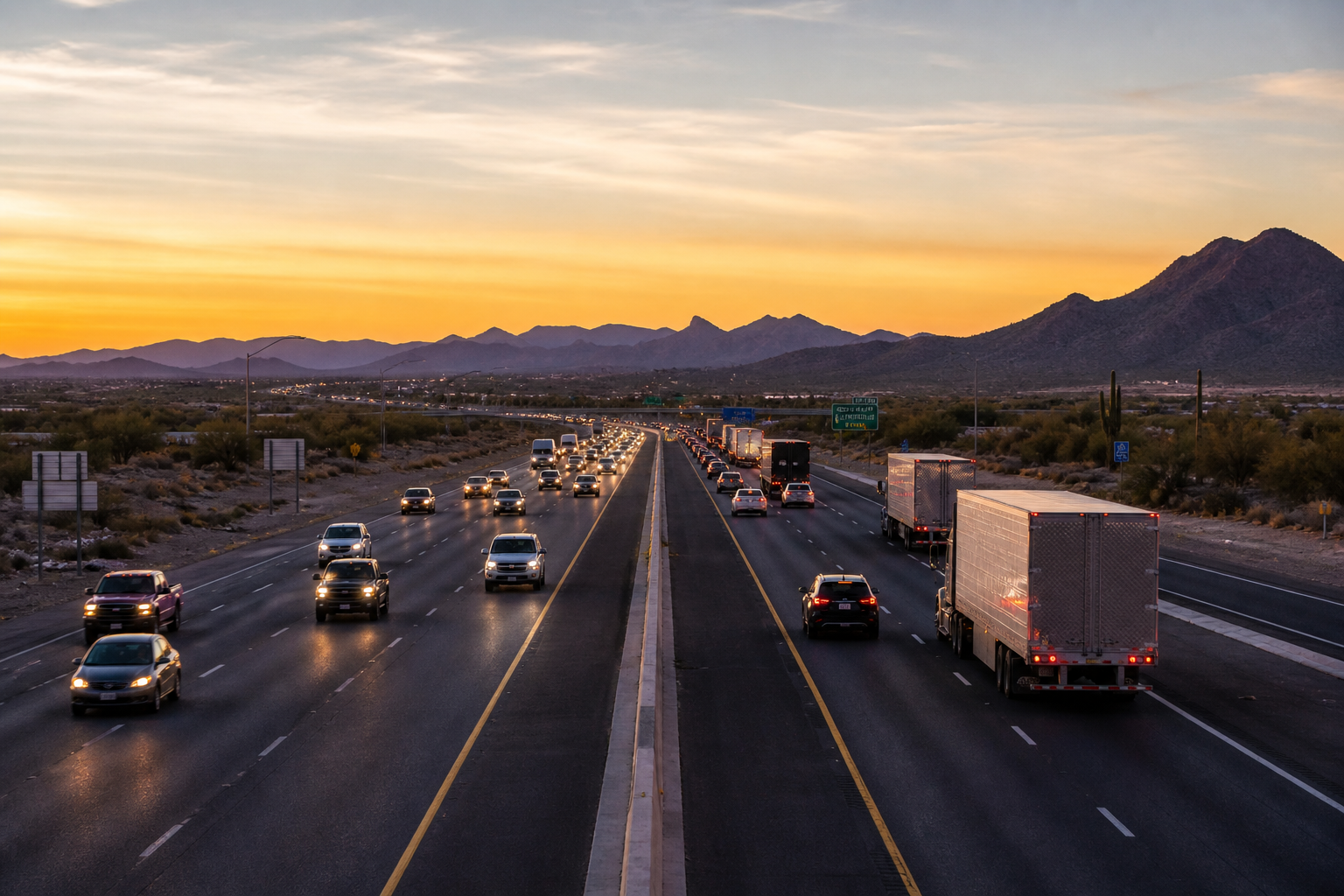
The Mileage Tax Problem
Arizona is moving toward a ballot measure that would block any per-mileage vehicle tax at the state or federal level. This is not hypothetical. Transportation planners have spent the last decade floating mileage-based user fees as a replacement for fuel taxes, which generate less revenue as vehicles become more efficient. The pitch comes from both directions—state transportation departments and federal highway officials see it as the fiscal solution to declining gas tax collections.
What they are really proposing is a tax on distance traveled. Track every mile you drive. Tax you for it. Then ask yourself what comes next.
How This Happens in Arizona
The Arizona Legislature has not yet passed a mileage tax. But the Department of Transportation has been studying it. The federal government has funded pilot programs in other states. Oregon ran one. Utah ran one. Washington state ran one. All of them involved GPS tracking, onboard diagnostics, or toll-collection infrastructure designed to measure individual vehicle miles.
Once a system like that exists, it does two things. First, it collects a tax you agreed to for distance rather than fuel consumption. Second, it creates a database of where you drove, when you drove, and how far. That surveillance capability does not disappear when the government says it will.
Arizona voters understand this problem better than legislators do. That is why a ballot measure banning mileage taxes has gained traction among conservative activists and county Republican committees across rural Arizona—Yuma, Cochise, and Graham counties have passed resolutions opposing any mileage tax framework.
The Fiscal Argument and Why It Matters
Transportation officials will tell you this is necessary. Gas tax revenue is declining. Vehicle electrification will accelerate that decline. Electric vehicles pay no fuel tax. Hybrid vehicles pay less. By the time EVs make up half the fleet, fuel tax collections will have fallen enough to affect road maintenance budgets.
That is a real problem. It is also not your problem to solve by surrendering data privacy and accepting a new surveillance infrastructure.
Arizona has other options. It can raise fuel taxes incrementally—a penny or two per gallon at a time, with legislative votes you can look up. It can issue bonds against future fuel tax revenue and retire them as fuel taxes actually decline. It can reduce spending on non-essential transportation projects. It can redirect registration fees. None of these require tracking how many miles you drove on a Tuesday.
The Legislature should have addressed this years ago, before the federal government started funding pilot programs and before state transportation agencies began building the intellectual case for a system that did not yet exist. Now, voters are moving to block it before it arrives.
What the Ballot Measure Would Do
The proposed measure would add language to the Arizona Constitution prohibiting any per-mileage or per-mile vehicle tax imposed by the state or any political subdivision. It would not affect fuel taxes, registration fees, or other road-use charges based on vehicle classification or fuel type. It would specifically target mileage-based systems that require measurement of individual vehicle travel.
That is a narrow, constitutional guardrail against a specific threat rather than a broad anti-tax measure. It leaves the door open for fuel tax increases and other traditional road-funding mechanisms. It closes the door on surveillance-based taxation.
The measure is being circulated for signatures. If it clears that threshold, it will go to the November ballot. Conservative primary voters will almost certainly support it. General election voters in rural and suburban Arizona will likely support it. Urban voters in Phoenix and Tucson are less certain—they worry less about surveillance and are more comfortable with progressive taxation of distance.
Why This Matters Now
The Biden administration has shown interest in federal mileage-tax pilot programs. The proposal died in Congress, but only this Congress. Democratic transportation officials have not given up on it. Arizona does not control federal policy, but it can control whether state agencies cooperate with such programs and whether state infrastructure permits them.
A constitutional amendment banning mileage taxes removes that option from the negotiation. It prevents future Arizona administrations—whether Republican or Democrat—from partnering with federal transportation agencies on tracking systems that require GPS data or odometer monitoring.
This is an example of voters using ballot measures to constrain government options before they become real problems. That is what the ballot initiative process is supposed to do. It is also an example of a threat that most voters have not yet heard about, which means the window to understand the issue and act on it is narrow.
What You Should Do
If you own a vehicle in Arizona, you will pay fuel tax every time you fill up. If a mileage tax replaces it, you will have a GPS receiver in your vehicle, and the state will know every mile you drove. Your precinct committeeman, county party officer, or state legislator can tell you whether they support a mileage tax ban. Ask them. Ask for their position in writing. Ask them how they plan to fund Arizona roads if fuel tax revenue declines.
The ballot measure will likely be on your November ballot. Watch for it. If you support it, vote for it. If you oppose it, know what the alternative is—a tax system designed to track your location.
Mark your calendar for the official ballot title. That usually arrives in August.
