
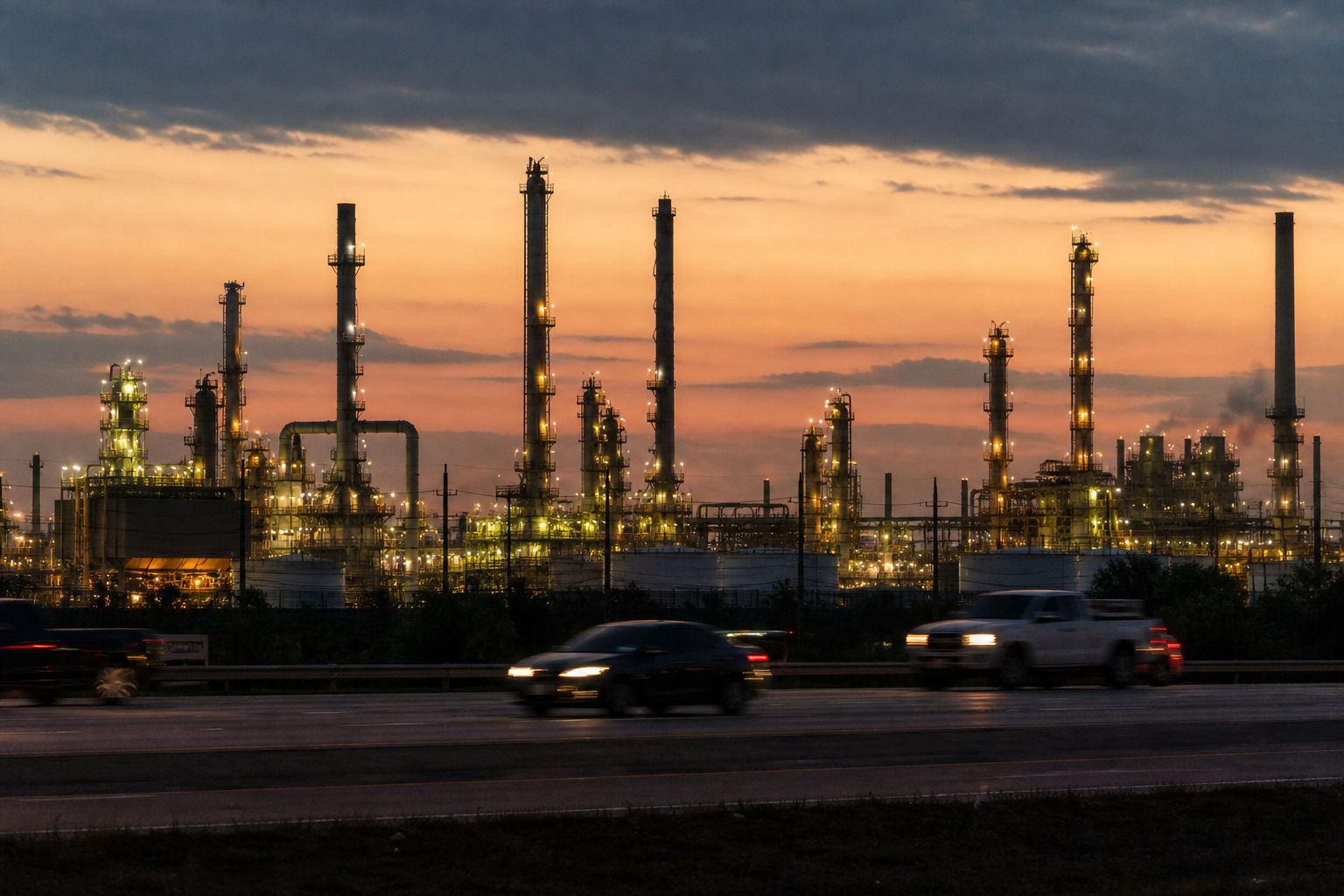
The Price at the Pump Tells a Story About Power
You filled up your truck last week and noticed the price. So did everyone else. The question is not whether gas costs more than it did six months ago. The question is why that fact matters to your freedom as a citizen, and why it matters that you understand where that money goes when you swipe your card.
Energy independence is not sloganeering. It is sovereignty. A nation that cannot produce the fuel its economy requires is a nation that rents its transportation system, its heating, its manufacturing base, and its military logistics from sellers who do not share its interests.
Domestic Production and Market Stability
The United States possesses vast proven reserves of oil and natural gas. Texas, Oklahoma, Alaska, and the deep water Gulf of Mexico can supply American demand. They have done so. Between 2008 and 2019, American crude oil production nearly doubled. When that production was flowing, prices stabilized. Not because markets are simple — they are not — but because supply that answers to American producers, American labor, and American law creates a floor beneath the volatility that global markets create.
Compare that to what happens when supply shrinks. Decisions made in Moscow, Tehran, Riyadh, and Beijing move your fuel pump by cents per gallon. A cartel can restrict supply. A war can close the Strait of Hormuz. A political shift can weaponize an export. You are not buying gasoline. You are buying exposure to every geopolitical calculation those governments make.
The Cost Is Not Just at the Pump
High fuel prices ripple through an economy like stones in water. Trucking costs climb. Shipping costs climb. The farmer who hauls his crop to Phoenix pays more per mile. The contractor who bids a job three months out has to account for fuel he cannot predict. The small business that operates on margins calculated in pennies feels every dollar of per-gallon movement. That cost is real. It comes out of payroll, out of equipment purchase, out of expansion plans that never happen.
You are a parent. You work. You have to drive. That money comes from your paycheck. When the government pursues energy policy that keeps domestic production constrained, it is making a choice about whose pocket that money leaves. It does not disappear. It flows overseas to energy producers we do not control and to governments we do not elect.
Policy Choices, Not Market Forces
This is where the analysis sharpens. Natural markets fluctuate. Wars happen. Weather happens. But American energy production can be expanded by policy choice. Leasing decisions on federal lands. Permitting timelines for new drilling. Pipeline approvals. Infrastructure investment in refining capacity. These are not natural constraints. These are regulatory choices made by federal agencies and approved or ignored by elected officials in Washington.
When a senator votes to restrict federal leasing, she is voting to keep barrels in the ground that Americans could produce instead of purchasing overseas. When an agency slow-walks a permit for twelve months when the statute allows six, someone in another country gets to sell us that energy instead. When a pipeline gets blocked after a decade of environmental review, the crude that pipeline would have carried arrives by tanker from Venezuela or Russia, and the jobs that pipeline would have created never exist.
These are not abstract policy disputes. These are choices with material consequences that show up at the gas pump and in the truck payment that gets harder to make.
What Sovereignty Demands
A conservative approach to energy policy begins with a question: Does America control the resources that fuel America? If the answer is no, then the next question follows: Why do we accept it?
Expanding domestic production does not require subsidies or government picking winners. It requires government getting out of the way. Open the federal leases that the statute permits. Process permits on schedule. Approve infrastructure that connects supply to markets. Let American producers, American workers, and American capital compete in markets that are not artificially constrained by regulatory delay.
You will not eliminate global price pressures. Oil is traded in world markets, and events in other countries matter. But you can eliminate the policy-induced scarcity that serves no conservation purpose and no environmental purpose — it simply transfers wealth and power to foreign governments while Americans pay the difference.
The Mark You Should Leave
When your representative comes to your precinct meeting, ask him this: What federal lands in Arizona and our region has he pushed to open for leasing? What pipelines has he supported? What permitting timeline does he think is reasonable for energy infrastructure? Do not accept an answer about environmental review. Environmental review exists under current law. Ask him what he has done to enforce that timeline and bring permits to decision.
The next time gas prices spike, it will not be because the market created an immovable constraint. It will be because American policy chose to rely on foreign production instead of unleashing American production. That choice belonged to elected officials you can name. That choice can be reversed by different officials making a different choice. But that reversal only happens if enough voters make it clear that energy independence is not negotiable. Mark the date of the next election. Write down the votes. Move accordingly.
