
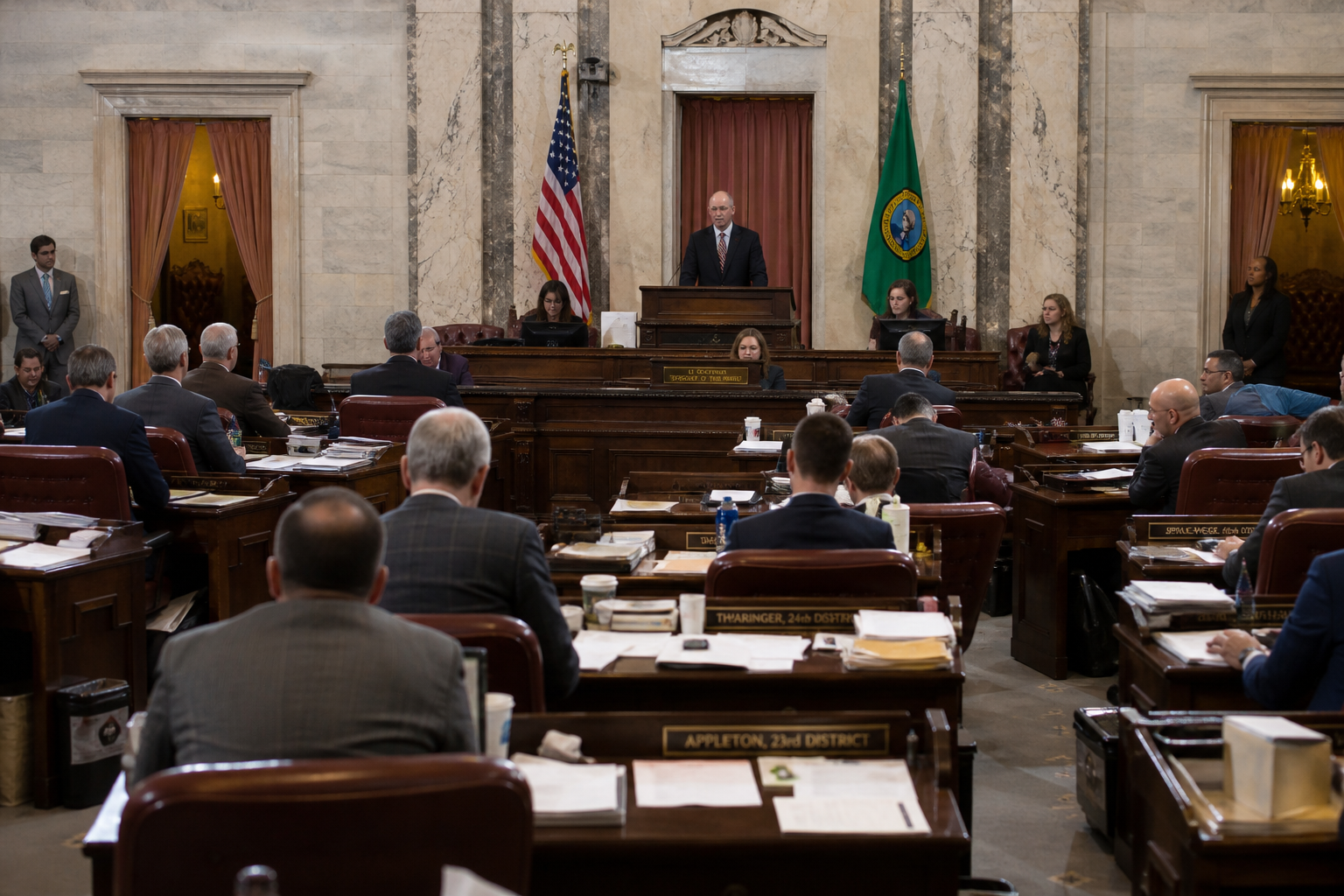
States Take Stand on Constitutional Supremacy
A growing number of state legislatures are pushing legislation explicitly prohibiting state courts from applying foreign law or international legal principles that conflict with state and federal constitutions. These bills, often called "American Laws for American Courts" measures, represent an assertion of state sovereignty against what conservative lawmakers characterize as judicial overreach and the creeping influence of extraconstitutional legal frameworks.
The movement reflects a deeper concern among state legislators and their constituents: that activist judges might use foreign law, international treaties, or supranational legal principles to circumvent or reinterpret constitutional protections established in the American founding documents. The bills typically specify that courts must apply only state constitutional law, federal constitutional law, and statutes enacted by the legislature.
The Constitutional Problem
The Supremacy Clause of the U.S. Constitution places federal law above all other legal authorities within the American system. State constitutions stand beneath it. Nothing in that hierarchy leaves room for foreign legal systems or international law to override either one.
Yet over the past two decades, certain courts have referenced international law or foreign court decisions in their reasoning on issues ranging from sentencing to privacy rights. In 2002, the U.S. Supreme Court itself cited international opinion in a death penalty case, a practice that alarmed constitutional originalists. The concern is straightforward: if judges can import legal reasoning from abroad, they can effectively bypass the amendment process and rewrite constitutional protections without a vote.
That is the legislative response these bills embody.
What the Bills Actually Do
These state-level measures typically contain several core provisions. They prohibit state courts from applying, adopting, or relying on foreign law in any legal proceeding when doing so would violate the state or federal constitution. They prevent courts from using international law or agreements not ratified by the U.S. Senate as the basis for decisions affecting state residents. They explicitly protect religious liberty and free exercise rights from being subordinated to international legal standards.
The bills also tend to reaffirm that the state legislature—the body accountable to voters—retains final authority over state law. Courts interpret law; they do not make it. That distinction matters because it preserves the consent of the governed as the foundation of legitimate law.
Several states have already enacted similar protections. Oklahoma passed such legislation over a decade ago, for instance. Other states have moved bills through committee or scheduled them for floor votes. The pattern suggests this is not a fringe issue but a growing concern among state lawmakers across multiple regions and legislative cycles.
Why This Matters for Voters
The practical effect of these bills is to close a door that some judges have begun to open. If you are a state resident whose property rights, religious freedom, or parental authority over your children's education are at stake in court, you want that decision made under law you can read and amend through the democratic process—not under legal principles imported from countries with different constitutions, different histories, and no accountability to Arizona voters.
Consider a case involving parental rights in education or religious liberty. A court could theoretically look to how other democracies handle these issues and argue that international consensus should inform American constitutional interpretation. But international consensus does not run elections. Arizona voters do. Arizona legislators do. And American constitutional text does.
These bills affirm that basic principle: law in the United States derives from the consent of those governed by it, through their elected representatives and the constitutions they have established.
The Federalism Question
There is also a federalism angle here. By protecting state constitutional law from external legal frameworks, these bills reinforce the principle that states retain authority over matters within their borders. The federal government has its role. States have theirs. International law has neither, except where the U.S. Senate has explicitly ratified a treaty and Congress has implemented it through statute.
That hierarchy is not arbitrary. It emerges directly from the Constitution itself. A federal court may invoke an international treaty if the Senate ratified it. But a state court has no constitutional authority to apply foreign law simply because foreign judges have done so.
Conservative critics of judicial activism have long argued that courts use vague references to "evolving standards" and "international norms" as cover for policy decisions that should be made through the legislative process. These bills eliminate that pathway. They force courts back to the text of actual law.
The Opposition
Predictably, some judicial activists and progressive legal advocates oppose these measures. They argue that courts should be able to consider comparative law and international perspectives when interpreting ambiguous constitutional language. They frame the bills as isolationist or as preventing courts from recognizing that other democracies have addressed similar legal questions.
The response is straightforward: courts are welcome to study comparative law and international approaches in the law library. What they cannot do is make those foreign systems binding on American citizens or use them to override constitutional text that voters can actually read.
What You Should Track
If your state legislature is considering such a bill, find the bill number and read it. Most of these measures are straightforward and brief. They do one thing: they tell judges to apply American law to American cases. Check whether your state representative and senator have cosponsored or supported it. Ask them directly why protecting state constitutional supremacy should be controversial.
The vote will tell you something important about your legislator's view of sovereignty and consent. Mark the date of any floor vote. These are the moments when elected officials show you what they actually believe about the rule of law.
