
Calls to reform the Federal Emergency Management Agency are growing again, and for once the complaint is not vague.
A federal oversight report has renewed scrutiny of FEMA's disaster readiness by laying out gaps in preparedness, planning, and execution. That matters because disaster policy is one of the few areas where government failure becomes visible fast. The storm hits. The power stays out. The shelter is not ready. The forms multiply. The people waiting on help are not interested in agency flow charts.
This debate is not new. What is new is the pressure created by repeated disasters, rising costs, and an obvious mismatch between FEMA's mission and its performance. Washington has built a disaster system that promises speed, scale, and coordination. Too often it delivers delay, duplication, and excuses.
What the oversight findings actually mean
When an oversight body flags preparedness gaps, it usually points to the same basic problem: the federal government has expanded its responsibilities faster than it has improved its competence.
That shows up in several ways.
Emergency plans are outdated or inconsistently applied.
Supply and staffing systems are not always aligned with real-world disaster demands.
Coordination between federal, state, and local agencies remains uneven.
Recovery programs grow more complex even as victims need simpler, faster decisions.
This is the central fact. FEMA is expected to be both a logistics operation and a grant-making bureaucracy. Those are different jobs. One requires speed. The other rewards process. When the same agency tries to do both at national scale, the paperwork usually wins.
You have seen this pattern before. Congress responds to each crisis by adding mandates, categories, compliance rules, and new streams of funding. The result is a larger system with more legal authority and less operational clarity. That is not reform. That is accumulation.
The problem is not just money
There is a familiar move in Washington when a report like this lands. Officials say the agency needs more resources. Sometimes that is true. It is also incomplete.
Preparedness failures are not always funding failures. They are often management failures.
If the chain of command is muddled, more money does not fix it. If procurement is slow, more money does not speed it up. If state officials cannot get clear answers during an emergency, more money does not create competence. It just increases the cost of confusion.
That is the part conservatives should keep in view. The issue is not whether disasters require government response. Of course they do. The issue is whether federal response is structured in a way that actually serves citizens instead of the administrative state.
FEMA exists because there are times when states need federal support. Support. Not substitution.
Federalism matters in a disaster
The best disaster response is local first, state second, federal third.
That order is not ideological theater. It is practical. Governors, county emergency managers, sheriffs, utility districts, hospital systems, and state guard units know the terrain, the roads, the vulnerable populations, and the choke points. They know which nursing home loses power first and which highway floods first. Washington does not.
When FEMA works, it works as a backstop that reinforces state capacity. When it fails, it behaves like a distant manager trying to standardize emergencies that are not standard.
A wildfire in the Mountain West is not a Gulf Coast hurricane. A western drought is not a Midwestern flood. Border counties dealing with infrastructure strain and remote access issues are not the same as dense urban centers. But Washington loves templates. Templates are tidy. Disasters are not.
This is why reform should begin with a simple test: does the federal role help states move faster, or does it force them to stop and translate reality into federal categories?
If it is the second one, you do not have a relief system. You have a permission system.
Three areas where reform should be serious
1. Logistics over messaging
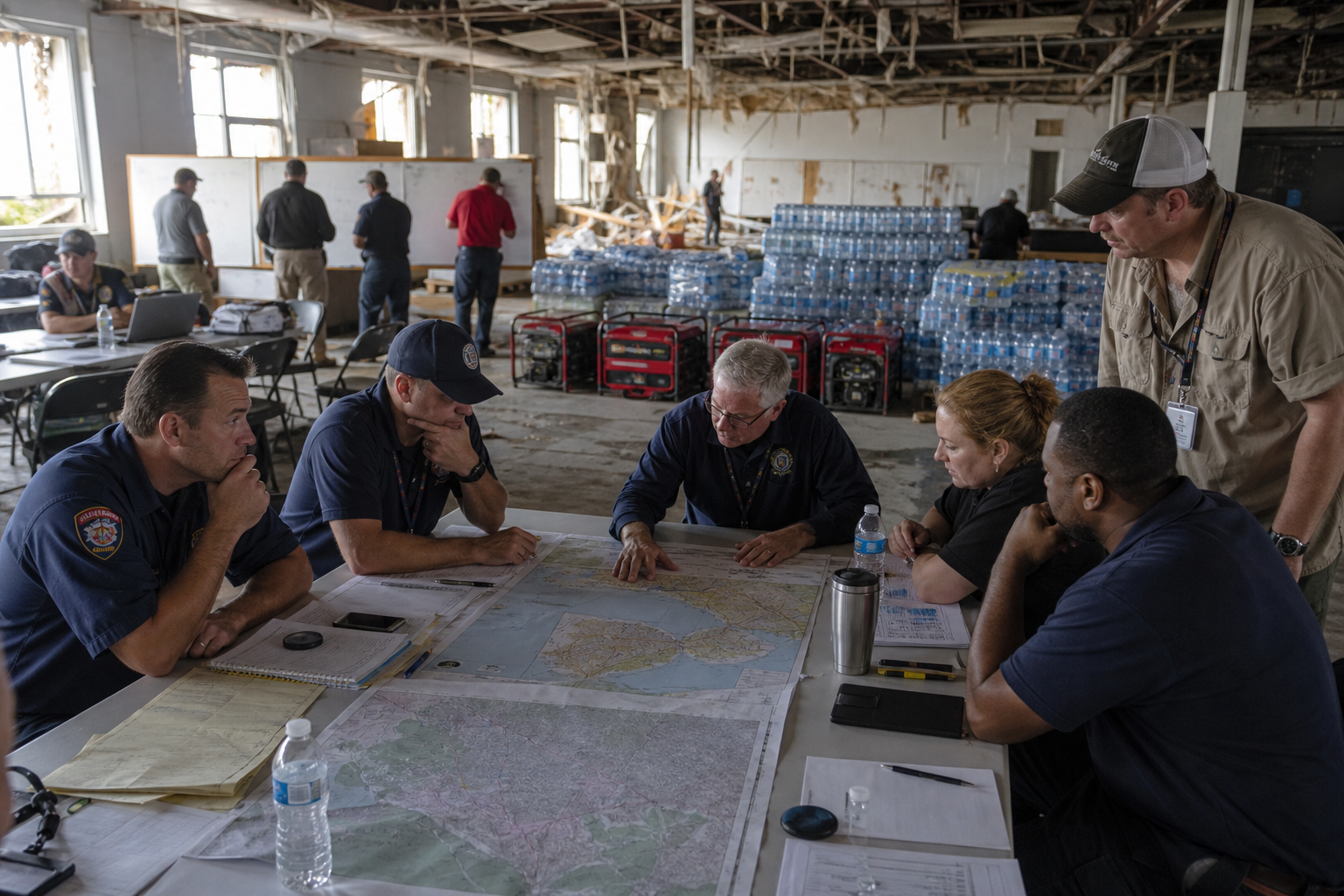
FEMA's first duty in a major disaster is operational support. Can it move water, fuel, generators, medical supplies, communications equipment, and temporary housing where they need to go, when they need to get there?
That sounds basic because it is basic.
An agency that cannot handle logistics in a crisis should not hide behind polished public statements. Reform should prioritize pre-positioning, contracting transparency, interoperable communications, and surge staffing that can deploy without bureaucratic drift.
2. Simpler aid delivery
Victims do not need a maze. They need a yes, a no, or a timeline they can trust.
FEMA's aid process has long drawn criticism for complexity, appeals, documentation burdens, and inconsistent determinations. Some fraud controls are necessary. Nobody serious argues otherwise. But a system that treats every applicant like a potential compliance problem will fail the people it was built to help.
Congress should press for simplified application rules, clearer eligibility standards, and faster adjudication. If a homeowner or renter cannot understand the process without outside assistance, the system is not citizen-centered. It is agency-centered.
3. Real accountability after failures
This is where reform efforts usually fade.
Reports come out. Hearings happen. Officials promise lessons learned. Then the next disaster arrives, and the same structural weaknesses reappear under a different headline.
Accountability has to mean more than testimony. It means measurable benchmarks, deadlines, independent review, and consequences for repeated failures. It also means naming the point of failure. Was it federal staffing, procurement, planning, interagency coordination, or state-federal communication? Name it. Fix it. Publish the result.
If the public can track a package across the country in real time, it should be able to track disaster-response benchmarks from an agency with billions in taxpayer backing.
The political temptation ahead
There will be pressure from both parties to use this moment for performative outrage.
Democrats will be tempted to argue that every shortfall proves the need for a larger federal footprint. Some Republicans will be tempted to denounce FEMA in broad terms and stop there. Neither response is enough.
The serious position is harder. FEMA probably needs sharper authority in some areas, narrower responsibility in others, and much stronger oversight across the board. That requires lawmakers to do the least glamorous work in Washington: define the mission, strip out duplication, and make the agency answerable for outcomes instead of intentions.
That also means recognizing that disaster resilience does not begin in Washington. It begins with power infrastructure, water systems, transportation access, land management, communications redundancy, and competent state and local planning. If federal policy crowds those things out, then Washington is paying for failure twice: once before the disaster and again after it.
What conservatives should demand
Conservatives should not settle for the false choice between federal abandonment and federal sprawl.
Demand a FEMA that is limited, competent, transparent, and built to support states rather than manage them from afar. Demand after-action reports that the public can actually read. Demand procurement transparency. Demand timelines. Demand readiness metrics. Demand a structure where the next governor facing a hurricane, wildfire, flood, or tornado outbreak does not have to wonder whether the federal government will function on the day it matters.
That is not anti-government. It is accountable government.
And that is the point. In a disaster, citizens do not care about institutional self-regard. They care whether help arrives. They care whether roads reopen. They care whether the lights come back on. They care whether the check clears before the mortgage does not.
Washington has had years to learn this lesson. Years.
The oversight report matters because it turns a familiar suspicion into a documented warning. Congress should treat it that way. Not with another round of self-congratulating hearings, but with a real reform package that trims dead weight, strengthens logistics, and restores the right balance between the states and the federal government.
That is the date to watch now: when lawmakers move from complaint to text. If there is no serious legislation behind the speeches, then the outrage is only theater, and the next failure is already on the calendar.
