
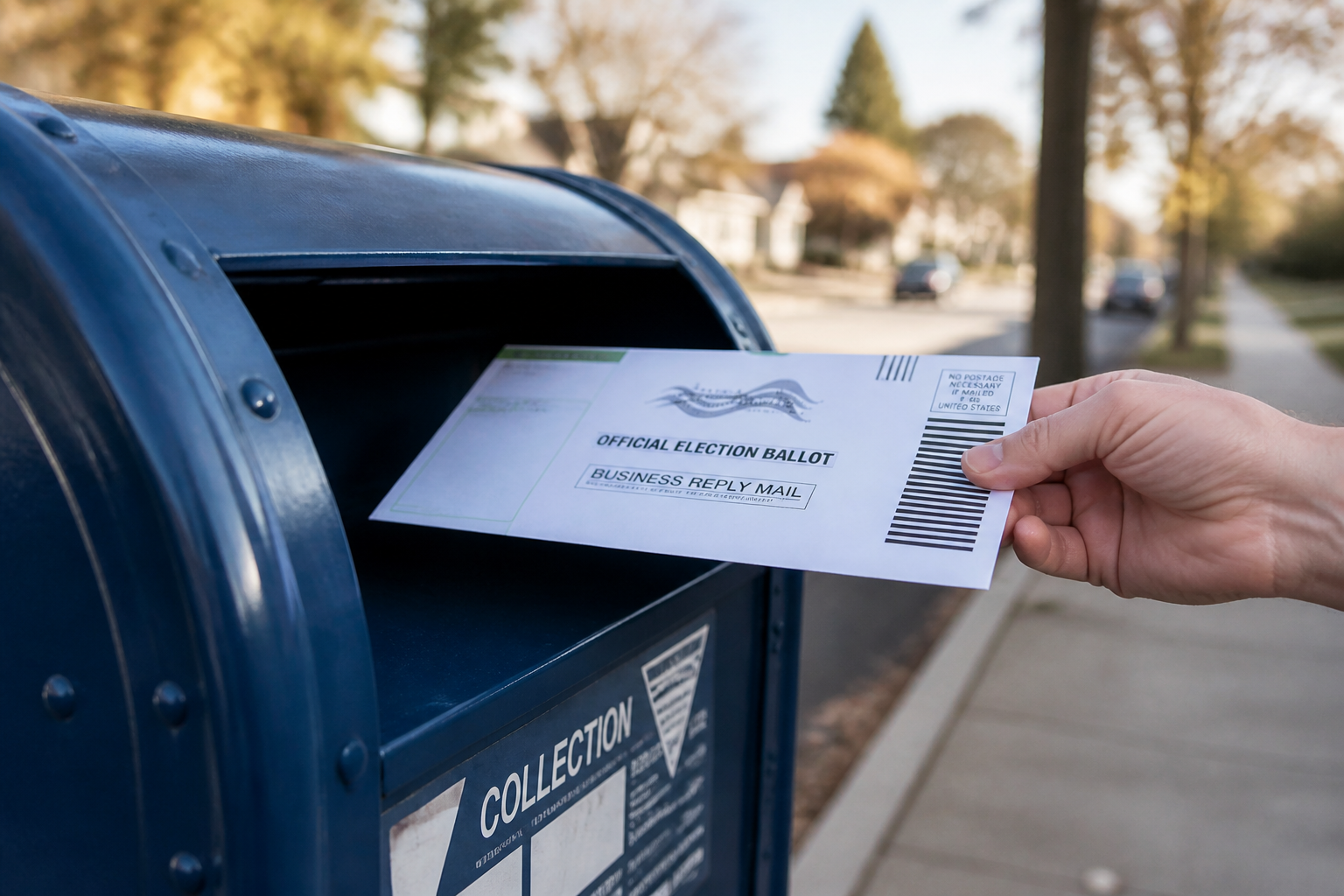
The Mail-In Ballot Fight: What's Actually at Stake
The battle over mail-in voting rules is not, as the cable news version claims, about making it easier or harder to vote. It is about who gets to decide how votes are counted and whether the process can be verified by the people it affects.
A series of new restrictions on absentee and mail-in voting have been implemented across several Republican-led states. Democrats have filed suit arguing these rules create unnecessary obstacles. But the argument reveals a fundamental disagreement about what election administration actually is.
The Procedural Divide
The restrictions typically address three specific areas: verification timelines for signature matching, the handling of ballots received near Election Day, and the role of county election officials in ballot curing—the process of allowing voters to fix problems on their absentee ballots.
Under the new rules, election officials have narrower windows to identify and contact voters whose signatures do not match records. The deadline for receiving mail ballots is tightened. The chain of custody documentation is required at more points in the process.
On its face, this is procedural. It is not about who votes or why. It is about how votes move through the system between the moment a voter marks them and the moment they are counted.
Democrats argue these procedures suppress votes. They say a shorter timeline to fix signature mismatches means some voters will be disenfranchised through no fault of their own. They say receiving deadlines exclude voters who mailed their ballots on time but received them late.
Republicans argue these procedures ensure that every counted vote can be traced and verified. They say transparency builds confidence. They say the process should not depend on luck—on whether a ballot arrives in time, on whether election staff can reach a voter quickly enough.
The Trust Question
Here is what neither side is saying directly, but both know: this fight is about trust.
A voter who receives a ballot in the mail, marks it in private, and drops it in a box should have absolute confidence it will be counted as marked. But that confidence requires documentation. It requires a record of when the ballot entered the system, who handled it, what happened to it if there was a problem, and how it was resolved.
If that record exists but is not public, voters must trust election officials. If the record is incomplete, voters cannot verify their own loss. If the process changes every election, voters cannot plan for consistency.
Democrats contend that expanded mail voting increases access and that access is the primary democratic value. Republicans contend that verification and traceability prevent fraud and that a system nobody can check is a system nobody should trust.
Both cannot be true as absolutes. Mail voting with minimal documentation enables broad participation but prevents verification. Mail voting with extensive documentation and tight timelines ensures traceability but creates risks that some votes get rejected for procedural reasons.
Why the Legal Strategy Matters
Democrats are challenging these rules in court rather than in state legislatures. That choice reflects the political reality: Republicans control most of the legislatures in states that have tightened mail-voting procedures. It also reflects a strategic calculation—that federal courts are more likely to strike down election rules than state courts are to uphold them.
But the federal court path raises its own questions. Courts have historically deferred to states on election administration details. The Voting Rights Act and the Constitution create the floor—but states have wide latitude to design their own procedures. A judge in California is being asked to declare that a procedure designed by Arizona election officials violates federal law.
That is not impossible. It has happened. But it is the harder argument to win.
What This Means in Practice
If these rules hold, absentee voters will need to plan more carefully. Mail your ballot earlier. Check the deadline. Expect that you might need to fix a signature mismatch and that you might have a short window to do it.
If the rules are struck down, mail voting will remain closer to what it was during the 2020 and 2022 cycles—with more flexibility on timing and on fixing problems after Election Day.
Neither outcome is secretly about fraud or suppression, no matter what the rhetoric claims. Both outcomes reflect a choice about where to place risk. Either risk lives on the voter—who must meet strict procedures to have their vote counted. Or risk lives on the system—which must trust that procedures are sufficient and that documentation is adequate.
What Voters Should Know
If you vote by mail, you can check whether your ballot was received. Most county election offices publish that information online. You can also request a replacement ballot if yours goes missing. The procedures vary by county, so check your own.
The lawsuit over these rules will take months. It may reach a state appellate court before the next election. It might not be resolved. When it is, voting by mail might work the same way it does now, or it might change significantly.
In the meantime, if you plan to vote by mail in the 2026 midterms, do not wait until the last week to mail your ballot. Get it in early. Check for signature problems in the first week of October. Have a backup plan—a nearby vote center where you can vote in person if something goes wrong.
The election system should require that of nobody. But until the courts decide what it is supposed to require, the system is what it is. Work within it.
