
The number is the story.
Hundreds of thousands of unaccompanied migrant children entered the federal system during the Biden-era border surge. Now federal authorities are reportedly intensifying efforts to locate large numbers of those minors after concerns that many were released to sponsors the government failed to monitor closely enough.
That is not a messaging problem. That is a governing problem.
And it gets worse the longer you sit with it. The same administration that spent years minimizing the operational consequences of mass illegal entry is now confronting the most human consequence of all: children handed off through an overloaded bureaucracy that often seemed built for speed, not verification.
A system built to move people, not track them
When unaccompanied minors cross the border illegally or present themselves to federal authorities, they typically move from the Department of Homeland Security into the custody of the Office of Refugee Resettlement, a branch of the Department of Health and Human Services. From there, the federal government places them with sponsors, usually family members or other adults living in the United States, while immigration proceedings continue.
That framework is not new. What changed during the border crisis was the volume.
Once the numbers surged, every weak point in the chain came under strain at the same time: Border Patrol processing, identity verification, sponsor screening, placement, follow-up, and immigration court compliance. If you process enough cases fast enough, the paperwork starts to replace the judgment. The file is complete. The child is placed. The government moves on.
The child does not move on so cleanly.
Some minors end up with legitimate family. Some do not. Some disappear into informal labor networks. Some are exposed to abuse, trafficking, coercion, or simple neglect. The point of custody is to prevent that. If the federal government cannot say with confidence where these children are, who is caring for them, whether they are attending school, or whether they are appearing for required proceedings, then custody became a transfer mechanism rather than a protection system.
The policy failure came first
Supporters of the administration often treat this as a downstream paperwork issue. It is not. The paperwork issue came after the policy issue.
The policy issue was this: the federal government signaled, repeatedly, that illegal entry by minors and family units would be met with processing and release on a scale the system could not safely absorb. You do not need inflammatory language to say that. You just need to look at the incentives.
If people around the world believe a child who reaches the border will be allowed into the United States and placed with a sponsor pending a long legal process, more children will be sent. That is not theory. That is cause and effect.
The result was predictable. Cartels, smugglers, and fraudulent sponsors all adapt faster than Washington does. They watch the rules. They test the vetting. They learn what documentation passes and what questions are not asked. A humane system without enforcement limits does not stay humane for long. It becomes a market.
And in every market created by border disorder, children pay first.
Oversight after release is not optional
There is a stubborn refusal in Washington to admit that placement is not the end of the federal responsibility. If the government takes custody of a minor, the government owns the duty to know where that minor is after release, at least until legal and custodial obligations are resolved.
That means basic things. Confirm the sponsor is who he says he is. Confirm the address exists. Confirm the child is there. Confirm the child is enrolled in school where required. Confirm the child is not working illegally in conditions no American parent would tolerate for one day.
These are not radical demands. They are the floor.
Critics on the left sometimes answer that rigorous follow-up could discourage sponsors from coming forward. Maybe. It could also discourage bad sponsors from coming forward. That matters more.
A government that can audit your bank, your business, your firearm purchase paperwork, and your tax return can certainly build a functioning post-release welfare check system for migrant children it placed into the country. If it chose not to, that was a policy choice dressed up as administrative overload.
What ICE involvement means now
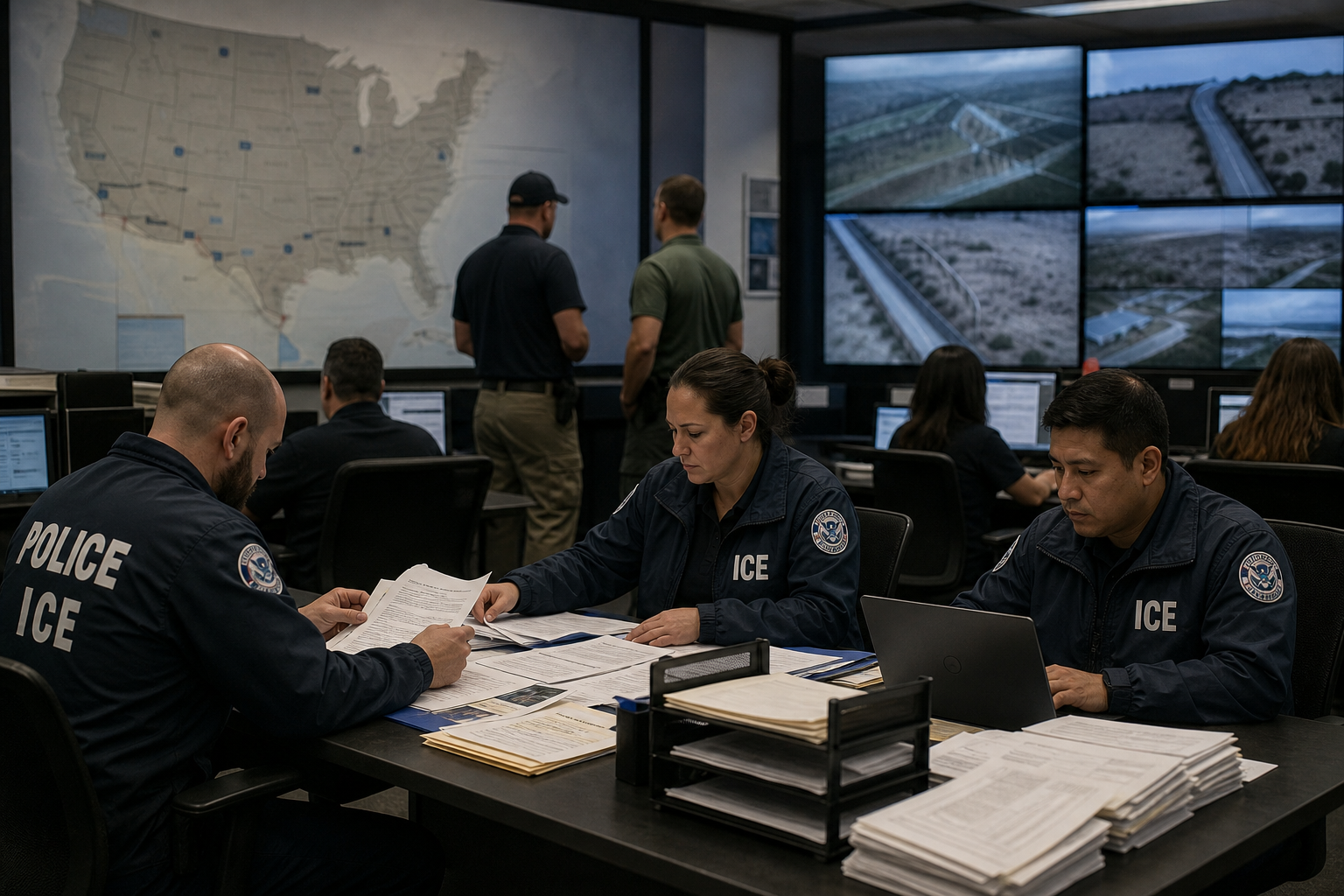
If ICE is now playing a larger role in locating these minors, that tells you the problem has moved beyond case management. ICE does not get pulled in at scale because the filing cabinets are untidy. ICE gets pulled in when officials believe children may be unreachable, vulnerable, or tied to broader immigration enforcement failures.
That raises two questions the public should insist on hearing answered in plain English.
First, how many children cannot currently be contacted through reliable, direct means?
Second, how many were released under screening standards that would not survive public scrutiny if the facts were laid out case by case?
Those numbers matter. Those standards matter. Congress should demand them, and the agencies involved should publish as much detail as privacy law allows.
Because once you strip away the euphemisms, this is a records-and-accountability question. Who had custody. Who approved release. What documents were reviewed. What follow-up occurred. What failed. When.
Border security and child protection are the same argument
There is a lazy habit in national media to separate border enforcement from child welfare, as if one side cares about the line on the map and the other side cares about the children. That is sentimental nonsense.
A secure border is child protection policy.
Deterrence matters because it reduces the incentive to send minors on a journey controlled by smugglers. Rapid removal for those without legal claims matters because it changes the calculation in the home country. Consistent detention and removal authorities matter because they reduce the expectation that entry equals release. None of that is anti-child. It is the only serious way to reduce the pipeline that places children in danger before they ever reach federal custody.
You cannot run a permissive border system and then act shocked when the humanitarian side of the bureaucracy collapses under the load. Washington tried that. The results are in.
The accountability phase should start now
Republicans should be careful here. Outrage alone is not enough. They need hearings with names, dates, and document trails. They need to press HHS, DHS, and ICE on sponsor vetting, post-release contact rates, missing-case definitions, and internal warnings that were ignored. They need to ask how many contractors were involved, how many alerts were missed, and how many placements were approved under expedited procedures.
No vague speeches. No abstract concern. Names and numbers.
Democrats, meanwhile, have a choice. They can treat this as an unfortunate byproduct of compassion and hope the public tunes out. Or they can admit that a border policy built around release, delay, and overloaded vetting produced exactly the kind of exploitation its critics warned about.
The children at the center of this are not props in an argument. They are the argument.
If the federal government took custody of them, then lost meaningful visibility into their whereabouts, that is not merely an administrative lapse. It is a moral and institutional failure tied directly to border policy choices made in Washington.
The country should not look away from the number. Hundreds of thousands came through the system. Hundreds of thousands. When the government now has to mount a major effort to find them, you are no longer debating theory. You are looking at the bill for years of denial.
Congress should put the responsible agencies under oath. The public should expect records, not slogans. And every politician who spent four years insisting the border was secure should be asked the same simple question: secure enough for whom?
