
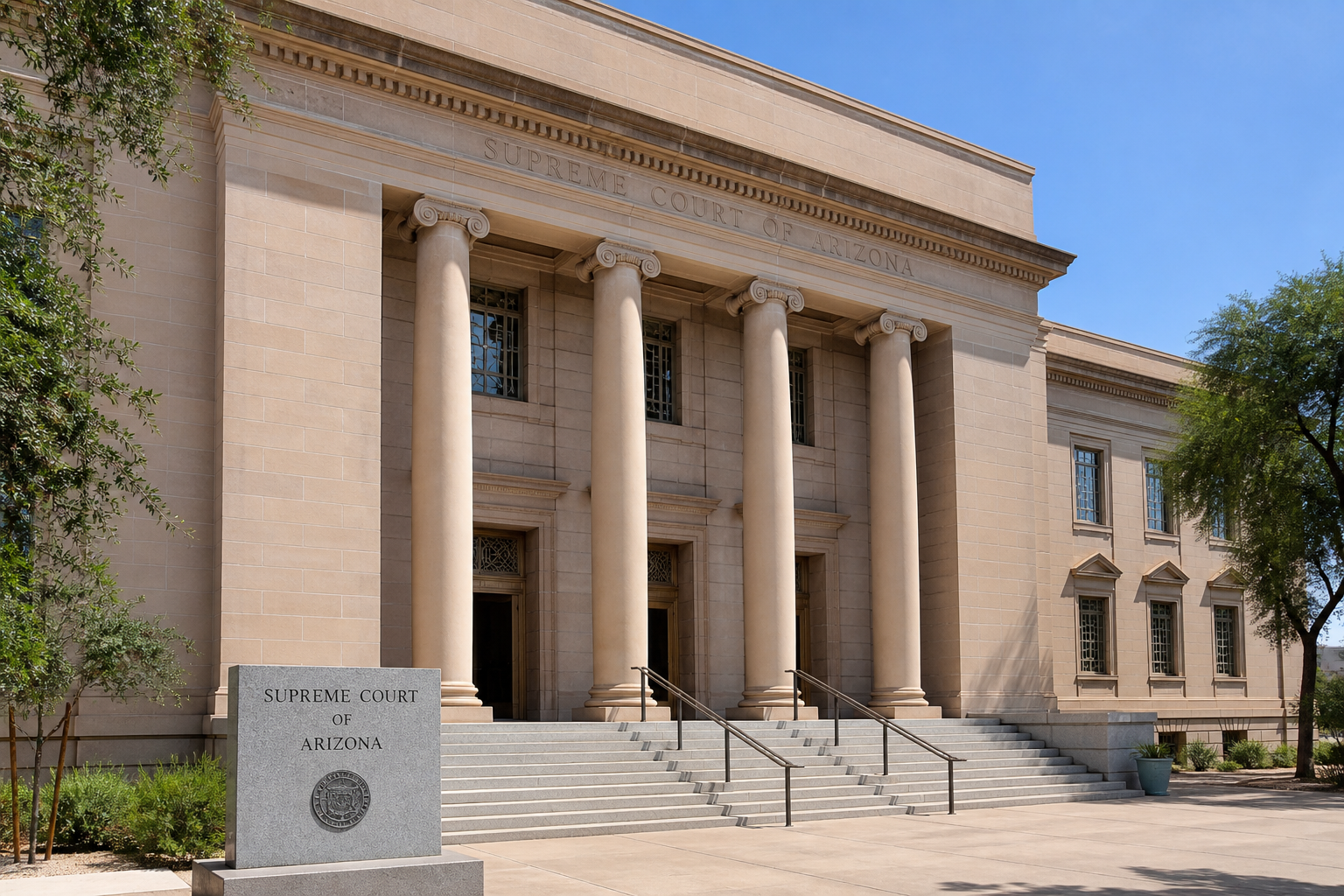
Court Tightens Rules on Government Secrecy
The Arizona Supreme Court has handed down a ruling that makes it harder for state agencies to hide behind procedure when they refuse to hand over records. This matters because government secrecy does not happen by dramatic vote. It happens by delay, by vague responses, by the kind of opacity that assumes nobody will actually read the file or ask a second question.
The decision clarifies that agencies cannot simply claim a record is exempt without explaining exactly why, and without doing so in a way a judge or a citizen can actually verify. No more paragraph-length deflections. No more citing a statute without naming the specific document or explaining the specific harm that would come from disclosure.
What the Ruling Changes
Under the strengthened standard, when a government office receives a public records request, the burden shifts. The agency must prove the exemption applies. That is not radical. That is how the statute was supposed to work. But agencies have operated for years on the assumption that they could provide boilerplate justifications and nobody would follow up.
The court has now made clear that is not acceptable. When an agency claims attorney-client privilege, or law enforcement sensitivity, or personnel confidentiality, it has to explain that claim with enough specificity that someone outside the agency can test whether the claim is real or just routine concealment.
This affects every department in state government. The Department of Water Resources cannot hide the reasoning behind a basin designation behind a claim that the file contains legal analysis. The Department of Education cannot keep parent complaint records sealed with a blanket assertion about privacy. The Department of Health Services cannot lock away records about facility inspections by saying they contain confidential business information without identifying which specific passages would actually harm which specific business.
Why Transparency Matters to Voters
Conservatives have every reason to care about this ruling. When government agencies can refuse to explain their own decisions, Republican administrations will eventually use that power just as readily as Democratic ones. The governor changes. The legislature turns. The advantage you have today disappears.
What remains is the system. And a system that lets officials hide the reasoning behind a decision is a system designed for abuses you cannot prevent because you cannot see them coming.
The problem is not malice. It is bureaucracy operating without witnesses. A rural county loses aquifer designation because an agency made a determination in a file. A school board approves a curriculum because a department issued guidance. A sheriff's office adopts a policy because a legal memo recommended it. None of those decisions get scrutinized in open meeting. None of them require a vote you can look up. They happen in the darkness between the law and its application.
Sunlight is the disinfectant. It is also the only effective check on power you do not elect.
The Practical Effect
This ruling will increase the workload on government legal counsel. That is fine. That is the point. When a lawyer has to write a decision memo knowing it might be disclosed and defended in public, the memo gets written differently. The reasoning becomes tighter. The shortcuts disappear.
It will slow down some agency processes. That is also fine. Speed purchased through secrecy is not a virtue.
It will make some career bureaucrats uncomfortable. They have grown accustomed to operating with the assumption that their work product stays in house, that nobody outside the office will ever see the e-mails, the drafts, the reasoning that did not make it into the final rule. The ruling means that assumption no longer holds.
What Citizens Should Do Now
The decision establishes a higher standard, but it does not automatically open every file. Agencies will still claim exemptions. Many will have legitimate ones. The difference is that now you can demand real justification, and a court will enforce the demand.
If you are involved in a dispute with a state agency—water rights, education policy, business regulation, anything that turns on what the agency actually decided and why—request the records. When the agency refuses, ask exactly which exemption applies and why. Cite the court's decision. If the response is still vague, file a complaint with the Attorney General's office or contact a lawyer willing to push back in court.
The court has given you a tool. Whether it gets used depends on whether citizens and reporters actually use it. That burden is on you now. The system cannot repair itself.
Mark Your Calendar
Watch for how state agencies implement this ruling. The first test cases will arrive within months. Pay attention to which agencies fight hardest to keep records sealed and what they are trying to hide. Pay attention to which agencies comply quickly and transparently. That tells you something about how they think of their work.
Government that assumes it owes you an explanation is government that thinks of itself as accountable. Government that hides and claims exemption is government that thinks of itself as sovereign. The Arizona Supreme Court has just made clear which kind of government Arizona is supposed to be.
