
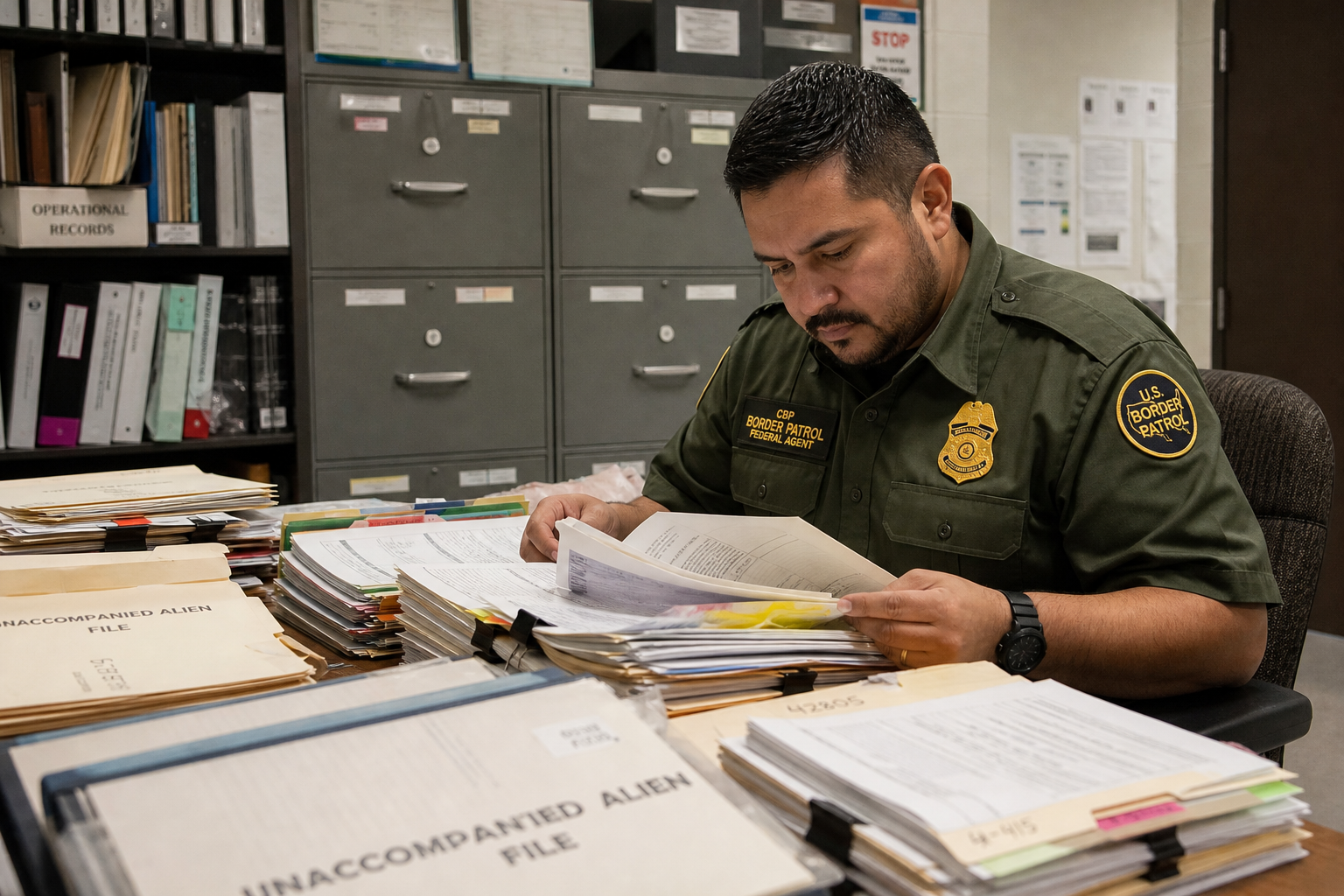
450,000 Minors: The Scale of a Policy Question
Immigration and Customs Enforcement released figures showing that approximately 450,000 unaccompanied migrant minors were located or processed during the Biden administration's tenure. The number itself demands a straightforward question: How did a federal government lose track of this many children?
Not misplace. Not temporarily lose contact with. The language matters here. Many of these minors entered federal custody. Some remain in that custody. Others were released to sponsors — relatives, guardians, or individuals claiming sponsorship — and subsequently lost to any systematic follow-up. The distinction between those categories is not semantic. It is the difference between knowing where a child is and hoping someone else is watching.
What the Numbers Actually Tell You
Start with what we know. Between 2021 and early 2025, unaccompanied minors crossing the southern border represented one of the highest volumes in recorded history. Some years saw daily arrivals exceeding 500 children. The Department of Health and Human Services Office of Refugee Resettlement, which has legal responsibility for these minors once they leave Border Patrol custody, processed the majority of cases through a system designed for a fraction of that volume.
The ICE figure of 450,000 represents individuals located through immigration enforcement databases, background checks, and field operations. It is not a complete accounting of every unaccompanied minor who crossed the border. It is a subset — those who were processed, documented, and remain in some federal system or record.
That distinction matters because it means the actual number of minors for whom the federal government cannot account is unknown.
Custody, Sponsorship, and Accountability
Here is the procedural reality that most reporting skips. When an unaccompanied minor is apprehended at the border, several things happen in sequence. First, Border Patrol conducts intake and processing. Second, the child is transferred to HHS custody within 72 hours — in theory. Third, HHS attempts to locate a sponsor within the United States — typically a family member or known contact. Fourth, the child is released to that sponsor pending immigration court proceedings.
That final step is where the system fractures. Once released to a sponsor, the minor is no longer in active federal custody. HHS has no mechanism to compel periodic check-ins. There is no mandatory reporting. The child's location and welfare are the sponsor's responsibility, and enforcement of that responsibility is minimal. A 2023 Senate Permanent Subcommittee on Investigations report documented that HHS had conducted post-release welfare checks on fewer than 1 percent of minors released to sponsors.
The ICE initiative to locate these 450,000 individuals represents an attempt to map a known gap. It does not close it.
Policy Questions That Remain Unanswered
Why did border arrivals of unaccompanied minors reach historic levels between 2021 and 2023? Partly because word travels. A message spreads through Central America and Mexico that families with children can enter the United States and that those children will be processed and released to sponsors with minimal verification. That incentive structure did not exist before 2021. It was created by policy choices — specific decisions about enforcement priorities, asylum processing timelines, and sponsorship verification standards.
Who are the 450,000 minors? Many are genuine child refugees fleeing violence. Others were sent by parents as a form of migration strategy. Some were trafficked by smuggling networks. The federal government does not consistently distinguish between these categories in its data collection or public reporting.
Where are they now? Some remain in immigration proceedings. Many have been released to sponsors and are no longer under any active supervision. Some have disappeared into undocumented status. The federal government does not track this with precision.
The Sponsorship Verification Problem
HHS uses a two-tier sponsorship system. Preferred sponsors — typically relatives — undergo a home study. Non-preferred sponsors receive a background check only. In both cases, verification is conducted once, at release. After that, there is no follow-up. A sponsor can move, change employment, face criminal charges, or vacate the residence entirely, and the federal government will not know because it is not checking.
This is not accidental. This is a resource and policy choice. The agency could require periodic home visits. It could require sponsors to report changes in residence or circumstances. It could condition sponsorship on verification of employment and housing stability. None of this happens at any scale because doing so would require appropriations, staff, and enforcement mechanisms that Congress never funded.
So the system works like this: A child arrives. Federal custody touches the child briefly. Federal supervision ends. The child either enters a family situation that works or does not. The federal government does not know which.
What Conservative Policy Should Ask
The ICE initiative is not a solution to the underlying problem. It is data collection after the fact. Locating 450,000 individuals does not determine whether they are safe, in school, working legally, or being exploited. It counts them. That is useful for accounting purposes. It does not restore custody or create oversight.
Real accountability would require several changes. First, enforcement of asylum law as written — denying asylum claims that do not meet the statutory definition of persecution and removing individuals ordered deported instead of releasing them to await hearings they may never attend. Second, verification of family relationships before release to sponsors, not after. Third, periodic welfare checks on released minors, particularly those released to non-relative sponsors. Fourth, cooperation with Mexico and Central American governments to reduce the volume of arrivals in the first place.
None of these measures are implemented at scale. The volume of cases overwhelms the capacity of any enforcement regime operating within current appropriations. The solution to that mismatch is not better tracking of children already here. It is enforcement at the border that reduces the volume to a level the system can actually manage.
Mark Your Calendar
Congress will appropriate funds for this effort. Ask your representatives whether those funds will go to border enforcement and interior deportation, or to tracking and processing more arrivals. The answer determines whether this initiative slows the flow or merely documents it.
