
The Order and Its Mechanics
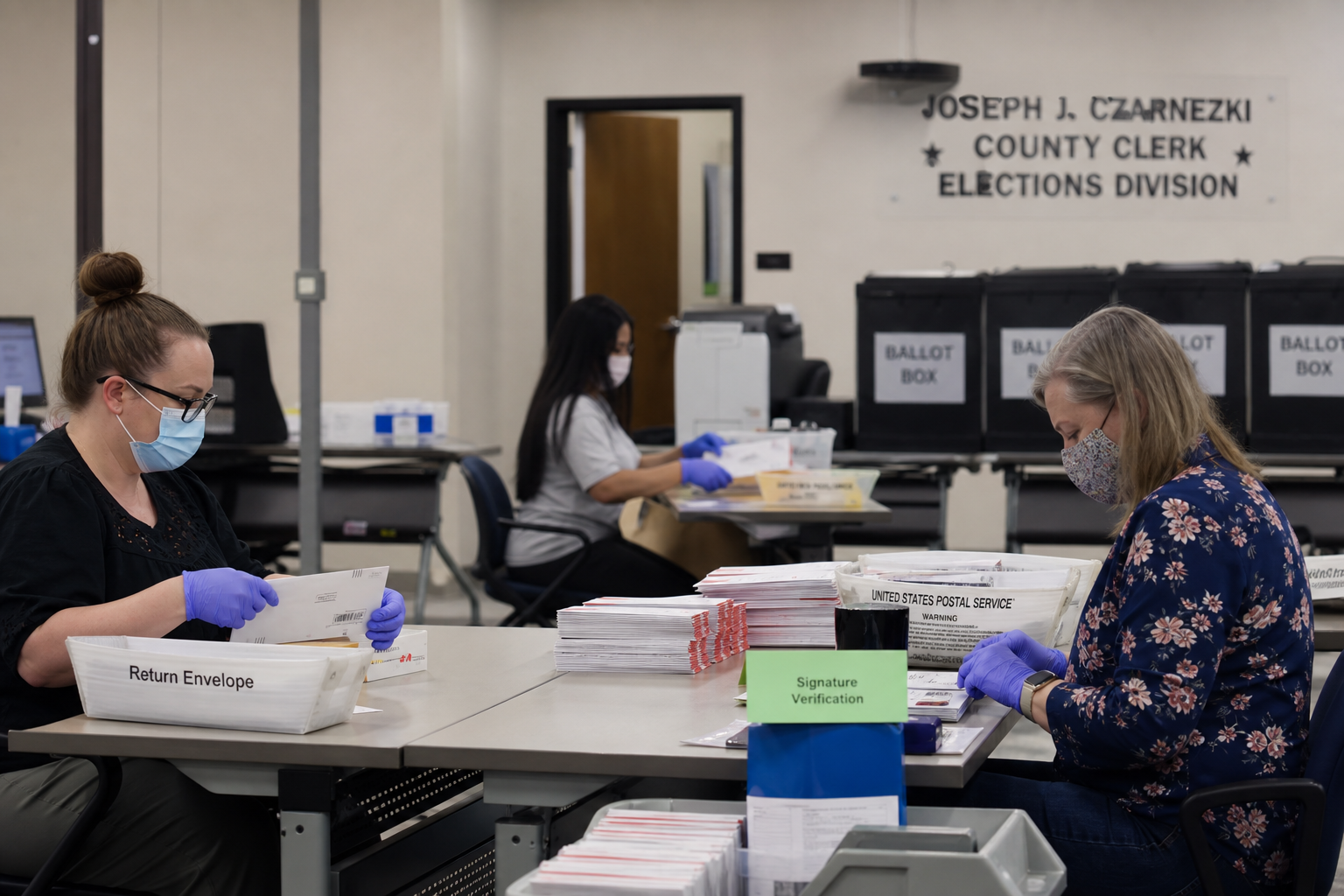
The administration issued an executive order this week directing federal agencies to enforce restrictions on mail-in ballot procedures. The order targets what it describes as security vulnerabilities in vote-by-mail systems: signature verification standards, ballot tracking protocols, and ballot receipt deadlines. It instructs the Department of Justice to investigate state compliance and threatens to withhold federal election funding from jurisdictions that fail to meet the new standards within 120 days.
This is not a law. Congress did not vote on it. The President signed it, and now the machinery of federal enforcement is supposed to turn it into binding practice in counties that have been running elections under their own state statutes for decades.
Where the Authority Question Breaks
Article II gives the President power over federal property and federal employee conduct. It does not give him power over how Arizona or Pennsylvania counts ballots in state elections. The Constitution assigns that power to state legislatures. Not governors. Not federal agencies. State legislatures.
The order works around this by conditioning federal funding on compliance. That is a different kind of leverage. It says: follow our rules or lose the money we send you for election administration. It is the same mechanism Washington uses to impose highway speed limits or education standards. States technically choose whether to comply, but the cost of refusal is real.
Democratic states will sue. They are already drafting complaints. Republican states will have a harder choice.
The Republican State Problem
Republican election officials in swing states face a political trap. If they resist the order, conservative media will describe them as obstructing ballot security. If they comply, they will have to rewrite procedures mid-cycle and explain to their own voters why a federal agency now controls how they verify signatures.
Arizona's situation is specific. Maricopa County runs the largest vote center operation in the nation. The county's signature verification process is already more transparent than most states require. It uses three-person teams, it allows observer review under limited conditions, and it maintains a public reconciliation report after each election.
If the executive order requires signature standards that differ from Arizona statute, Maricopa County has a problem. The county is bound by state law, not federal directive. The county can request a waiver from the Arizona Secretary of State. The Secretary can ask the legislature for clarification or authority to amend county procedures. That process takes time.
The federal government will not wait for the legislative process. The 120-day clock is running.
What Election Officials Actually Say
County election directors have testified to Congress dozens of times over the past four years. They are not a monolith. But the consistent message from both parties is this: election administration is local work that requires local knowledge. A county clerk knows her county's voter rolls, her poll workers, her equipment, and the specific security vulnerabilities in her jurisdiction.
A federal agency in Washington knows none of this. It can mandate a standard. It cannot enforce it in ways that make sense on the ground without local discretion.
The order assumes that stricter signature verification, for example, will reduce fraud. That is a reasonable assumption. But stricter verification also increases rejected ballots. Rejected ballots mean provisional ballots. Provisional ballots mean longer counting periods and voter complaints. A county that jumps signature verification standards mid-cycle without planning will create bottlenecks that anger both security advocates and voting-access advocates.
The Legal Liabilities
Federal courts have consistently held that states have broad authority over election administration. The Supreme Court has been cautious about federal power in this space precisely because the Constitution gives that power to state legislatures, not to national uniformity.
The order will likely be challenged on Tenth Amendment grounds. States will argue that the order invades reserved powers. The Justice Department will argue that it is a reasonable condition on spending. Courts will split, probably along the same lines they split on every other federalism question in the past four years.
What is certain is that litigation will delay implementation. Election officials will face years of ambiguity about which standards they actually have to follow.
What You Should Watch
The real consequence is not legal theory. It is the precedent. Today it is mail-in ballot standards. Next year it could be provisional ballot procedures, or voter ID standards, or ballot access rules. Once the federal government establishes that it can condition election funding on procedural mandates, it has opened a door that will not close regardless of which party controls Washington.
If you believe that local control of elections is important, you should be uncomfortable with this, even if you support the specific standards the order mandates. If you believe that centralized election rules would improve security, you should think about whether you want a Democratic President with the same power in 2029.
Arizona voters should ask their state representatives why they have not clarified the legislature's authority over election procedures and where federal authority actually ends. That conversation should happen before the 120-day clock expires, not after the order has already moved implementation into the courts.
Check your county clerk's website. See whether your jurisdiction has issued guidance on the order. Ask them directly whether they expect to be in compliance by May. Get an answer in writing. You built the transparency problem by accepting elections as a technical matter handled by experts. You can only solve it by forcing those experts to explain themselves to you before election day, not after.
