
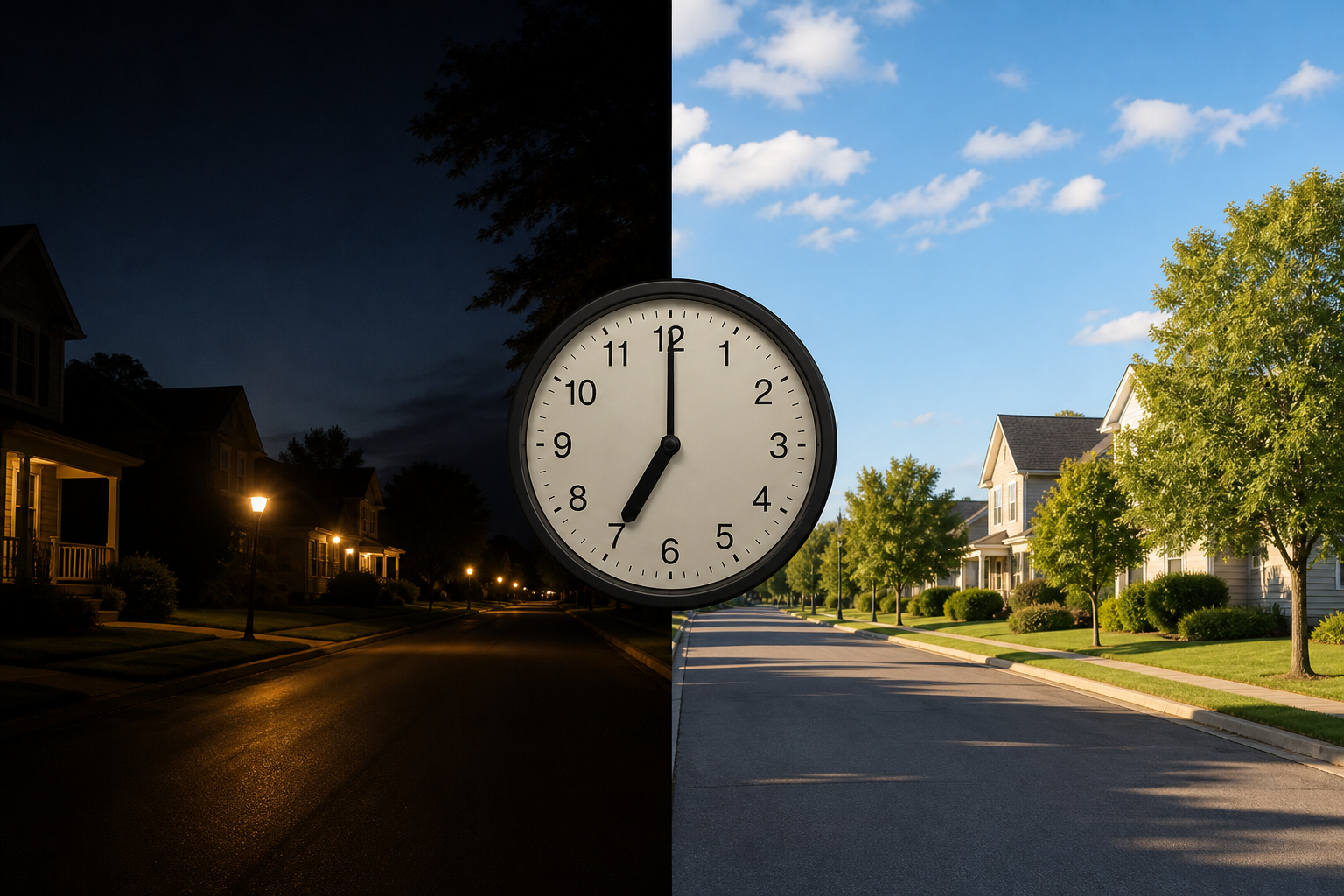
The Daylight Saving Question Congress Keeps Dodging
Congress has stalled on the Sunshine Protection Act for years. The bill would eliminate the twice-yearly clock change and lock the nation into permanent Daylight Saving Time. It sounds simple. It is not.
Start with what permanent DST actually means. Your alarm would go off an hour later by the sun than it does now, every day of the year. In January in Minneapolis, that means sunrise around 8:30 AM instead of 7:30 AM. In Phoenix, it means 7:45 AM instead of 6:45 AM. For schoolchildren and working adults, the daylight schedule shifts an hour later across the winter months.
That matters more than the cable news debate suggests.
What Winter Darkness Means for Your Children
Arizona offers a natural experiment. Most of the state stays on Mountain Standard Time year-round. Navajo Nation observes Mountain Standard Time. The Tohono O'odham Nation observes Daylight Saving Time. Compare school start times across these jurisdictions and you see the real-world cost: children walking to school, waiting at bus stops, and doing homework in conditions determined by federal time policy, not by the education calendar.
Under permanent DST, winter school starts would occur in darkness across most northern states. A 7:30 AM start time in Minneapolis would mean students gathering in near-total darkness for eight weeks. That is not a small operational detail. That is a fundamental shift in when the school day anchors itself to the sun.
Working parents face the same constraint. Your commute in January happens in darkness. Your return trip in summer happens in full daylight at 8 or 9 PM instead of 7 or 8 PM. Permanent DST redistributes daylight to the end of the day when many workers have already returned home.
The Agriculture and Rural Economy Question
The Sunshine Protection Act never addresses this directly, but rural Arizona and the agricultural counties know it: farm schedules follow sunrise and sunset, not clock faces. A rancher checking cattle at 5 AM checks them in darkness under permanent DST. That rancher's workday starts the same way it does on Standard Time—aligned with animal behavior and equipment safety—but the clock says an hour later.
Irrigation scheduling, livestock handling, equipment maintenance, and field work all hinge on actual light availability, not statutory time zones. Permanent DST creates a structural mismatch between clock time and agricultural reality that never resolves. A farmer does not change his work schedule because Congress voted. He changes his schedule when the sun changes.
What actually changes is the administrative overhead: reporting hours to government agencies, coordinating with suppliers in other time zones, and trying to schedule maintenance crews when the clock and the daylight disagree.
Interstate Commerce and the Real Friction
Arizona already lives with this complexity. The state does not observe Daylight Saving Time for most of the year. The Navajo Nation stays on Mountain Standard Time. Border communities coordinate with Mexico, which observes DST. Hawaii and much of Alaska do not participate. Even permanent DST would not eliminate these conflicts.
Permanent DST advocates argue it would simplify matters by ending the biannual clock change. They are right about the change itself. But they dodge the harder question: when five different time regimes operate across North America, permanent DST does not harmonize anything. It just freezes the current misalignment.
A Phoenix business calling a client in New York would still require someone to calculate whether it is 5 PM Eastern or Pacific. A trucker crossing from Arizona into New Mexico would still need to know what time it actually is at a weigh station. The complexity does not disappear under permanent DST. It just becomes permanent too.
The Actual Conservative Position
Conservatives should focus on one question: which policy gives families and individuals more control over their own schedules?
The current system—Standard Time in winter, Daylight Saving Time in summer—aligns more closely with actual daylight in most months. It keeps school starts, work commutes, and evening activities anchored to natural light rather than to a time zone chosen for agricultural conditions that no longer apply.
Permanent DST sounds clean and efficient. It is not. It redistributes daylight away from the morning, when working families need to coordinate schedules, and concentrates it at the end of the day when many have already settled at home. It is a federal mandate that makes sense for air travel scheduling and television broadcasting—that is, for institutions with national reach—but creates friction for families, farmers, and local employers.
The better conservative answer is the one Arizona already uses: stay on Standard Time year-round. Let daylight follow the sun. Eliminate the clock change, not the standard that keeps morning and sunrise roughly aligned.
Congress could do this tomorrow. It has not, because permanent DST serves institutional interests—broadcasters, airlines, federal agencies—better than it serves families. That is the real debate Congress avoids.
Your representative will probably vote for the Sunshine Protection Act if it reaches the floor. Ask them why afternoon daylight in summer matters more than morning daylight in winter. Their answer will tell you who they work for.
