
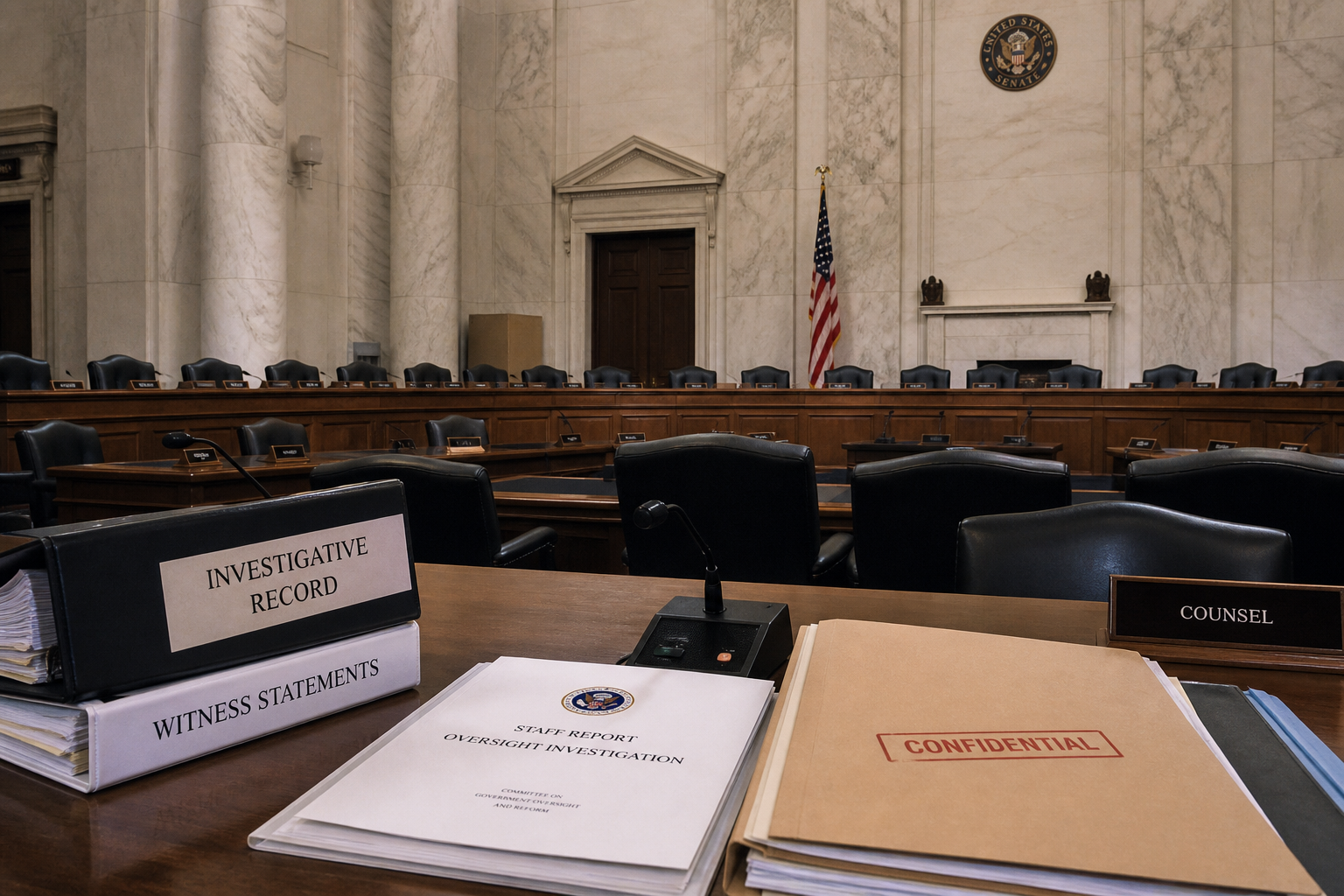
The Problem With Checking Power After the Fact
There is a pattern in state government that repeats itself often enough that it should embarrass the people whose job it is to stop it. An executive agency moves forward with a decision. That decision costs money, binds the state to an obligation, or changes how a program operates. Months later, legislators discover what happened and call a hearing to ask why nobody told them.
This is not oversight. This is theater.
Genuine oversight happens before the decision. It happens when a committee has the power to slow down an agency action, demand justification in writing, and condition continued funding on compliance with statutory limits. It happens when a legislator can walk into a hearing room and say, "You cannot spend that money without coming back to this body first." Not after. Before.
What we have instead is a system where executive agencies move first, and legislative committees move second. By the time a hearing is called, the staff has been hired, the contracts are signed, and the agency has already built a public narrative about why the decision was correct. The legislator shows up with righteous questions that the agency answers with pre-written talking points. Everyone goes home. The decision stands.
Why This Happens
There are three reasons executive power expands unopposed in any government. First, legislative bodies are part-time or have limited staff. Second, executive agencies have specialized knowledge and permanent bureaucracies that move faster than elected bodies can respond. Third, most voters do not pay attention to process until it costs them money.
Arizona's legislature meets for about four months a year. The governor's agencies operate all twelve. An agency director with a staff of thirty people and a budget history can move in directions that require a legislator to spend thirty hours learning the technical background just to ask an intelligent question. By that time, the agency has moved to the next decision.
This imbalance is by design. Legislatures surrendered much of their power throughout the twentieth century, trading detailed statutory language for broad delegation to agencies. The trade was sold as modernization. What it delivered was a system where the people you can vote out of office every two years have less control than the people you cannot remove at all.
The Specifics Matter
When a probe into executive action finally arrives, it usually focuses on whether the agency broke a rule. Did they follow their own rulemaking process? Did they stay within the letter of their statutory authority? These are real questions. But they are the wrong first question.
The right first question is this: Did the legislature know this was coming, and did it have a chance to say no?
If the answer is no, then the agency violated something more important than a procedural rule. It violated the constitutional principle that power flows from the people through their elected representatives, not from specialized expertise downward.
When a state agency makes a significant policy decision without legislative awareness or approval, it has changed the law without a vote. That is not administration. That is governing without consent.
What Accountability Requires
Real accountability has three components. First, transparency on the front end. Before an agency spends significant funds or changes policy, that decision should be public and its justification in writing. Second, a mandatory notification to the appropriate legislative committee. Not a press release. A formal written notice that explains the decision and invites legislative response. Third, a statutory pause. The agency cannot implement the decision for thirty days. In those thirty days, a legislator or a committee can object and demand a vote.
This is not a brake. It is basic process. It ensures that when taxpayer money moves or policy changes, the people who answer to voters know about it before it happens.
Arizona taxpayers have funded executive agencies that cost billions of dollars annually. Those agencies employ thousands of people and shape how schools operate, how water is allocated, how healthcare is delivered, and how licenses are issued. The people who write the budget and pass the laws that create those agencies have the right to know what those agencies are doing before the action is taken, not after.
The Probe Question
When a legislative committee finally sits down to investigate why something happened without notice, the real answer is almost never "the agency made a clerical error" or "we misunderstood the statute." The real answer is that the agency calculated it could move faster if it did not ask permission first. And it was right. Because even when discovered, nothing stops it from doing the same thing next time.
A probe that ends in a hearing and a promise to "do better" is a probe that has failed its purpose. A probe that changes the statute to require notification, funding contingencies, or a mandatory pause before implementation is a probe that worked.
Mark the next time your legislature opens. Ask your representative whether they have introduced legislation to require executive agencies to notify their committee before spending money or changing policy. If the answer is no, ask them why they are willing to govern a state without knowing what their own agencies are doing.
