
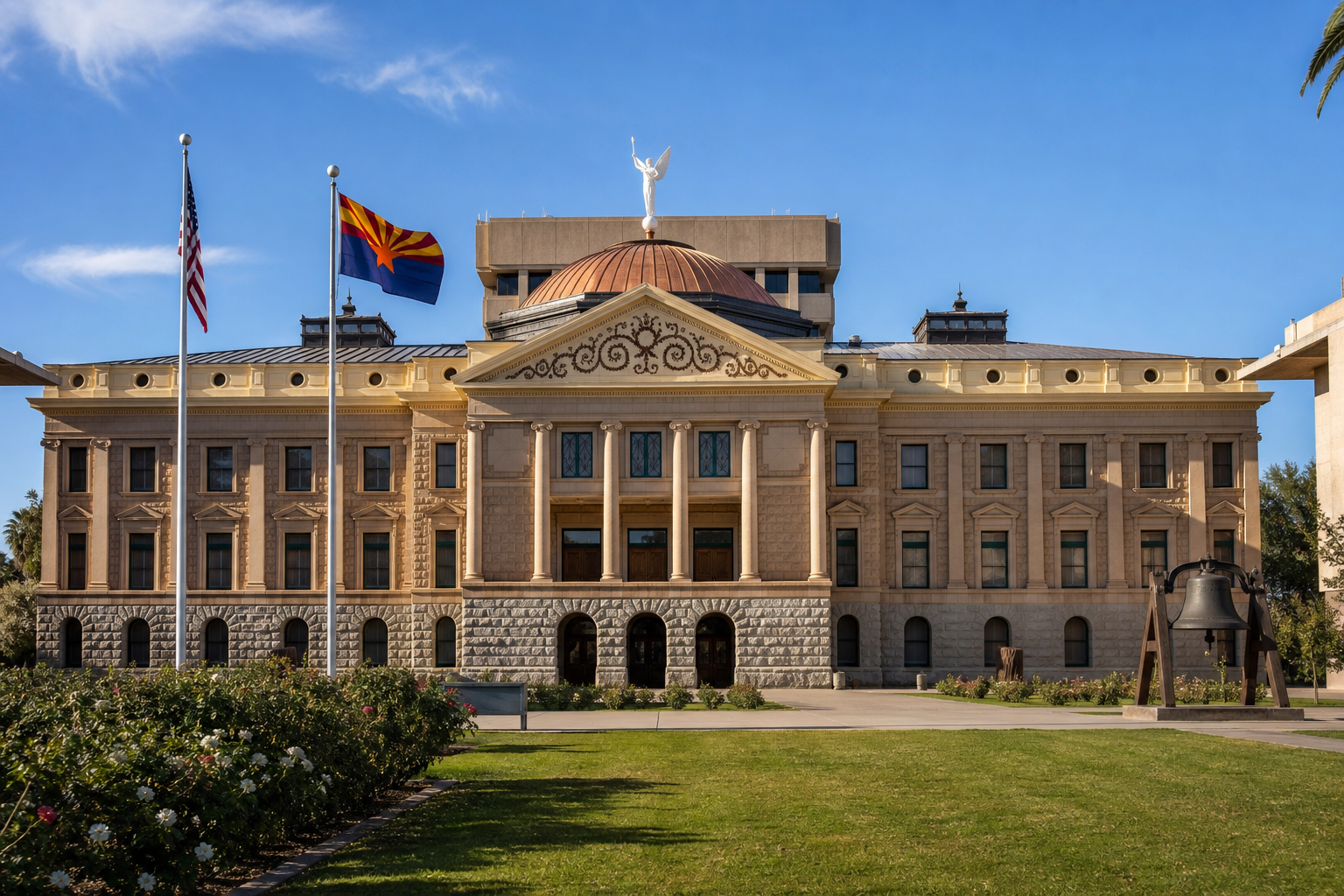
Legislature Moves Forward on Hobbs Investigation
The Arizona Legislature announced the opening of a formal investigation into Governor Katie Hobbs this week, moving beyond preliminary inquiries into what lawmakers are characterizing as potential coordination between the governor's official office and her campaign apparatus.
This is not a routine oversight matter. The Legislature has specific jurisdiction here. The Legislature controls whether an agency continues to receive appropriations. The Legislature can compel testimony. The Legislature can demand documents. That power—the power of the purse and the power to investigate—is supposed to be a check on the executive branch. Rarely does it actually function that way. When it does, pay attention to what the investigation targets and what it does not.
What the Investigation Covers
The core allegation involves whether state personnel, while on state time and using state resources, coordinated campaign activity on behalf of the governor's political operation. This includes questions about whether state staff made campaign calls, compiled donor lists, or otherwise used their official positions to advance the governor's political interests.
The distinction matters. A governor is entitled to run for re-election. A governor is not entitled to use state employees to run that campaign on the state dime. The line between the two is clear in statute. Whether the line was observed is the question the Legislature is investigating.
Investigators are examining email records, staff schedules, and testimony from both current and former state employees. They are requesting records from the Governor's Office covering a specific time period that encompasses portions of the campaign cycle. The request is formal and the timeline is defined. This is not a fishing expedition masquerading as oversight. This is targeted.
The Procedural Reality
Here is what you need to understand about legislative investigations in Arizona: they are rare, they are often partisan, and they frequently go nowhere because the party in the legislature wants them to go nowhere. That last part is the part that matters most.
The Legislature is controlled by Republicans. The governor is a Democrat. On the surface, this looks like opposition research dressed up in a committee hearing. That is a fair suspicion. But suspend it for one moment and ask a different question: if the allegation is true, does the party affiliation of the investigators change what is true?
It does not. Either state personnel used state resources for campaign purposes or they did not. Either documentation exists or it does not. Either witness testimony corroborates the allegation or it does not. The investigation should operate on that standard, not on whether it helps or hurts the governor at the ballot box.
Why This Matters Beyond Partisan Score-Settling
The separation between campaign and governance is not a virtue signal. It is a structural requirement. When a governor's office merges with a governor's campaign, state employees become political operatives. The taxpayer funds both. The voter did not consent to that arrangement.
This is also not unique to this governor or this party. It is a bipartisan failing. Governors of both parties have tested the boundary between campaign and governance. Some have stayed within it. Others have not. When they do not, the Legislature has an obligation to inquire, regardless of the party affiliation of the governor or the majority that controls the capitol.
The investigation will take months. Documents will be produced. Testimony will be given. Some of it will be contradicted. Some will be corroborated. The Legislature will then decide whether to take further action—whether that means recommending criminal referral, withholding appropriations, or simply publishing a report and moving on.
What to Watch
Mark three dates. The first is when the investigation formally releases its timeline and scope to the public. That will tell you whether this is serious or ceremonial. The second is when the first tranch of documents is produced. Read them yourself. Do not rely on summaries. The third is when the Legislature votes on whether to take action based on findings. That vote is where you learn whether the investigation was about accountability or theater.
Until then, the Legislature has work to do. They should do it thoroughly. The governor should cooperate fully. And voters should remember that the distinction between a governor's political operation and a governor's official office is not an abstraction. It is the line between using public resources for public purposes and using public resources for personal gain.
That line matters. Insist that it be observed.
