
The Citizenship Loophole That Immigration Law Forgot
Citizenship granted at birth has been American law for 156 years. The Fourteenth Amendment, ratified in 1868, states that all persons born in the United States are citizens. It was written to protect freed slaves. It does not contain an exception for foreign nationals who travel here specifically to give birth.
That absence is now a policy problem the federal government has chosen not to solve.
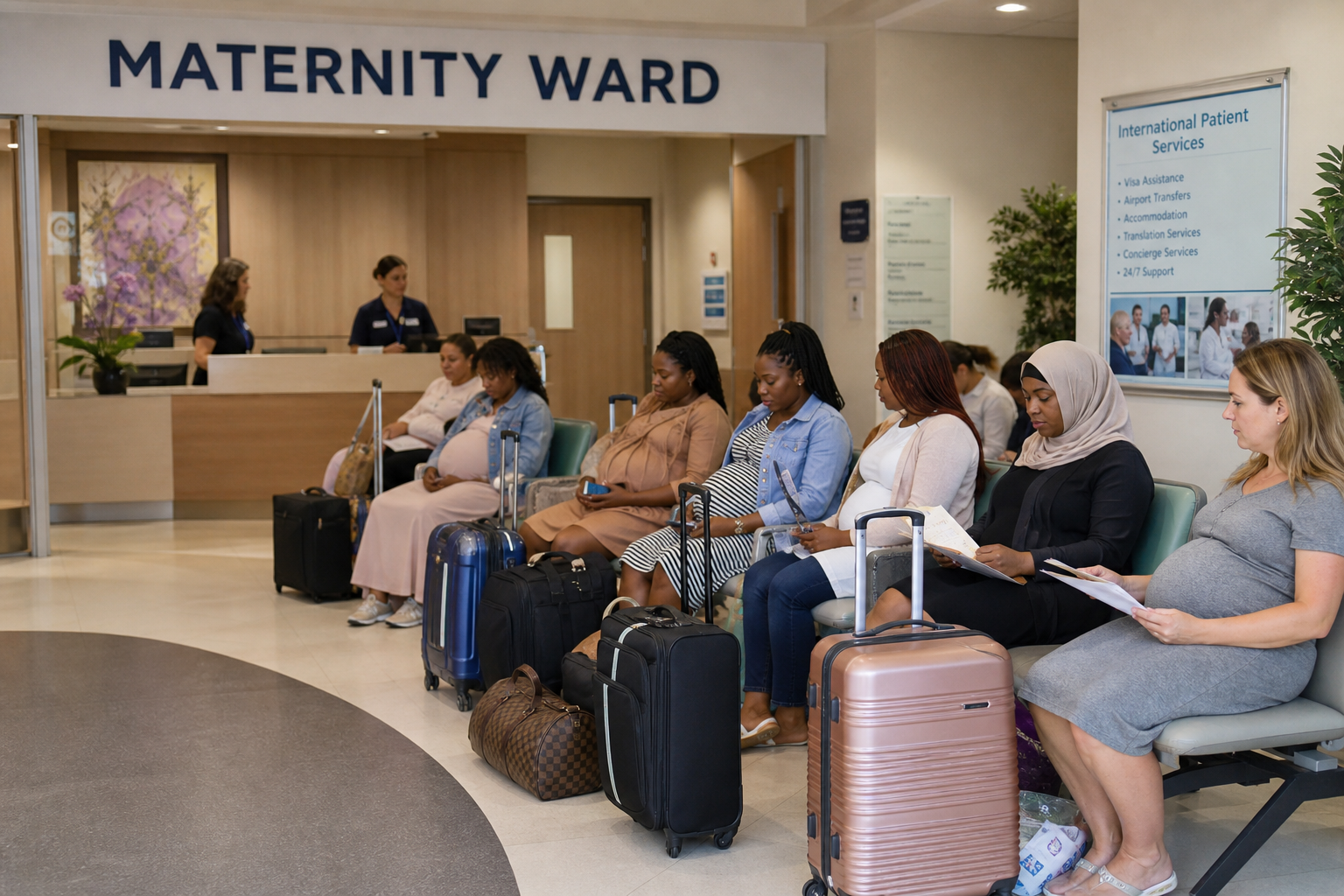
Birth tourism is organized, advertised, and entirely legal. Foreign nationals, predominantly from Asia and Latin America, purchase packages from agencies that arrange travel, hospital delivery, and documentation. They enter on tourist visas—visa holders are expected to remain outside the country—and give birth in American hospitals. The child receives a birth certificate and Social Security number. Citizenship follows. The parents depart. No law has been broken.
Who Bears the Cost
American hospitals treat everyone who arrives at emergency or maternity services, regardless of ability to pay. That is federal law. Uninsured foreign nationals giving birth in the United States generate hospital bills averaging $10,000 to $20,000. Most do not pay. The bills are absorbed by the hospital, which passes the cost to insured patients and taxpayers funding indigent-care programs.
California hospitals have documented this pattern for years. A single maternity center can handle hundreds of birth tourism cases annually. The financial impact ripples through the system. Maternal wards are occupied by patients with no insurance and no intention to establish residency. American citizens and legal residents compete for bed space and labor-and-delivery resources in hospitals running at capacity.
Nobody in federal policy has quantified the national cost. The Department of Health and Human Services does not track it. The Department of Homeland Security does not track it. The question is not asked, so the answer remains unknown.
The Visa Fraud Problem That Isn't Prosecuted
A visitor arriving on a B-2 tourist visa is required to demonstrate that they intend to return to their home country and that they have sufficient funds to support themselves during their stay. When that visitor is pregnant and enters the United States with the documented purpose of giving birth and remaining for several weeks postpartum, they have not committed fraud in any prosecutable sense. The visa application asks about the purpose of the visit. Birth tourism agencies advise clients to state that they are visiting family or sightseeing.
It is not illegal to lie to a consular officer if you do not lie on paper. The visa interview is not recorded. There is no documentary evidence. The visa officer makes a judgment call based on an interview. Once the visa is issued, enforcement is impossible.
This is a design problem in the visa system itself. The B-2 visa places the burden of proof on the visa applicant at the moment of application. Once issued, the visa is nearly irrevocable. The government cannot revoke it based on the traveler's subsequent intentions or behavior during the visit, because the subsequent behavior is not prosecutable.
Citizenship and Immigration Policy at Odds
The United States maintains one of the world's most permissive automatic citizenship laws. Birth within the territorial United States confers citizenship regardless of the parents' immigration status or intent. This reflects historical policy dating to Reconstruction. Most developed nations do not follow this rule. Canada and Australia confer citizenship by birth only to children of citizens or permanent residents. Germany, France, and the United Kingdom impose residence requirements or parental status conditions. Mexico changed its constitution in 2011 to limit automatic citizenship.
The American rule is not binding. It is statutory and constitutional both, which means changing it requires constitutional amendment. That is a high bar. But the rule can be narrowed through immigration enforcement and through hospital billing policy.
What Federal Policy Should Address
Congress has not passed legislation distinguishing birth tourism from ordinary childbirth. The Department of State has not issued guidance to consular officers on detecting pregnancy as a basis for visa denial or heightened scrutiny. The Centers for Medicare and Medicaid Services has not issued guidance to hospitals on billing procedures or collection practices that would make birth tourism financially unsustainable.
None of these steps would require constitutional change. All would require political will that does not currently exist at the federal level.
Arizona hospitals, particularly those in border counties and in metropolitan Phoenix, absorb disproportionate costs. Federal policy failure becomes a state problem. Hospitals reduce services or shift costs. Medicaid budgets strain. Parents without insurance delay their own care. The system deteriorates at the margins.
The Action That Matters
If Congress intends to limit birth tourism, it should direct the Department of State to train consular officers to identify pregnant applicants and deny B-2 visas accordingly, with narrow exceptions for pregnant women married to American citizens or permanent residents. It should direct the Centers for Medicare and Medicaid Services to require hospitals to verify insurance status and citizenship of all maternity patients, with billing protocols that pursue collection from foreign nationals with the same force applied to American patients.
Short of that, the policy silence continues. Birth tourism remains profitable for the agencies running it. Hospitals continue absorbing losses. Citizenship continues flowing to children whose parents have no intention of residing in the United States and no connection to its laws, obligations, or community.
If you live in Arizona and received a hospital bill you could not explain, or if you sit on a hospital board trying to understand why maternity revenue does not cover maternity costs, birth tourism is part of the answer. It is a problem designed by policy inaction and sustained by bureaucratic silence.
Mark this: the next Congress should debate this openly and vote. If your representative will not take a position, ask why.
