
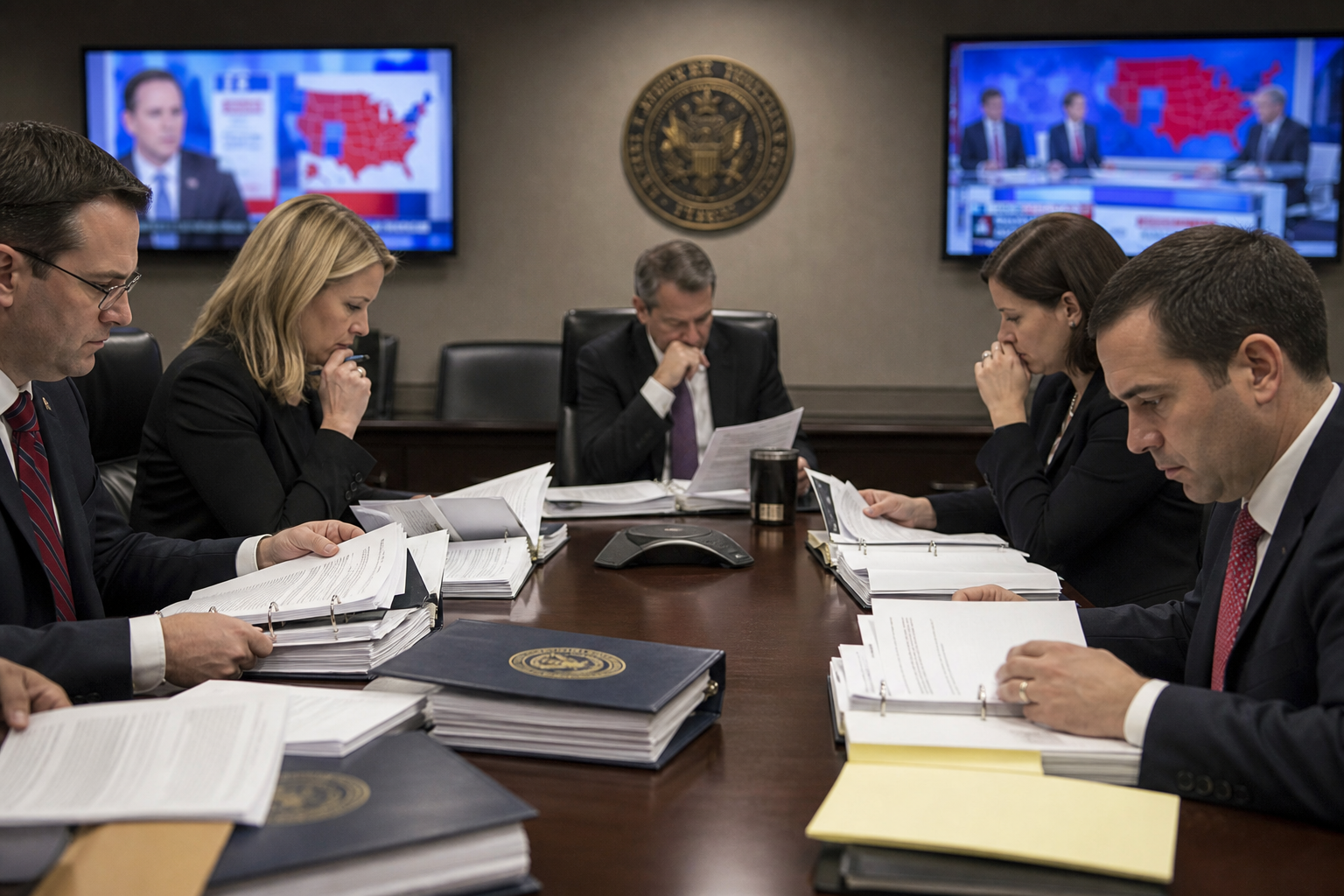
Seven months before Donald Trump returned to the White House, Democratic attorneys general were reportedly discussing and coordinating legal strategy for a second Trump term.
Start there. Not after Inauguration Day. Not after a disputed order. Not after a specific agency action. Before the election was decided.
That fact does not prove every future lawsuit lacks merit. States have every right to prepare for litigation. Attorneys general are supposed to think ahead. But it does tell you something important about how the modern left views the law. Not simply as a means to challenge an unlawful act. As a permanent political battlefield.
That is the real story here.
Preemption has become the model
State attorneys general often coordinate. Republican AGs do it. Democratic AGs do it. Multistate litigation is now a standard feature of national politics because Congress increasingly refuses to legislate clearly, and presidents increasingly try to govern through agencies, memoranda, and executive action.
That part is familiar.
What is different is the timing and posture. If a coalition is planning broad legal resistance before any new administration policy exists, the message is plain enough. The objective is not only to review legality on the merits. It is to build an instant opposition infrastructure, with lawsuits ready for filing as soon as a personnel memo, immigration directive, environmental rollback, or education rule appears.
In other words, government by injunction was not going to be an emergency measure. It was going to be a governing model.
You do not need to guess how this works. We have seen it for years. One administration issues a directive. Friendly states race to a friendly court. A district judge issues a nationwide injunction. The country then lives under provisional rule by litigation while appellate courts sort it out months or years later.
That is not stable government. It is factional trench warfare with case captions.
The legal merits and the political intent are not the same thing
To be fair, some future Trump actions could have presented legitimate legal questions. Every administration pushes boundaries. Courts exist for a reason. Federalism exists for a reason.
But conservatives should not miss the deeper point because the deeper point is institutional.
When elected state law officers begin organizing resistance in advance of a democratic outcome, they are signaling that the next presidency will be treated as presumptively suspect. Not reviewed case by case. Presumptively suspect.
That matters because the public is told, constantly, that only one side threatens norms.
Yet here you have a class of powerful state officials effectively preparing to move the next national election into the courts before voters had rendered the final judgment. Very polished. Very credentialed. Very dangerous.
And it feeds the same public distrust these officials claim to oppose.
If politics becomes a system where each side assumes the other cannot be allowed to govern without immediate legal siege, then elections still happen, but the consent that gives elections legitimacy starts to drain away.
Why Democratic AGs hold so much leverage
Attorneys general are not cable commentators. They are not activist nonprofits with fundraising lists and no formal responsibility. They are law enforcement officers with subpoena power, litigation budgets, and the institutional prestige of the state behind them.
That gives their coordination unusual weight.
It also means their decisions can shape policy far beyond their own borders. A lawsuit filed by one large blue state, especially in a receptive federal court, can delay or derail national policy on immigration, energy, labor, health care, or education.
That leverage is exactly why these offices have become central political weapons in the Trump era.
Again, Republicans use the same tools. They have challenged Democratic administrations on border enforcement, student loan schemes, environmental regulation, vaccine mandates, and administrative overreach. Some of those suits were necessary. Some succeeded because the executive branch had plainly exceeded statutory authority.
The distinction is not that litigation itself is illegitimate.
The distinction is whether the law is being used to force constitutional limits or to guarantee that an opposing administration cannot function at normal speed.
Those are not the same thing.
This is part of a larger administrative war
The American system was not designed for permanent national management by agencies and emergency orders. It was supposed to rely on legislation, elections, and separated powers. We no longer live in that system in full. We live in a hybrid where presidents try to do by executive branch maneuver what Congress will not do by statute.
That creates the opening for attorneys general to become shadow combatants in every national policy fight.
Immigration is a good example. If a president tries to tighten asylum processing, expand removals, redirect enforcement priorities, or alter grant conditions tied to sanctuary jurisdictions, litigation will begin at once. Some of those cases may involve serious statutory disputes. Some will be straightforward ideological resistance dressed in legal language.
The same goes for climate rules, Title IX guidance, religious liberty conflicts, abortion-related federal policy, and election administration questions.
Once that machinery is built, it never really powers down. It waits for the next administration. Then it starts again.
That is where the country is now. A rolling legal counteroffensive, election after election.
The constitutional question conservatives should keep asking
Who governs?
If voters elect a president, does that president get to carry out lawful executive authority until checked by Congress or the courts on an actual controversy? Or do we now accept a system where partisan state legal offices maintain preassembled war rooms to freeze federal policy on contact?
That is not a small procedural matter. It goes to self-government.
The left often frames this behavior as heroic institutional defense. Sometimes it may be. Sometimes it is simply partisan anticipation by other means.
And when that anticipation becomes routine, it weakens accountability.
Why? Because every branch gets an excuse.
- The president says courts blocked him.
- Congress says litigation made legislation harder.
- State AGs say they were defending democracy.
- Voters get process instead of results.
Everybody keeps a press release. Nobody takes the full blame.
What comes next
Expect more of this, not less.
Any second Trump administration would likely face immediate lawsuits over border enforcement, federal personnel changes, environmental permitting, public health directives, education policy, and conditions attached to federal funding. Democratic attorneys general have both the incentive and the institutional habit to move quickly.
Republican voters should understand two things at once.
First, some litigation is a lawful and proper feature of federalism. States are not provinces. They do not have to salute every federal directive.
Second, the normalization of preplanned legal resistance before an election result is final should trouble anyone who still believes voters, not coordinated legal-political networks, are supposed to decide who governs.
That is the line to watch.
Not whether state attorneys general ever sue. They will. Not whether presidents ever overreach. They do.
The line is whether the country continues drifting into a system where every election is followed by an immediate attempt to transfer the real fight from the ballot box to the courthouse.
Once that becomes standard practice, the public will conclude, with some reason, that campaigns are only the first round.
And a republic cannot stay healthy long if the people are permitted to vote but never permitted to settle anything.
