
State Land Trust Revenue Reaches Historic Levels, Education Gets First Priority
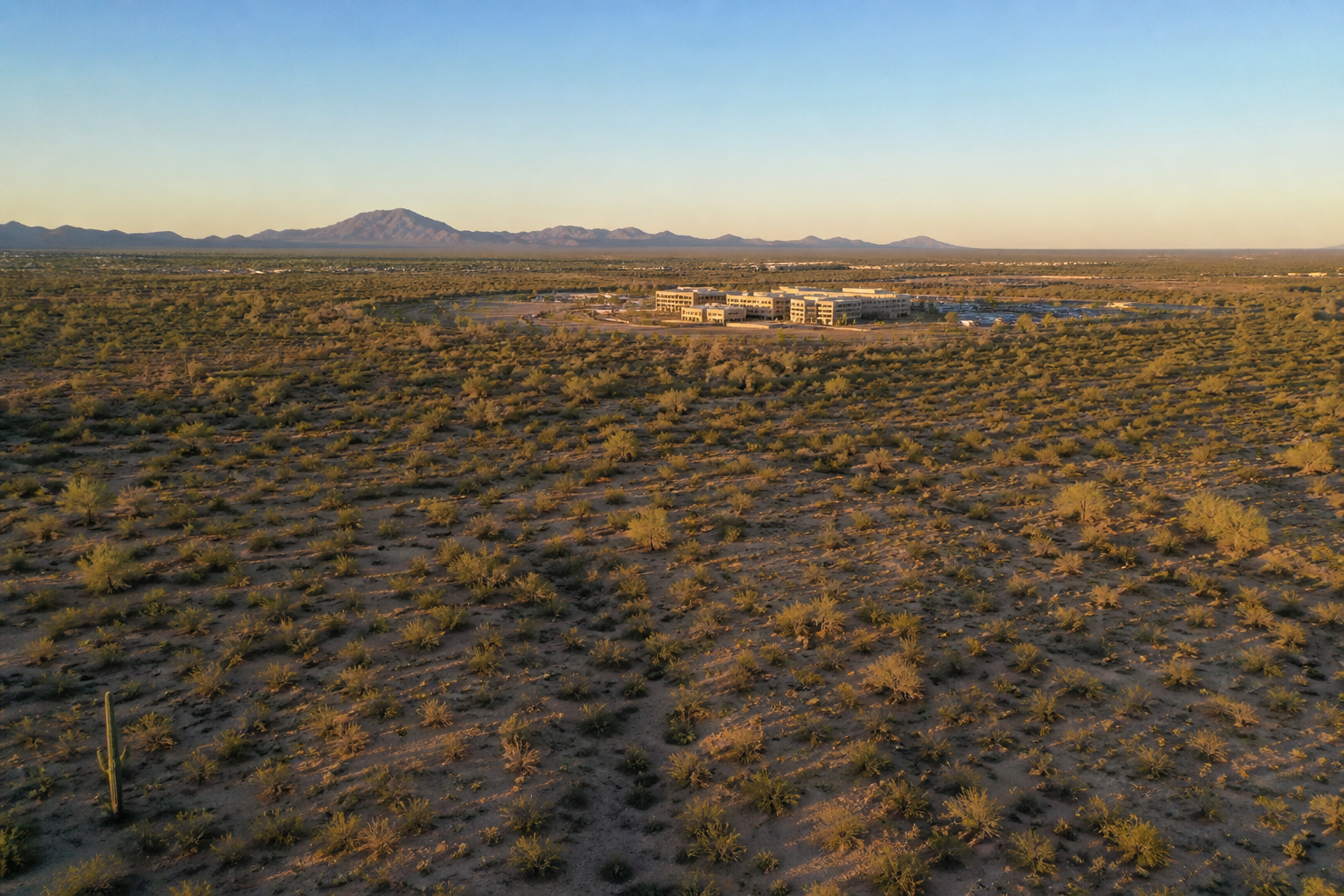
Arizona sold or leased state trust land during the past fiscal year at levels that have not been seen in two decades. The revenue stream—generated entirely from Arizona's own asset base—will direct hundreds of millions into K-12 education without a single federal mandate attached to the spending.
This matters more than the headline suggests. Federal education funding comes with strings. Compliance officers. Reporting requirements. Restrictions on how money can be used. Washington decides the parameters, and states administer them. Arizona's land revenue is different. It belongs to Arizona. The state legislature decides how it moves.
How the Trust Land System Works
Arizona did not inherit this revenue stream by accident. The state constitution established the Land Grant Trust when Arizona entered the union in 1912. Congress set aside roughly 10 million acres—land that Arizona could manage, lease, or sell with proceeds dedicated to public education and other state institutions.
For more than a century, that land sat as a financial backstop. During boom years, it generated steady income. During recessions, the trust proved less volatile than general fund revenue. Ranchers leased grazing rights. Timber companies cut timber. Oil companies explored. Real estate developers purchased tracts.
But the system functioned best when it worked quietly, below the radar of state budget fights. Last fiscal year, something changed. State land sales accelerated. Lease rates climbed. Demand for Arizona real estate—rural and urban—pushed the trust to its highest revenue year in recent memory.
The Conservative Case for State-Generated Revenue
The appeal here runs directly into conservative principle. When a state funds its own institutions from its own assets, it depends on nobody. No federal strings. No compliance regime. No bureaucratic second-guessing from Washington about how Arizona should educate its children.
Compare that to federal Title I funding, which carries hundreds of pages of regulation about how money must be spent, who must be hired, and what metrics matter. Arizona schools that accept federal dollars accept federal rules. It is not voluntary. Accepting the check means accepting the conditions.
State trust land revenue bypasses that problem entirely. Arizona sold its own land. Arizona keeps the proceeds. Arizona's legislature appropriates the money, and Arizona schools spend it according to Arizona judgment, not a federal agency flowchart.
This is also a case for asset ownership as a fundamental conservative concern. A government that owns productive assets—land with real value that generates real income—has independence. It does not have to levy higher taxes or beg Congress for grants. It can manage what it owns and harvest the returns.
What the Money Actually Funds
The historic revenue permits education spending that was not possible five years ago. Classroom construction. Teacher salary improvements in rural districts where recruitment has become difficult. Special education infrastructure. Career and technical education facilities that actually have working equipment instead of aging simulators.
The details matter. A rural county school district that gets $2 million from state trust land revenue can hire a special education coordinator in a county where that position has sat vacant. A charter school network can upgrade its science lab facilities. A high school in Yuma County can open a welding program that feeds directly into local construction companies that actually need welders.
This is not theoretical money. It is not grant money that appears for three years and disappears when the federal program gets reauthorized. It is recurring revenue from a state asset that generates income year after year.
The Sovereignty Question
The broader principle deserves attention. States that fund their own operations from state-generated revenue maintain sovereignty in a way that states dependent on federal transfers cannot. This is not ideological. It is mechanical.
When Washington provides money, Washington sets conditions. When Arizona provides money, Arizona sets conditions. When Arizona provides money from its own land trust, Arizona sets almost no conditions because the revenue is simply general fund education money with no federal origin and therefore no federal strings.
A legislature that has $500 million in state trust land revenue to direct toward education makes spending decisions differently than a legislature that has only federal Title I and Title II grants. The state has leverage. The state has choices. The state is not administering Washington's priorities.
The Question of Sustainability
One caution: land sales revenue is not infinite. The trust owns approximately 10 million acres, but not all of it is valuable. Not all of it is marketable. Historic high revenue years do not necessarily repeat at the same levels indefinitely.
This makes the current spending moment important. The legislature should be thoughtful about which education investments are one-time and which are permanent. Building a school facility is a permanent commitment. You cannot un-build it when revenue declines. Funding ongoing payroll from one-time land sale revenue is how governments create fiscal crises later.
That is a management question for the legislative budget committees and the state land commissioner, not a reason to refuse the resource. It is a reason to be smart about what the money does.
What to Watch
Mark the date on your calendar when the legislature appropriates the final education funding package from this land revenue windfall. Ask which districts get the money and why. Ask what the spending priorities say about what state leadership actually believes education should emphasize—and whether that matches what your school board believes.
Most importantly: recognize this as an alternative model to federal dependency. It works. It preserves local and state control. It funds real needs without federal micromanagement. When your legislator votes on how to allocate state trust land revenue, that vote is a statement about whether Arizona values independence or convenience.
