
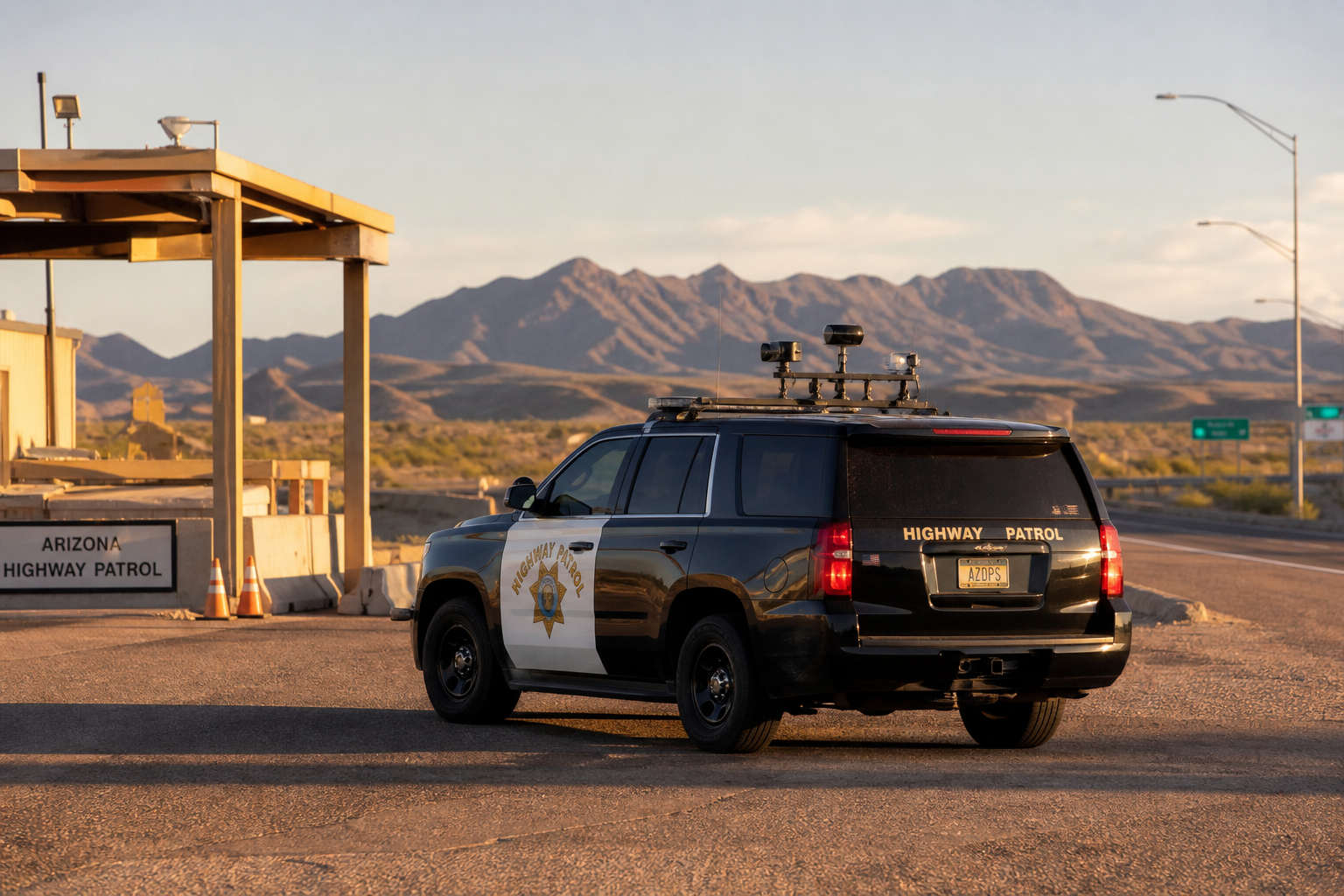
The ALPR Question Arizona Must Answer Now
The Arizona Attorney General's office is conducting a formal review of automated license plate readers deployed by law enforcement agencies statewide. The examination covers how these systems operate, who accesses the data they collect, how long that data is kept, and whether current state law provides adequate protection against abuse.
This is the right question to ask at exactly the right time. Not because license plate readers are new — they have been in use for years — but because the technology has become ubiquitous enough that Arizona taxpayers deserve to know what they are paying for and what it costs them.
What These Systems Actually Do
An automated license plate reader is a fixed or mobile camera system that captures images of vehicle license plates as they pass. The system converts the plate into data, runs it against databases — typically stolen vehicle registries and wanted person lists — and flags matches for officer response. A single unit can scan hundreds of plates per minute. A statewide network of these devices creates a continuous record of where vehicles travel.
Law enforcement defends the technology as a tool for recovering stolen vehicles and locating suspects connected to crimes. That is genuine. A stolen truck recovered through ALPR data is a stolen truck recovered. A fugitive located because a reader flagged his vehicle is a fugitive located. The benefit is real and measurable.
The question is not whether the benefit exists. The question is what you pay for it and whether the cost stays within constitutional limits.
The Data Retention Problem
Automated license plate reader systems create databases. Every read — every time a camera captures and logs a plate — becomes a record. In some jurisdictions, those records are retained for years. In others, they are purged after days or weeks. There is no uniform standard in Arizona.
Think about what that means. A reader deployed on Interstate 10 near Willcox captures the plate of every vehicle passing that location. If the data is retained for five years, then someone reviewing those records can construct a detailed timeline of where you traveled, when you traveled it, and how often you made the trip. They can do this without a warrant, without suspicion, and without your knowledge.
That is not law enforcement. That is surveillance. And there is a constitutional difference between the two.
The Access and Accountability Gap
Who can access ALPR data? That depends on which agency operates the reader and which policies that agency has established. Some departments restrict access to criminal investigations. Others permit queries for civil matters, administrative purposes, or administrative reviews. Some officers can run plates at will. In some systems, there is no audit trail showing who queried what or when.
The Attorney General's review will need to determine whether Arizona has consistent standards governing access. Right now, it does not appear that it does.
Consider the implications. A rejected applicant for a job could theoretically be tracked. A person engaged in a custody dispute could theoretically be located. A political opponent's travel patterns could theoretically be mapped. None of these outcomes require criminal intent by the officer involved. They require only access to data that was collected without that person's knowledge or consent.
The fact that these things theoretically can happen is not an argument that they regularly do. It is an argument that Arizona needs guardrails.
What the Review Should Examine
The Attorney General's inquiry should produce answers to specific questions that Arizona voters can understand and evaluate.
First: How long is ALPR data retained across all agencies? Get a number. Thirty days? Six months? Five years? The answer determines how much historical surveillance capacity the system carries.
Second: Who has access? Law enforcement only? Civil agencies? What categories of investigations justify a query? Is there an audit trail? Can a person subject to an ALPR query know that it happened?
Third: What safeguards exist against misuse? Are there penalties for officers who run plates for personal reasons? How many times has that happened? Have there been any cases where ALPR data was used improperly?
Fourth: What oversight exists? Does the Legislature know how many times these systems are queried? Does a court review access decisions? Or does law enforcement simply manage itself?
The Conservative Case for Limits
Conservatives should be the strongest advocates for strict rules on ALPR data. The principle is simple: surveillance without accountability is a threat to liberty, and surveillance without warrant is a threat to the Fourth Amendment.
If you believe in limited government, you should believe that government data collection requires explicit legal authority and meaningful oversight. You should believe that a person's location and travel patterns are private absent criminal suspicion. You should believe that law enforcement tools must operate within boundaries set by people you can vote out of office, not by bureaucrats you cannot.
Law enforcement agencies are not enemies. They are institutions staffed by people doing difficult work under pressure. But institutions require limits. That is not a rebuke of police. That is how police operate in a country with a Constitution.
What Happens Next
The Attorney General's review will produce recommendations. Those recommendations will likely reach the Legislature. The Legislature will decide whether to codify new standards into statute or leave current practice in place.
This is the moment to weigh in. If you operate a small business in Pinal or Cochise County, if you manage a farm, if you commute regularly for work, you are creating ALPR records. You should know what those records are used for and how long they are kept.
Watch for the review's findings. They will be published. When they are, read them. The numbers matter. The names of the agencies matter. The vote counts, if the Legislature acts on them, matter most of all.
Mark your calendar for the next legislative session. This issue will either be addressed or it will not. You will know which it is by looking at the bill number and the vote tally.
