
When Tech Companies Write the Rate Bill
The Arizona Corporation Commission does not often say no to growth. The agency exists to balance utility rates, service reliability, and economic development in a state that has built its modern economy on attracting business. Most days, those three priorities align. Most days, somebody benefits and somebody pays, and the commission tries to keep the balance level.
Not this time.
What the commission is confronting is a straightforward question: should a family in Chandler or a small manufacturing shop in Tempe subsidize the power infrastructure for a data center owned by a billion-dollar tech company?
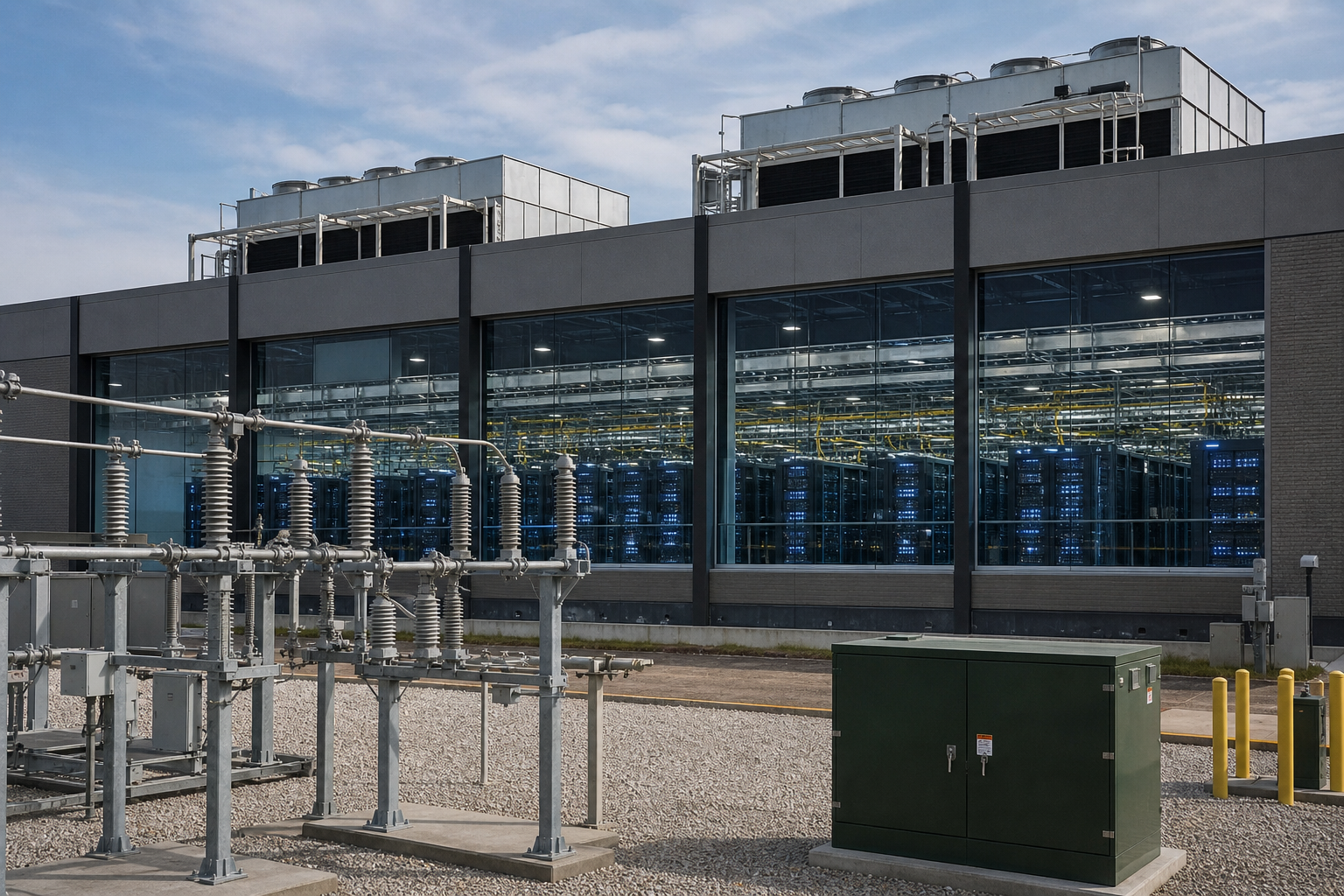
The answer matters because the question is not abstract. When a major data center locates in Arizona, it requires enormous amounts of electricity. That electricity has to come from somewhere. The grid has to be upgraded. Substations need to be built or expanded. Transmission lines need to be extended or reinforced. All of that costs money. Someone pays for it. The question is whether that someone is the data center operator, through negotiated rates, or whether it is every other customer on the grid.
The Subsidy by Another Name
For years, Arizona has approached tech recruitment the way a lot of states do: by socializing the cost of private infrastructure. A company says it will build a facility and create jobs. The state or utility sees growth and tax base. So the utility agrees to spread the cost of the grid upgrades across all ratepayers, meaning the data center pays something closer to an average rate rather than the actual cost of service it requires.
That is a subsidy. Not a grant check, not a tax abatement, but a subsidy delivered every month through the electric bill. A mother paying for her daughter's school supplies helps fund somebody else's multimillion-dollar capital project. That is how it works.
The commission is now asking whether that arrangement serves Arizona or just serves those companies.
What the Commission's Action Changes
The Corporation Commission's move requires utilities to be more specific about the costs attributable to data center development. Before approving rate structures or granting service territory changes that would allow a company to operate, the commission wants to see the actual cost to serve that load. If a data center requires a new substation, the commission wants to know what that substation costs. If transmission upgrades are needed, the commission wants to see the bill.
Then, the commission wants the data center operator to pay for it.
This is not anti-growth policy. This is anti-fraud policy, which is a different thing. It is saying that if Arizona wants tech companies to locate here, fine. Come. Build. Hire people. But you will not hide your infrastructure costs inside the rate base and make the grocery store clerk subsidize your operations.
The distinction matters to people who have lived in Arizona long enough to remember what happened when residential ratepayers funded nuclear power plants that utilities built without proper cost controls. Those costs followed Arizona families for decades. Rates went up. The utilities blamed regulation. But the real problem was that people who did not benefit from the infrastructure paid for it anyway.
Why This Matters Now
Arizona's power grid is already stressed. Demand for electricity has been climbing faster than generation capacity. The state is in Colorado River shortage tier two, which means less water available for cooling power plants. Summer peak demand grows every year.
Into that situation comes data center development. A single modern data center can consume as much electricity as a town. If Arizona attracts dozens of them, as the state hopes to do, the grid has to be substantially upgraded.
The commission is saying those upgrades should not come cheap for the companies that force the upgrades to happen. That is economically rational. It also prevents the transfer of wealth from poor and middle-class ratepayers to tech corporations and their shareholders.
Whether you believe in growth incentives or not, this principle holds: public cost should track private benefit. If a company makes money from Arizona, Arizona should not subsidize the machinery that makes that money.
The Harder Question
The commission's action opens a second conversation. If Arizona wants to compete with Texas, Nevada, and California for data center investment, and if those states are also working to keep costs down for tech companies, what happens when Arizona insists on full-cost-of-service rates?
The answer is: companies will price it in. They will build in Texas instead, or Nevada, or somewhere else cheaper. Or they will demand a more explicit incentive, like a property tax abatement or a sales tax holiday. At least then the cost is visible. You can see what Arizona is spending to attract the business.
That is preferable to hiding the cost inside everybody's electric bill.
For the moment, the commission has drawn a line. If utilities want to serve new data centers, they need to show the work. The cost of serving that load cannot be spread across ratepayers who did not ask to subsidize it. That is a straightforward principle applied by an agency that does not get many chances to apply it.
The commission meets on rate case decisions monthly. If you own a business or pay an electric bill in Arizona, watch which way those votes go. The margin of those decisions will tell you whether the commission's line holds or whether it gets quietly erased at the next quarterly meeting.
