
The 450,000 Question
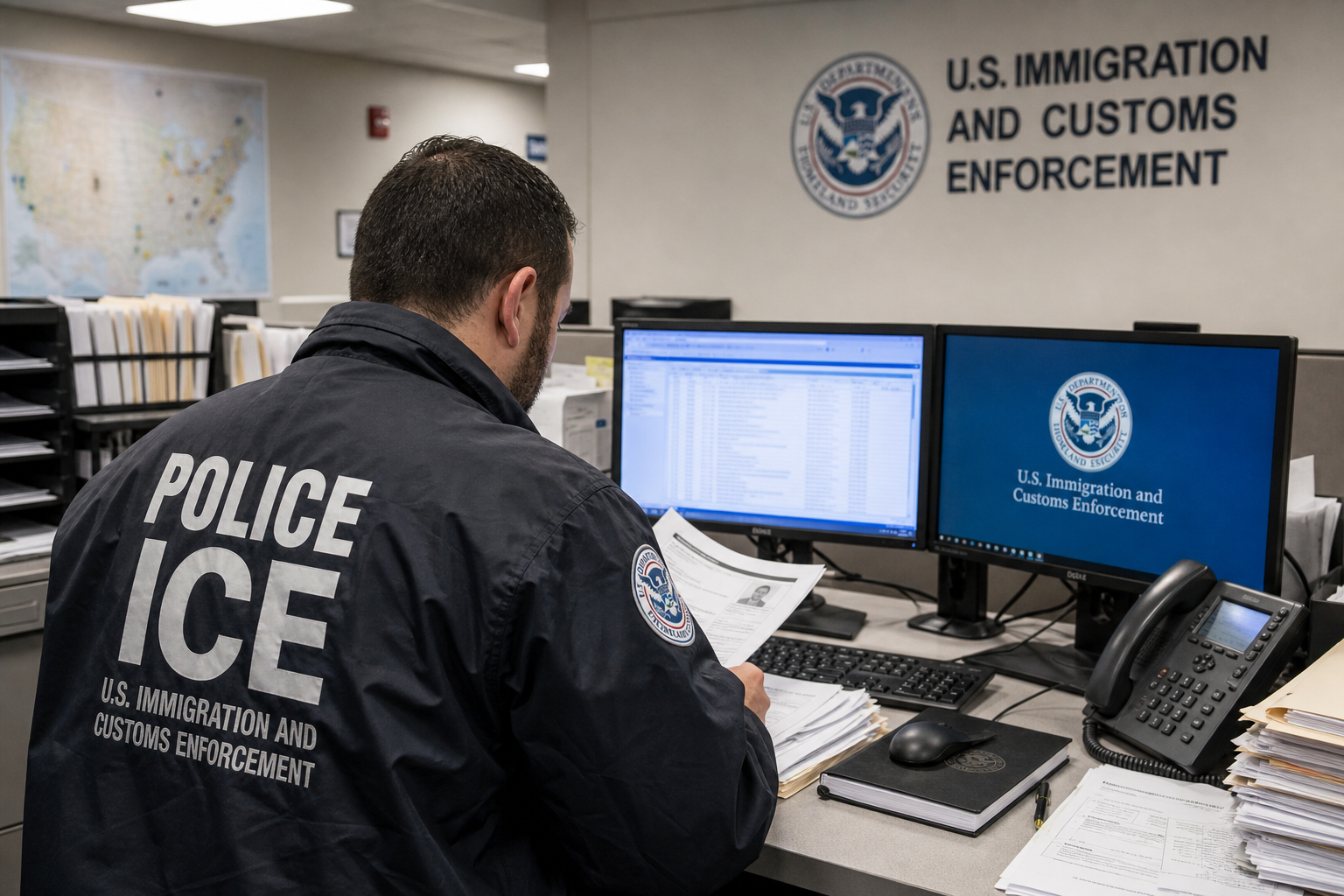
Immigration and Customs Enforcement announced an initiative to track and locate roughly 450,000 unaccompanied migrant children who entered the United States during recent years. The figure itself is the story. Not the tracking system. Not the agency that built it. The number.
Four hundred fifty thousand children.
For perspective: that is more people than live in Tucson. It is more than three times the current enrollment of Arizona's entire charter school system. It is a population equivalent to a mid-size American city, except every one of them entered this country as a minor without a parent or guardian present, and the federal government lost institutional track of where they went.
This did not happen overnight. The scale accumulated over four years of border policy that treated migrant arrivals as a logistical problem to be processed rather than as a sovereignty problem to be prevented. The Biden administration inherited a functioning asylum system in January 2021 and systematically dismantled the deterrents that kept arrival numbers manageable.
What the Tracking System Reveals
The ICE initiative itself is, technically, competent. The agency is using data analytics to locate minors who were released to sponsors or who are otherwise outside direct federal custody. It is an attempt to construct accountability after the fact. A rear-guard action against a problem that should never have reached this scale.
But here is what you should notice: ICE is running a tracking operation for children that the government was supposed to maintain custody over in the first place. The system exists because the prior administration refused to enforce existing law on arrival, because it accelerated releases to sponsors with minimal verification, and because it treated the border as an intake center rather than as a boundary.
A system that works requires three things. Authority at the entry point. Verification at the release point. Accountability after release. The Biden administration gutted the first, rushed through the second, and now ICE is improvising the third.
The Sponsor Problem
Most unaccompanied minors are released to sponsors — usually family members, sometimes not. The government is supposed to vet sponsors. Background checks. Home visits. Ongoing caseworker contact. That process broke down at scale. When you process hundreds of thousands of arrivals, corners get cut. Paperwork gets expedited. Verification becomes a checkbox rather than an investigation.
We do not know how many of those 450,000 children are in safe situations. We do not know how many sponsors were properly vetted. We do not know how many minors have had meaningful contact with a caseworker since placement. Those are not technical questions. They are moral ones. And they are the reason ICE had to build this tracking system in the first place.
Why This Matters for Arizona
Arizona sits directly on the arrival corridor. Yuma County, Cochise County, Santa Cruz County — these are the places where unaccompanied minors first cross. They are processed through federal facilities in Arizona. They are released to Arizona sponsors. They are transported through Arizona to destinations across the country.
Your county has absorbed the logistics of a border system that failed to prevent arrival and failed to maintain custody. Local school districts absorbed hundreds of newly arrived minors with minimal advance notice or federal support. Local law enforcement managed the criminal exploitation that follows when a minor enters the country unprotected.
Phoenix and Tucson absorbed the secondary effects: shelter overflow, social services strain, street-level exploitation networks that prey on minors who fell out of federal tracking.
The Accountability Question
The ICE tracking initiative is competent and overdue. It will probably find many of the 450,000. But finding them is not prevention. Prevention requires authority at the entry point. A secured border. Enforcement of existing asylum law. Deterrent processing. Disincentive to attempt the journey.
Instead, the prior administration chose to invite the journey and then manage the paperwork on the back end.
The incoming Trump administration has stated its intention to reverse that posture. That means enforcement pressure at the border and enforcement pressure on sponsors who smuggle minors into the country for labor or exploitation. It means restoring the authority that was deliberately stripped away.
It also means asking, with precision, what happened during the four years when 450,000 children entered federal custody and then left it. Where did they go. Who sponsored them. How many are in school. How many are in contact with a caseworker. How many have disappeared into the underground labor market or into the hands of the criminal networks that recruited them for the crossing in the first place.
What Happens Next
The tracking system will generate data. That data will show gaps. Gaps will become policy arguments. Policy arguments will become legislative battles. And somewhere in those battles, the actual children — the 450,000 real minors who crossed a border and were supposed to be the responsibility of a federal system — will be either accounted for or written off as acceptable loss.
That is not acceptable.
Securing a border is the first obligation of a sovereign state. Protecting a child in custody is a prior moral obligation. The number 450,000 tells you that this administration chose not to do either one.
The incoming administration has said it will reverse that choice. Hold them to it. Ask for the data. Ask for the names. Ask for the locations. Ask for proof that each of those 450,000 children is accounted for and either in genuine family custody or in federal protection.
Ask, specifically and often, until you get an answer you can verify yourself.
