
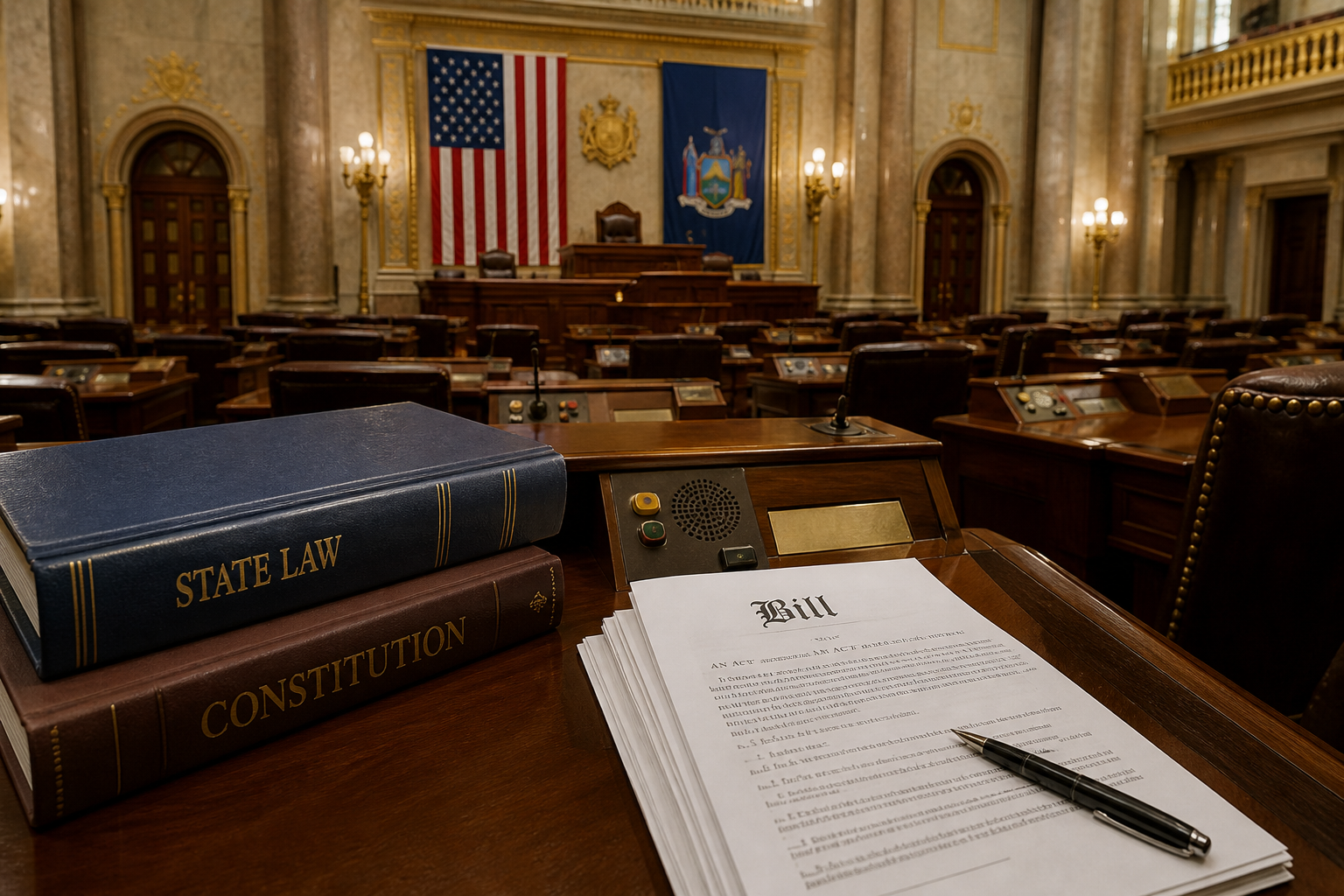
The Push for Constitutional Clarity in State Courtrooms
A coalition of state legislators is moving forward with legislation that sounds straightforward until you read what courts have actually been doing with it. The so-called 'American Laws for American Courts' bills aim to prevent state judges from applying foreign legal systems or religious law in cases where American constitutional and statutory law applies.
On its face, this should be uncontroversial. The Constitution is the supreme law of the land. State law derives from state legislatures. Courts exist to apply those frameworks, not to import Sharia law, Hindu family codes, or the legal systems of other nations into American courtrooms. Yet the fact that legislators feel compelled to write this into statute tells you something about the state of judicial overreach.
What the Bills Actually Do
The legislation typically contains several core provisions. First, it prohibits courts from applying foreign law when doing so would violate the Constitution or state law. Second, it prevents judges from recognizing judgments from foreign courts if those judgments contradict constitutional rights. Third, it establishes that disputes arising under federal or state law must be resolved using federal or state law, period.
Arizona has version of this language in its books already. Other states are now strengthening their own language or passing it for the first time. The bills are narrow enough to survive legal challenge. They do not prevent a court from understanding foreign law as context for a contract dispute. They prevent a court from substituting foreign law for American law in resolving the dispute.
Why This Matters
Here is the problem. In a handful of high-profile cases, judges have entertained arguments that Islamic law should govern questions of marriage, inheritance, or contract interpretation. In others, courts have deferred to religious arbitration in ways that effectively allowed foreign legal systems to override state law protections. A woman seeking divorce in a state court found herself bound by arbitration clauses that defaulted to religious law that the state does not recognize.
This is not theoretical. It happened. In Michigan, in New York, in other states. A judge decided that because a contract contained language referencing Islamic arbitration, the state court would enforce that arbitration even when it contradicted state family law. State law was supposed to govern. The judge decided differently.
The constitutional problem is not hard to see. States have the sovereign authority to set their own legal frameworks. If Arizona says that inheritance is governed by Arizona law and the Arizona probate code, then a court cannot hand that authority to a foreign legal system because the parties agreed to it in a contract or because one party's religious tradition prefers it.
The Federalism Question
This is also a federalism issue. The Tenth Amendment reserves to the states the powers not delegated to the federal government. State legislatures, not state courts, set the law. When a judge applies foreign law instead of state law, the judge is acting as if she has the power to rewrite the state's legal framework. She does not.
Conservative critics of judicial activism have made this argument for decades. Judges should interpret law as written. They should not rewrite it. The 'American Laws for American Courts' bills are a legislative response to judges who have gotten that backwards. They are saying, plainly, what should already be obvious: your job is to apply the law this legislature wrote, using the constitutional and statutory tools we gave you.
The Opposition and Its Weaknesses
Critics say the bills are unnecessary, that courts would never actually do this. The evidence says otherwise. Critics also argue the bills are hostile to religious freedom or to cultural diversity. That argument conflates the right to practice your religion with the right to have a state court ignore state law because your religion prefers a different legal standard. Those are not the same thing.
You can practice Islam freely. You cannot require a state court to apply Islamic law instead of state law. You can follow your religious community's traditions on marriage or inheritance. But if you want a state court to enforce a contract or settle a dispute, that court is going to use state law. The state is not denying you the right to your faith. It is saying the state court applies the state's law.
What Comes Next
Several states have these bills in committee or on the legislative calendar. Some are likely to pass. Others will draw litigation from advocacy groups that view any restriction on applying foreign law as an attack on religious liberty. That litigation will probably lose, because the Constitution itself establishes that American law is the supreme law and that states have the authority to define their own legal frameworks.
For Arizona, the question is whether the existing statute is strong enough. Read it. If it leaves room for a judge to defer to foreign arbitration or foreign legal standards, it is not strong enough. If you are a business owner, if you sit on a school board, if you are a taxpayer in this state, you should know what authority your state courts actually have and where they get it.
Mark the date your legislature addresses this. Watch the vote. The judges will not hold the line here on their own. That is why the legislature has to hold it for them.
