
How a City Council Vote Bypassed Neighborhood Accountability
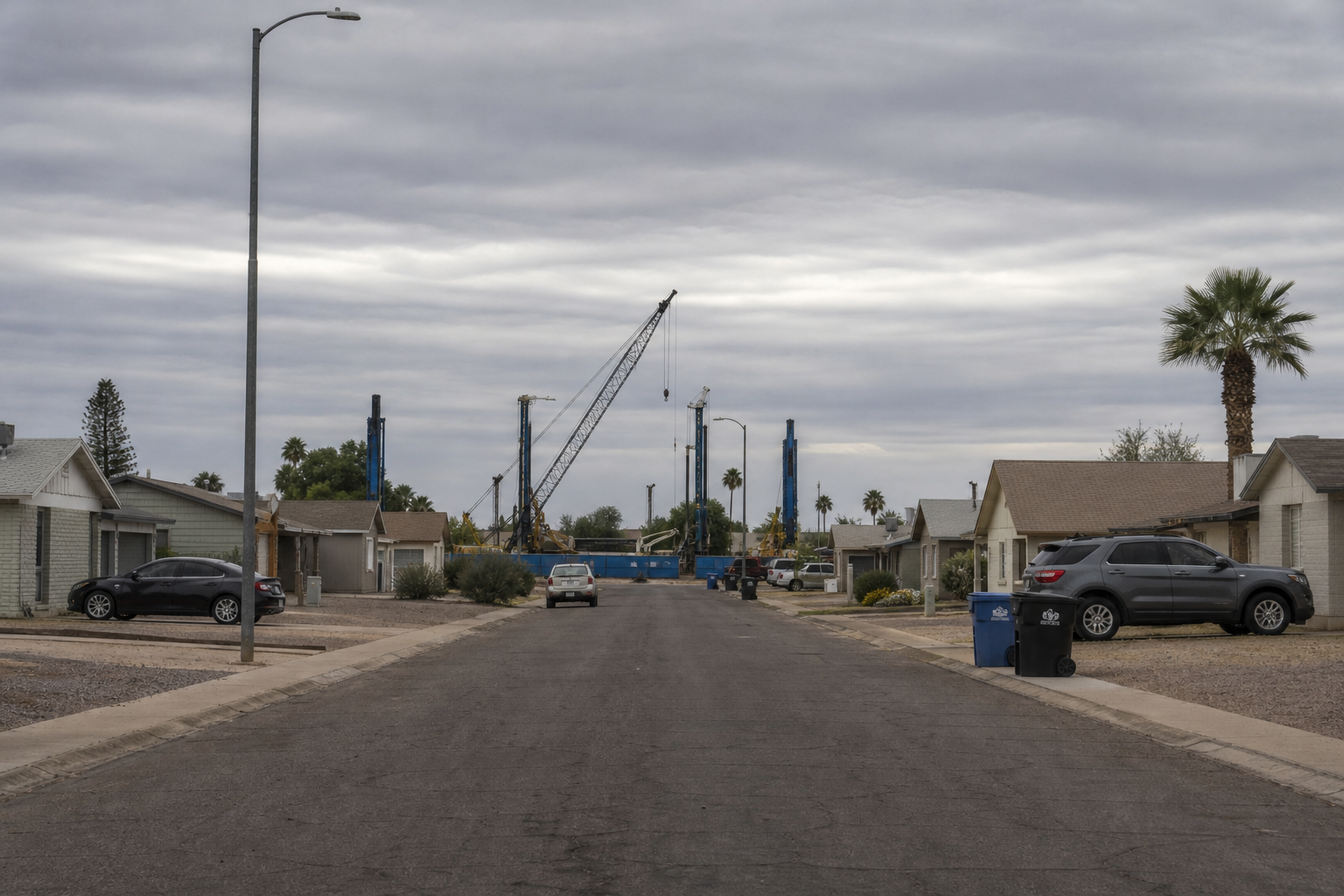
The Phoenix City Council approved a data center development project last month in a vote that satisfied the letter of municipal code without meeting its spirit. Five council members voted yes. The developer had submitted the project as a permitted use that did not legally require neighborhood notification. The affected residents learned about it from a neighbor's email chain.
That is not a process failure. That is the process working as it was written to work.
Data centers are essential infrastructure. They process financial transactions, host cloud services, and anchor the digital economy that Arizona is trying to build. The developers who build them are not the enemy. But a city government that can approve a large industrial facility adjacent to a residential area without written notice to the residents adjacent to it has set up a system where community trust and development approval move in opposite directions.
The Municipal Code and the Gap It Creates
Phoenix municipal code requires neighborhood notification for certain conditional use permits and zoning variance requests. Data centers, depending on their classification under city code, can qualify as permitted uses that bypass that trigger. The developer files. The planning staff approves. City Council ratifies it on a consent agenda. No public hearing. No posted notice at the site. No requirement to contact property owners within a specified radius.
I asked the city planning department how many data center projects had been approved under this classification in the past three years. The answer came back: seven.
Seven industrial facilities that run 24/7 with generator backup systems, water cooling requirements, and high-voltage electrical infrastructure. Seven times Phoenix residents discovered their neighborhood was zoned for something new only after the planning commission had already weighed in.
Development Needs Clear Rules, Not Procedural Ambiguity
This is not an argument against data centers. Arizona water is cheap, Arizona power costs are competitive, and Arizona companies need reliable data infrastructure. Sun City West and Prescott do not benefit when Phoenix cannot process venture capital at scale. Rural Arizona does not benefit when tech jobs stay in California because Arizona cannot build the backend.
But Phoenix cannot build durable development policy on the assumption that residents will never find out what is being built next to them until it is too late. When a city council member stands at a development forum six months after a project is approved and says the city is committed to neighborhood input, she is not wrong in a legal sense. She is just operating in a category of truth that voters have learned to recognize as the opposite of accountability.
What Neighborhood Rights Actually Mean
Neighborhood rights do not mean a veto. They mean notice. They mean a posted sign on the property 30 days before approval, not a Planning and Zoning agenda item that shows up on a city website nobody checks. They mean written notification to property owners within 500 feet. They mean a public hearing where residents can ask why a data center's emergency diesel generator was not required to have sound dampening, or why the developer's water usage projections were not independently verified, or why the site plan shows loading docks facing a residential street.
Those are not anti-development questions. Those are the questions that separate a development project that fits a neighborhood from one that reshapes it without asking permission.
The City Council's Opportunity
The Phoenix City Council can fix this without killing development. Amend the municipal code to require written notice to affected residents for any industrial use permit in residential or mixed-use zones, regardless of whether it qualifies as a conditional use or a permitted use. Set a 14-day public comment period. Hold a planning commission hearing if three or more residents request one in writing. Then vote. The developer still gets his project if it meets code. The neighborhood gets informed consent instead of a surprise.
This is not radical. It is baseline governance. It treats residents as stakeholders rather than obstacles.
Mark Your Calendar
The next Phoenix City Council meeting is January 23rd. If you live within a mile of an industrial area zoned for mixed use, attend the public comment period and ask your council member what notice process you get if someone files for a data center permit near your house. Ask for the municipal code section that covers your neighborhood. Ask if they would vote to amend it to require written notification. Write down their answer. You will want to remember it at the next primary.
