
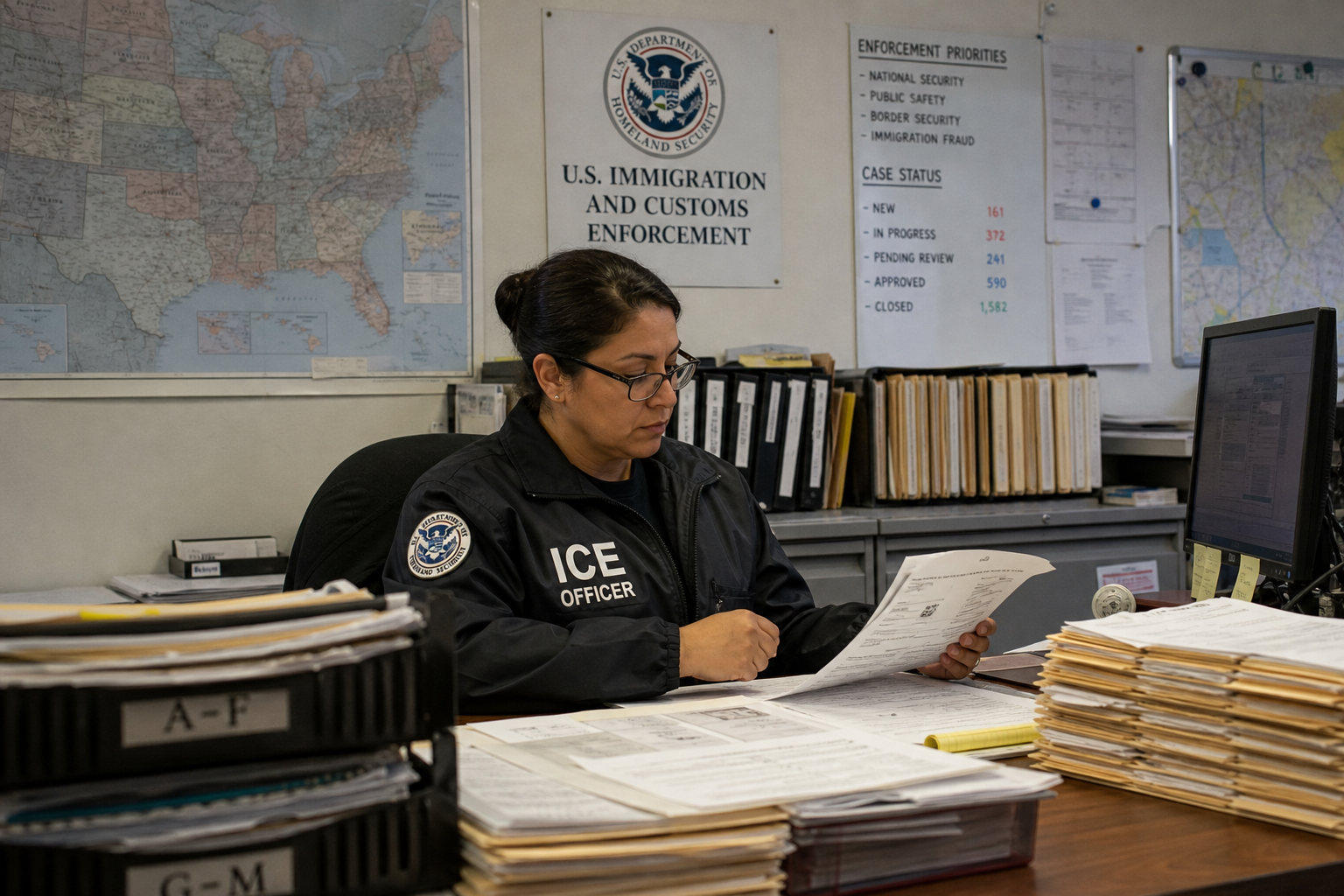
The Scale of the Problem
Four hundred and fifty thousand children. That is the number of unaccompanied minors whom the federal government placed with sponsors between 2021 and 2024 without conducting thorough background checks on those sponsors. Immigration and Customs Enforcement is now attempting to track where those children are and whether they remain safe. This is not a partisan talking point. This is a record-keeping failure of government.
The Department of Health and Human Services, which oversees the Office of Refugee Resettlement, has responsibility for placing unaccompanied children in custody. When a child arrives at the border, HHS is supposed to locate a suitable sponsor—typically a family member or approved caregiver—and place the child in their care. The statute requires certain safeguards. The agency did not follow them at scale.
What Vetting Actually Means
The operative phrase is "unvetted sponsors." What does that mean in federal procedure? It means the government placed a child in the home of an adult whose background had not been verified. No criminal history check. No home visit. No confirmation that the sponsor had legal status themselves. The sponsorship process, designed to reunite children with family members and place them in safe settings, became a system that moved children out of federal custody quickly without confirming basic facts.
Ask yourself why speed became more important than verification. The answer sits in the appropriations committees and in the staffing levels at the agency. When you have 450,000 children flowing through a system designed for a fraction of that number, the pressure to move them becomes the primary operational constraint. Procedure suffers. Oversight disappears. Children scatter.
The Tracking Initiative and What It Reveals
ICE's new tracking program is an admission. If the placements had been properly vetted and documented, there would be no need to launch a tracking initiative years later. The agency would know where each child was placed, who the sponsor was, and what checks had been completed. Instead, ICE is now trying to locate 450,000 records and verify where 450,000 children currently reside.
This is not a new investigation. It is not prosecutors unearthing a scandal. It is the agency that should have done this work from the beginning attempting to construct accountability after the fact. The children have been in sponsor homes for months or years. Any child who was at risk has already faced that risk. Any exploitation that occurred has already occurred. You cannot rewind placement to prevent something that has already happened.
The Border as Context
Arizona sits on the southern border. We watch children arrive here. We see the processing centers, the federal buses, and the distribution of minors to sponsors across the country. Border communities know the reality: that system capacity and sponsor vetting cannot both be true simultaneously when the volume exceeds the infrastructure. When the Biden administration prioritized processing speed over verification, it was not an accident. It was a choice to move children through the system faster than anyone could properly check who would receive them.
That choice had consequences. Some children were placed with relatives and are safe. Some were placed with traffickers. Most landed somewhere in between. The government will never know the exact ratio because it did not maintain the records that would tell it.
What Accountability Looks Like
Here is what needs to happen next. The tracking initiative must produce a public report documenting how many of the 450,000 placements included documented vetting. How many included criminal background checks. How many included home visits. How many sponsors had verified legal status. These numbers must be broken down by state, so Arizona voters can know how many unvetted children were placed in Arizona homes.
Congress must subpoena the sponsorship records. The committees with oversight authority—House Judiciary, Senate Appropriations—must examine why the agency prioritized speed over safety. Individual officials who made policy decisions to waive vetting requirements must be named and questioned under oath.
And the agency itself must implement binding procedures that cannot be waived by administrative discretion. The statute already requires vetting. The problem is not the statute. It is the agency's willingness to ignore it when volume becomes inconvenient.
The Lesson for Arizona
This is why Arizona fights for operational control of its border. This is why we demand that Washington actually enforce entry procedure, not just move people through it. When the federal government cannot properly vet 450,000 children, it cannot be trusted to manage immigration policy by executive discretion alone.
The tracking initiative will produce numbers. Mark the date when those numbers are released. Then read them yourself. Do not wait for a summary. Do not accept agency talking points. Ask your congressman if he reviewed the full report. Ask your senator if she demanded the records. These are the questions a sovereign state asks when the federal government has custody of children within its borders.
450,000 is a number that should lodge in your mind. Hold it there through November. It is not a trend. It is not a policy disagreement. It is half a million American childhoods processed by an agency that did not have the discipline to verify where they went.
