
The Daylight Saving Question Congress Won't Answer
Every few years, Congress revisits the same argument: Should we keep resetting our clocks twice a year, or move to permanent daylight saving time and leave it alone?
The Sunshine Protection Act, reintroduced in recent Congressional sessions, would let states opt into year-round daylight saving time without the twice-annual switch. It sounds simple. It is not.
Before you call your congressman, you should understand what permanent daylight time actually means for your family, your electric bill, and the school bus your kids ride in the dark.
What the Bill Actually Does
The current federal law, the Uniform Time Act of 1966, allows states to opt out of daylight saving time entirely and stay on standard time year-round. Hawaii and most of Arizona do this. But the law does not currently allow a state to stay on daylight time all year. The Sunshine Protection Act removes that barrier.
This matters because it is the difference between a technical change and a real one. A state cannot simply decide to keep its clocks where they are in March. It has to choose a legal time zone and stay there permanently.
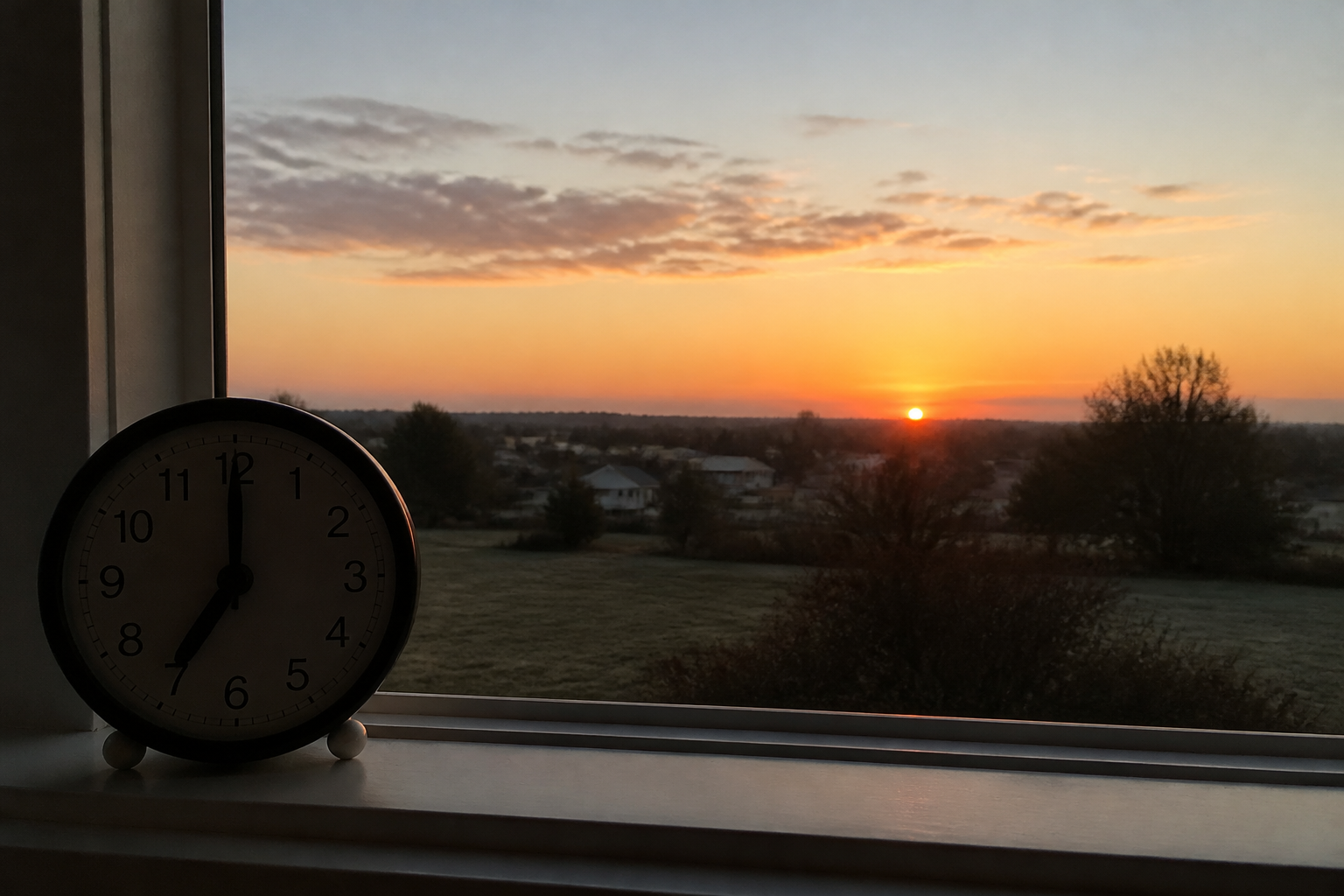
Under the bill, states could pick daylight time as their permanent zone. When winter arrives and the sun sets at 4:45 p.m., your clock would say 5:45 p.m. instead of 4:45 p.m. You would get an extra hour of daylight in the evening. You would also get sunrise at 8:15 a.m. instead of 7:15 a.m. in December.
That trade-off is where the problem begins.
The Rural School Problem
Rural Arizona and rural America run on daylight. A rancher does not care what the clock says. He cares whether it is light enough to work safely and whether his kids can wait for the school bus without standing in the dark for forty-five minutes in December.
Permanent daylight time makes winter mornings darker. In much of Arizona, sunrise in January would not occur until after 8 a.m. on the clock. School buses pick up children at 6:45 a.m. and 7 a.m. in rural precincts. Those children would board in complete darkness.
School districts in northern Arizona and the rural southwest already fight with parents about bus stop safety. Adding ninety minutes of predawn darkness in winter makes that worse, not better.
The bill does not require states to adjust school start times. It does not fund additional lighting at bus stops. It simply imposes the clock change and leaves districts to manage the fallout.
The Energy Grid Question
Utilities and energy analysts have raised a consistent question about permanent daylight time: Does it actually save energy, or does it simply shift when you use it?
Daylight saving time was sold as an energy conservation measure. The research on whether it works is mixed. Some studies suggest modest savings during the brief periods of overlap in spring and fall. Other research indicates the savings vanish or reverse when you account for heating and cooling costs across the entire year.
What is certain is that permanent daylight time would shift peak electricity demand to earlier in the evening when people return home and turn on lights and appliances. In winter, that happens when the sun is already down. You gain nothing by keeping your clock at daylight time if you still need to flip the light switch at 5 p.m. because the sky is dark.
Arizona's grid is already stressed in summer. The bill does not address whether year-round daylight time improves or worsens peak demand in the seasons that matter most.
The Interstate Problem
One reason Congress has not simply imposed permanent daylight time federally is that not every state wants it. Hawaii and Arizona would likely remain on standard time. If Arizona stays on standard time and California moves to permanent daylight time, the border counties lose the convenience of time zone alignment.
Yuma County conducts business with California. Cochise County coordinates with New Mexico. Fragmenting time zones at state lines creates practical headaches for commerce, agriculture, and cross-border coordination that Congress is treating as a minor issue.
The bill allows states to opt in individually. That is federalism. It is also chaos if half the country chooses permanent daylight time and half does not.
What Comes Next
The Sunshine Protection Act has bipartisan support. It polls well. Americans, when asked in a survey whether they prefer permanent time to switching twice a year, usually say yes. Fewer Americans are asked what they prefer when the option is permanent darkness in winter mornings.
If you have opinions on this, communicate them to your Arizona House representative and your senators before the bill moves further. Specifically: whether you want your children's school bus running in predawn darkness, whether you want your electric utility managing a shift in peak demand during winter months, and whether you want Arizona coordinating time zone policy with California or maintaining the current standard.
Congress rarely revisits technical fixes once they pass. The time to weigh in is before the vote, not after.
