
The Measures and What They Actually Say
Arizona has two ballot initiatives before voters that sit at the intersection of national conservative movement priorities and state procedural authority. One restricts transgender athletes from competing in sports categories aligned with their gender identity. The other tightens voter identification requirements at the ballot box. Both measures reflect real policy questions. Neither is simple.
The athlete measure requires that sports teams be designated by sex based on biological sex at birth, with limited exception for certain hormone therapy. It does not specify enforcement mechanism, penalty, or which state agency holds responsibility for compliance. That gap matters, because ballot measures become law without legislative discretion to clarify ambiguity.
The voter ID measure adjusts what documents qualify for same-day registration verification. It narrows the category of documents accepted and adds a new requirement to match driver's license images against voter rolls at tabulation. The fiscal note estimates implementation cost at roughly $300,000 statewide for software and training.
What Arizona Voters Are Actually Deciding
These are not abstract policy debates. They are questions about who controls the rules and who enforces them.
The athlete measure puts the question of sports eligibility into statute, removing it from school boards and athletic associations. School boards in Chandler, Scottsdale, and Paradise Valley have written their own policies. Some allow case-by-case evaluation. Others establish bright-line rules. By moving to statute, voters are saying: your discretion ends here. The legislature and courts will decide this, not you.
That is a legitimate choice. Parents in suburban districts have watched athletic policies change without public notice or board vote. The frustration is real. But the mechanism matters. A statute that says sports teams must be designated by sex is clear. A statute that says sex means biological sex at birth, with exception for hormone therapy at unspecified thresholds, creates the exact discretion it was meant to eliminate—except this time it moves to the Arizona Department of Education, which will write rules in a rulemaking process most voters will never see.
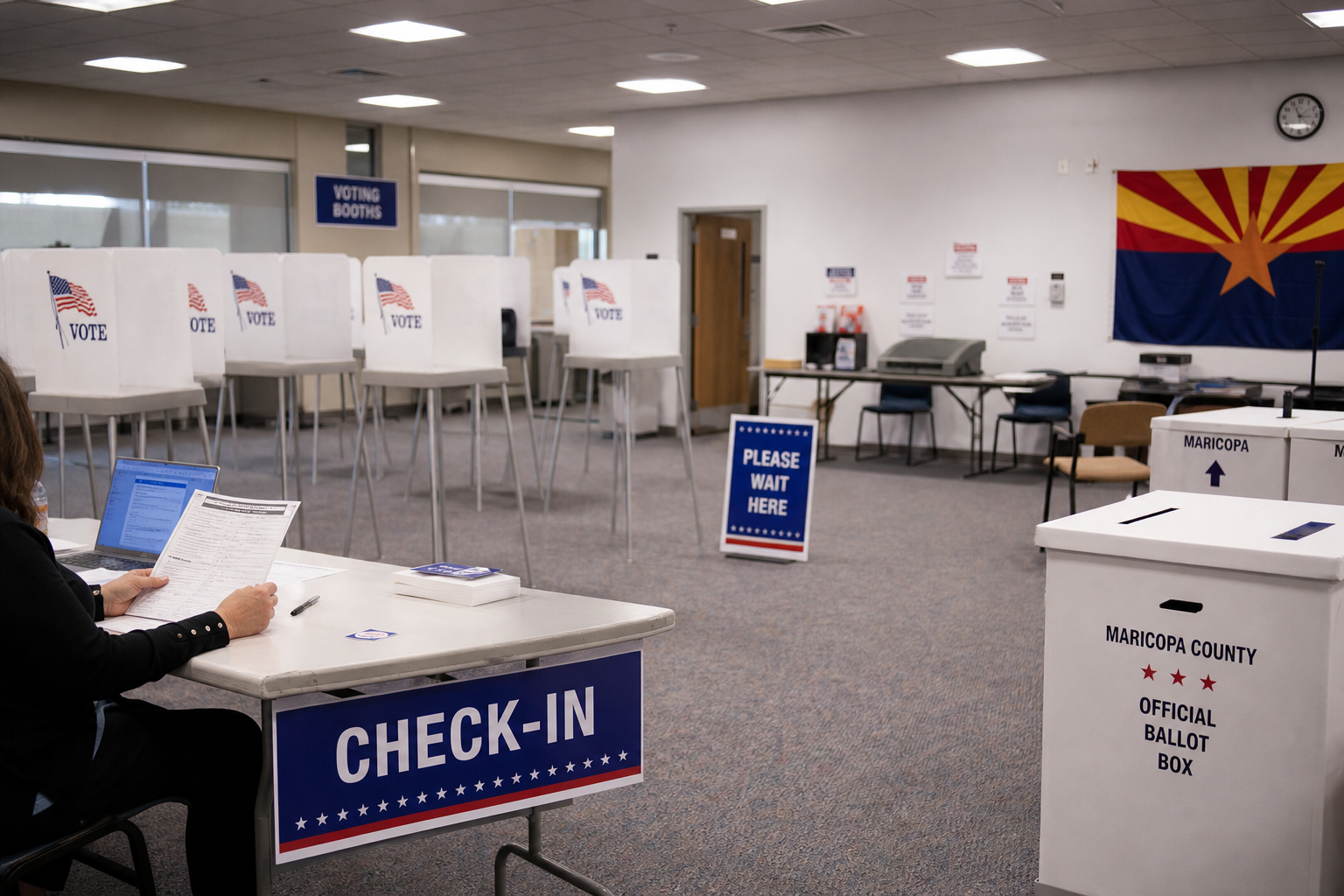
The voter ID measure operates the same way, but in reverse. It tightens the rules on the front end—narrower document categories, image matching—and moves enforcement to election day itself, at the tabulation center, instead of during the registration period when questions can be resolved.
Why This Matters for Arizona Politics
Both measures test the limits of what a conservative majority believes should move from institutions to law. Republicans control the legislature. Republicans hold the governorship. If these policies matter that much, why not vote for them in the Capitol?
The answer is that ballot measures bypass the deliberative process. They do not require stakeholder testimony. They do not force the sponsor to respond to procedural questions. They do not produce a detailed fiscal analysis. They go directly to voters as a binary choice.
That works when the policy is simple. Arizona's Marriage Protection Amendment was simple: define marriage as the union of one man and one woman. Voters knew what they were voting for.
These measures are not simple. They create statutory obligations without full specification of implementation. The athlete measure will generate litigation the moment two school districts interpret the hormone therapy exception differently. The voter ID measure will create bottlenecks at tabulation if election workers have to resolve image-matching disputes on election night with lines of voters behind them.
Republican legislators should be uncomfortable with this approach. It looks like Republicans do not trust their own majority to govern. It looks like they need voters to do the job the legislature should do. Sometimes that is true—legislative leadership has betrayed conservative priorities on spending and regulatory agency budgets often enough that the skepticism is warranted. But the solution to legislative cowardice is not a ballot measure. It is primary accountability.
The National Context
These measures are not accidents. They reflect national movement priorities. Social conservative organizations have pushed athlete eligibility restrictions in multiple states. Election integrity groups have pushed voter ID tightening nationwide.
The national groups bring resources and message discipline. They also bring templates. Both of these measures bear the fingerprints of national advocacy organizations, not grassroots Arizona initiative campaigns. That is not inherently corrupt—advocacy is legitimate—but it means the measures reflect national priorities more than Arizona-specific circumstances.
Arizona has actual voter ID requirements already. Voters must provide identification at the ballot box unless they registered in person with ID. The measure tightens that requirement. Whether that tightening improves election administration or creates logistics problems depends on implementation details the measure does not specify.
Arizona has school athletic policies already. Whether they are adequate depends on local context. A rural district with one high school has different circumstances than Scottsdale Unified, which has fifteen campuses and substantial resources for specialized athletics programs. A statute that applies uniformly may not serve either well.
What Happens After Election Day
If both measures pass, implementation falls to bureaucracies. The Department of Education will write rules on the athlete measure. The Secretary of State and county election officials will write procedures on voter ID. Those rules will be written in rulemaking processes that operate on timelines measured in months. Details will be settled by agency staff with little public input, then challenged in court, with litigation stretching years.
If the measures lose, it signals to the legislature that voters are not aligned with the proponents, and that ballot measure investment should be directed elsewhere.
Either way, these two measures tell voters something important: conservatives in Arizona are trying to move authority from local institutions to state law and state bureaucracy. That is a legitimate policy choice. But it is worth understanding what you are voting for.
You are voting to remove discretion from school boards and to add discretion to the Department of Education. You are voting to make voter ID verification a real-time tabulation problem instead of a registration-period question. You are voting for law instead of local governance, then trusting bureaucracy to implement it correctly.
Ask yourself if you trust that equation. Then look at the ballot again.
