
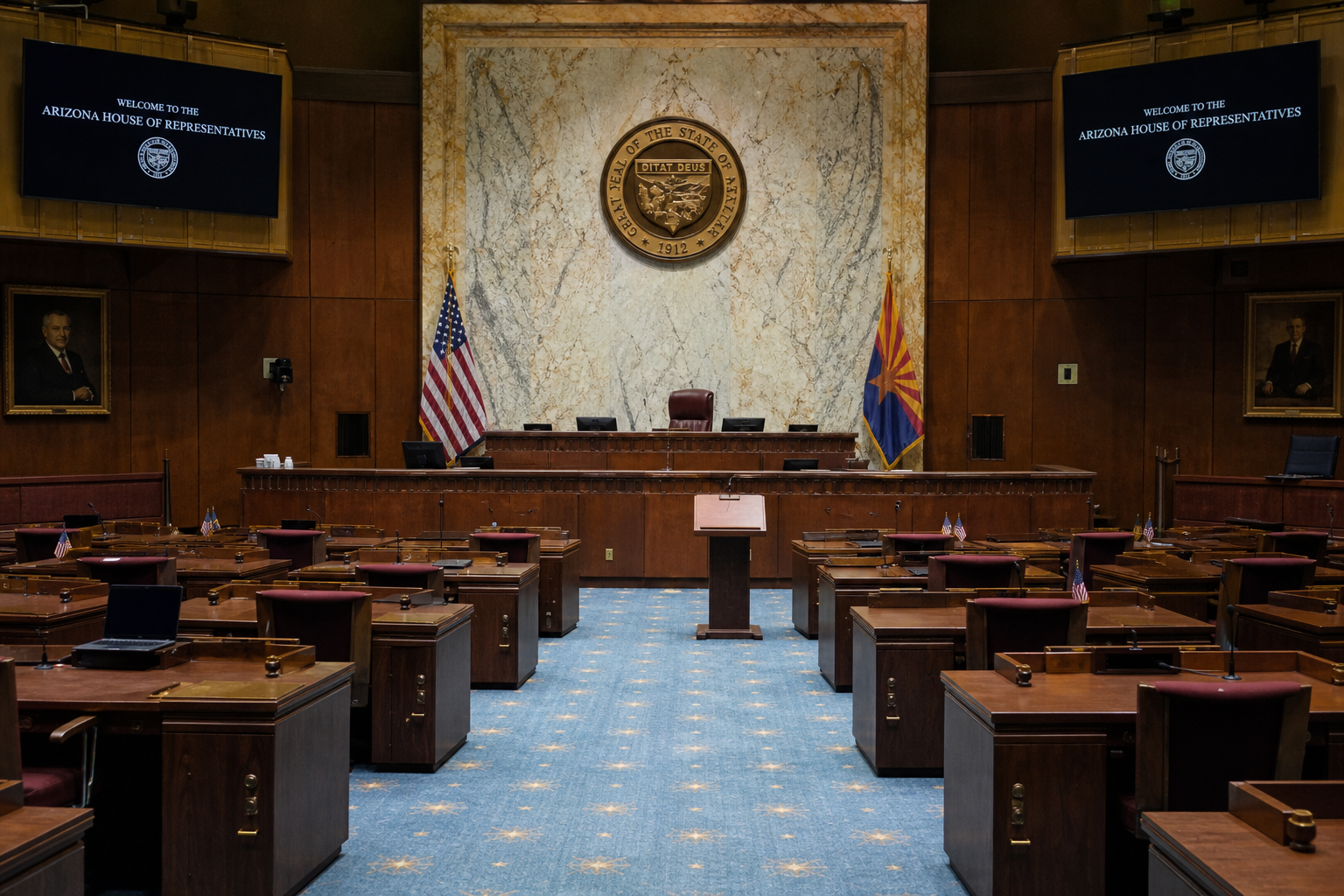
Arizona Takes Stand on Judicial Sovereignty
The Arizona Legislature is moving forward with a series of bills aimed at protecting state courts from the application of foreign legal systems. The measures, broadly referred to as "American Laws for American Courts" legislation, would explicitly prohibit Arizona judges from applying or considering foreign law, international law, or religious legal codes when rendering decisions in state proceedings.
The stated purpose is straightforward: ensure that Arizona courts apply Arizona law and the U.S. Constitution, period. Not Islamic Sharia law. Not international human rights frameworks. Not the legal traditions of any other nation or system. Arizona law.
What the Legislation Actually Does
The bills under consideration would amend state statute to prevent courts from applying, enforcing, or considering foreign legal principles in any civil or criminal case. The language typically carves out narrow exceptions for contracts where parties have explicitly agreed to foreign law under specific circumstances, and for conflicts of law where federal interstate commerce rules would apply.
This is not a solution searching for a problem in Arizona. But it is a solution to a real problem in other jurisdictions.
Federal courts have already grappled with cases where parties sought to enforce agreements based on foreign legal codes. State courts in Michigan, Oklahoma, and New Jersey have dealt with disputes where one party argued that decisions should be guided by the legal customs of another nation or religious system. In a handful of cases, judges have had to explicitly reject such arguments. The legislation simply makes that rejection the standing rule before the case ever reaches argument.
The Federalism Question
This is fundamentally a federalism issue, which is why it lands squarely within the proper scope of state legislative power. The Tenth Amendment reserves powers to the states that are not delegated to the federal government. Control over your own courts, and the law they apply within your borders, sits at the center of that reservation.
Arizona has no obligation to defer to foreign legal systems in its own courtrooms. If a resident of this state enters into a contract, commits an act, or stands accused of a crime, they are entitled to be judged by Arizona law and the Constitution of the United States. That is not provincial. That is the definition of sovereignty.
The federal government has exclusive authority over foreign affairs and treaty interpretation. States do not negotiate with other nations. States do not recognize foreign governments. States do not apply foreign law to their own citizens in their own courts. That is the constitutional order. This legislation simply codifies it.
The Conservative Case and the Practical Concern
From a conservative standpoint, this measure rests on three pillars. First, constitutional fidelity: the courts of Arizona exist to apply Arizona law and the U.S. Constitution, nothing else. Second, local accountability: judges in Arizona answer to Arizona voters and to Arizona law, not to international bodies or foreign legal traditions. Third, equal protection under law: a citizen of Arizona should not face judgment under a legal code foreign to the state where they reside and where the court sits.
The practical concern is real, even if the immediate frequency of the problem is low. As immigration and demographic change accelerate, and as litigation increasingly involves parties with ties to multiple legal systems, the temptation for courts to defer to foreign legal frameworks will only increase. Once one judge does it, others will follow. The legislation prevents that drift.
What Critics Argue
Opponents of such measures typically raise two arguments. First, they argue the problem does not exist in Arizona, so why legislate. Second, they argue that the legislation could interfere with private contract law or international commerce where parties have knowingly agreed to foreign arbitration or choice-of-law provisions.
The first argument misses the point of preventive legislation. The time to establish your boundary is before someone tries to cross it, not after. The second argument is addressed in the bill's language, which carves out exceptions for consensual arbitration and properly executed choice-of-law provisions in commercial contracts.
The Broader Pattern
This legislation is part of a broader conservative effort across multiple states to reassert state and local control over questions that progressive jurisprudence has attempted to federalize or internationalize. It sits alongside voting integrity measures, parental rights legislation, and constitutional carry laws. The underlying principle is the same in each case: power belongs to the people and their elected representatives at the state and local level, not to unelected judges, federal agencies, or foreign entities.
The legislation does not prevent Arizona from honoring international treaties or complying with federal law. It simply says that when an Arizona court renders judgment in an Arizona case, it will apply Arizona law and the Constitution of the United States. Everything else is subordinate.
What Happens Next
The bills will move through the legislature, likely with straightforward party-line support. The governor's position will determine whether the measure becomes law or dies by veto. If it passes, Arizona will join a growing list of states that have codified judicial sovereignty in statute.
Mark the bill number when it appears on the House floor. Check the roll call vote. This is the kind of legislative work that does not make national headlines but shapes what your courts can and cannot do for the next decade. It is worth knowing where your representative stands on it.
