
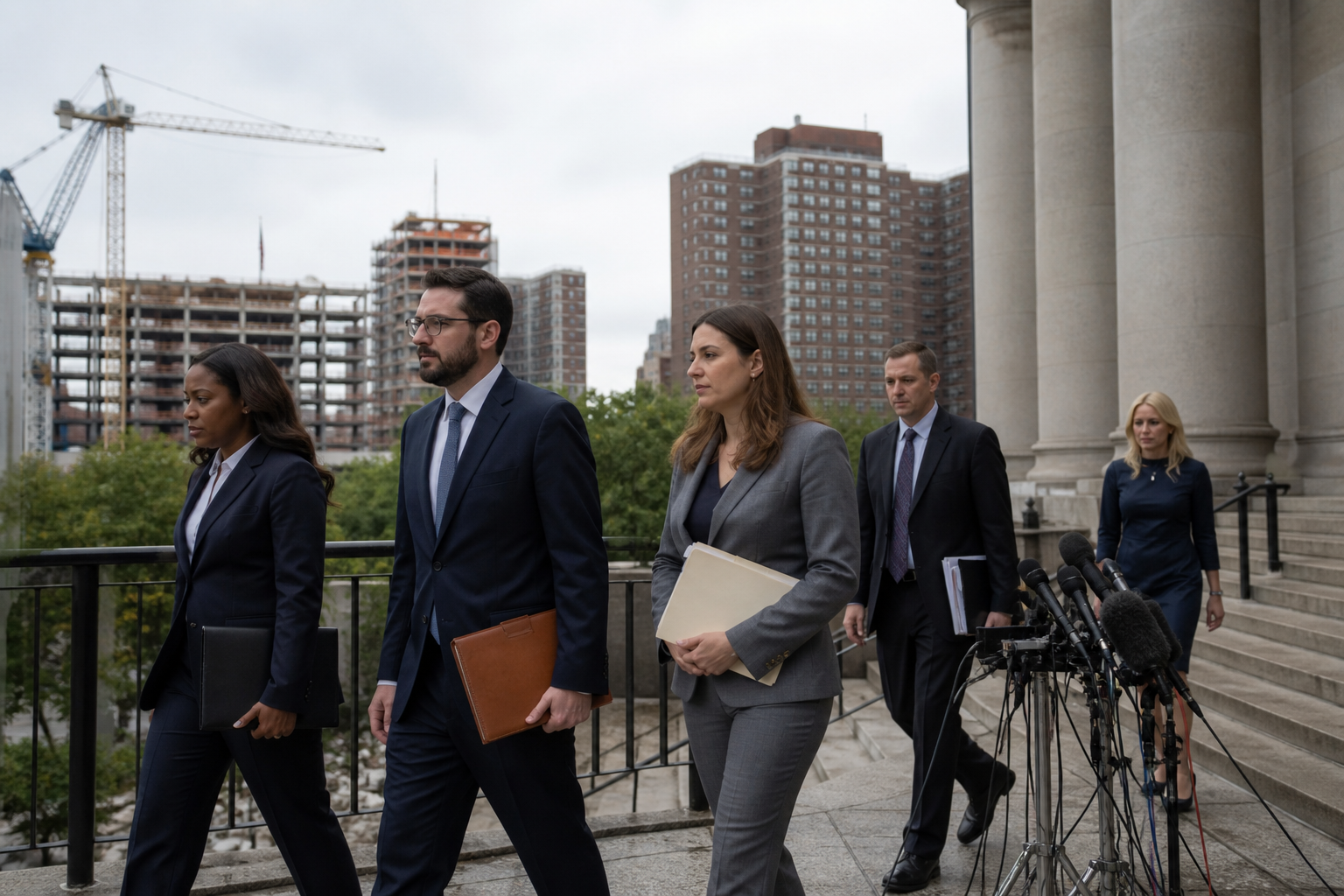
Another administration change. Another multistate lawsuit. Another attempt to freeze federal policy before voters can even judge the results.
This time the fight is over housing policy. Democratic attorneys general from several blue states have moved against Trump administration housing reforms, framing the dispute as a defense of fair housing, tenant stability, and federal statutory duty. That is the public argument. The practical argument is plainer. They want the courts to stop a policy shift they could not stop at the ballot box.
You have seen this movie before. Immigration. Energy. Student loans. Environmental permitting. Election rules. Now housing.
The pattern matters as much as the policy. A Republican administration enters office promising deregulation, narrower federal mandates, and more room for states and local governments to make decisions. Blue-state officials respond by filing in favorable courts, seeking nationwide or near-nationwide relief, and asking judges to halt implementation before the administrative process can play out. The lawsuit becomes the policy.
The Real Fight Is Over Control
Housing is a useful battlefield for the left because the issue carries moral language and bureaucratic leverage at the same time. Federal housing policy reaches zoning incentives, grant conditions, fair housing enforcement, environmental review, public housing administration, mortgage standards, and development timelines. Change the rules there, and you affect cities, suburbs, lenders, builders, and local officials all at once.
That is why Democratic AGs fight so hard over it. Not because every federal housing directive works. Many do not. Not because Washington has solved affordability. It plainly has not. But because housing regulation gives progressive administrations a way to pressure localities that would never adopt those priorities on their own.
If the Trump administration is trying to scale back certain mandates, streamline review, or narrow the interpretation of federal housing obligations, then the states bringing suit are not merely defending procedure. They are defending a governing model. That model runs through federal agencies, consent decrees, guidance documents, and grant strings that let unelected officials shape local land-use decisions from a distance.
That should concern anyone who believes in federalism, whether he lives in Phoenix, Dallas, or Jacksonville.
Housing Costs Are Driven by Supply, Delay, and Regulation
The left talks about housing affordability as though it were mainly a funding problem. It is often a restriction problem.
Costs rise when approvals take too long. Costs rise when environmental review becomes a weapon. Costs rise when developers face overlapping federal, state, and local mandates before a shovel hits dirt. Costs rise when Washington treats every housing question as a civil-rights enforcement mechanism first and a supply problem second.
That does not mean every rollback is wise. It means the policy debate should be honest.
If an administration wants to remove rules that delay construction, reduce compliance burdens, or return more discretion to local governments, opponents should argue the merits in public. They should name the rule. Name the statute. Name the expected harm. Instead, too often, they race to court with maximal claims and ask judges to preserve the prior administration's framework by default.
Default government is still government. And it is usually the least accountable kind.
The Injunction Economy
This is now a standard operating model in national politics. Friendly states sue. Friendly advocacy groups coordinate. Friendly media describe the filing as a defense of democracy or civil rights. Friendly judges are asked for immediate relief. Process becomes punishment.
Even if the administration eventually wins on the merits, the delay is the point. Months matter. Sometimes years matter. Rulemakings are slowed. Grants are paused. Guidance is rewritten. Political momentum is lost. Bureaucracies learn that resistance pays. Agencies begin governing defensively, not decisively.
And voters are told, again, that the elected branch cannot do what it campaigned on because the courts need more time.
More time. Always more time.
When that pattern repeats often enough, elections begin to feel advisory.
There Is a Federalism Question Here
Blue-state attorneys general often speak the language of state sovereignty when a Republican sits in the White House. They discover local control on cue. Then the same officials will defend sweeping federal administrative power the moment it advances progressive outcomes.
That is not a principle. That is a tactic.
Real federalism cuts both ways. If Congress has clearly assigned a duty to the executive branch, the president is entitled to execute it within the bounds of the law. If an agency has lawful discretion to revise a prior rule, it is allowed to revise it. A new president is not a caretaker for the last president's regulatory preferences.
Courts have a role. Of course they do. But the role is to interpret law, not to referee every ideological dispute by freezing policy at the point preferred by the plaintiff coalition.
That has become the expectation. It should not be.
Why Conservatives Should Watch the Details
Housing policy sounds technical until it reaches your mortgage payment, your property tax base, your commute, and the character of your neighborhood. The details matter.
Conservatives should ask four questions every time one of these suits is filed.
What specific rule change is being challenged? Not the slogan. The actual change.
What statute gives the administration authority here? If the authority is real, courts should say so.
What does the plaintiff states' theory require? More federal control, more paperwork, more delay, or all three.
Who benefits from the delay? Usually not the family trying to buy a house.
That last one matters most. Delay protects incumbents in government and in the activist class. It rarely protects working families. It rarely lowers rent. It rarely speeds up construction. It rarely expands ownership.
It protects the administrative status quo. That is what these fights are usually about.
A Court-Centered Resistance Has Costs
There is a larger institutional cost here. When every policy dispute becomes a lawsuit, the country trains itself to look past legislatures and past elections. The most aggressive actors then shop for the fastest judge rather than the strongest argument. That habit weakens self-government.
It also feeds public distrust. Americans can see when one side treats the courts as a permanent veto office. They may not know the caption number or the district venue, but they understand the basic arrangement. Elect one government, get another. Vote for change, get an injunction.
That is not stability. It is managed paralysis.
If Democratic attorneys general believe Trump housing reforms violate federal law, they should make the legal case cleanly and specifically. If they win, they win. But the larger pattern deserves to be named. This is not simply legal oversight. It is a political strategy built on judicial obstruction.
And it keeps expanding because it keeps working.
Watch the venue. Watch the injunction request. Watch whether the challenge is aimed at a concrete legal defect or at stopping policy momentum cold. That will tell you what this case is really about.
Housing is the headline. Control is the subject.
Mark the next hearing date when it is set. In these cases, procedure is never just procedure.
